How to Read Labels to Spot Genuine Organic Products (And Avoid Fake Organic)
Walk into any supermarket, and you’ll find many products labeled as “organic,” “natural,” “pure,” or “chemical-free.”
But how do we know that it’s genuinely organic? It has become harder to spot genuine organic products nowadays.
The reality is that India’s market is flooded with fake organic products, misleading labels, “unhealthy” ingredients, and clever marketing tricks.
If you truly care about your health, genuine organic products, and sustainability, you must learn how to read labels smartly and identify genuine organic food.
In this blog, we’ll tell you how to spot genuine organic products and how to avoid fake organic products.
-
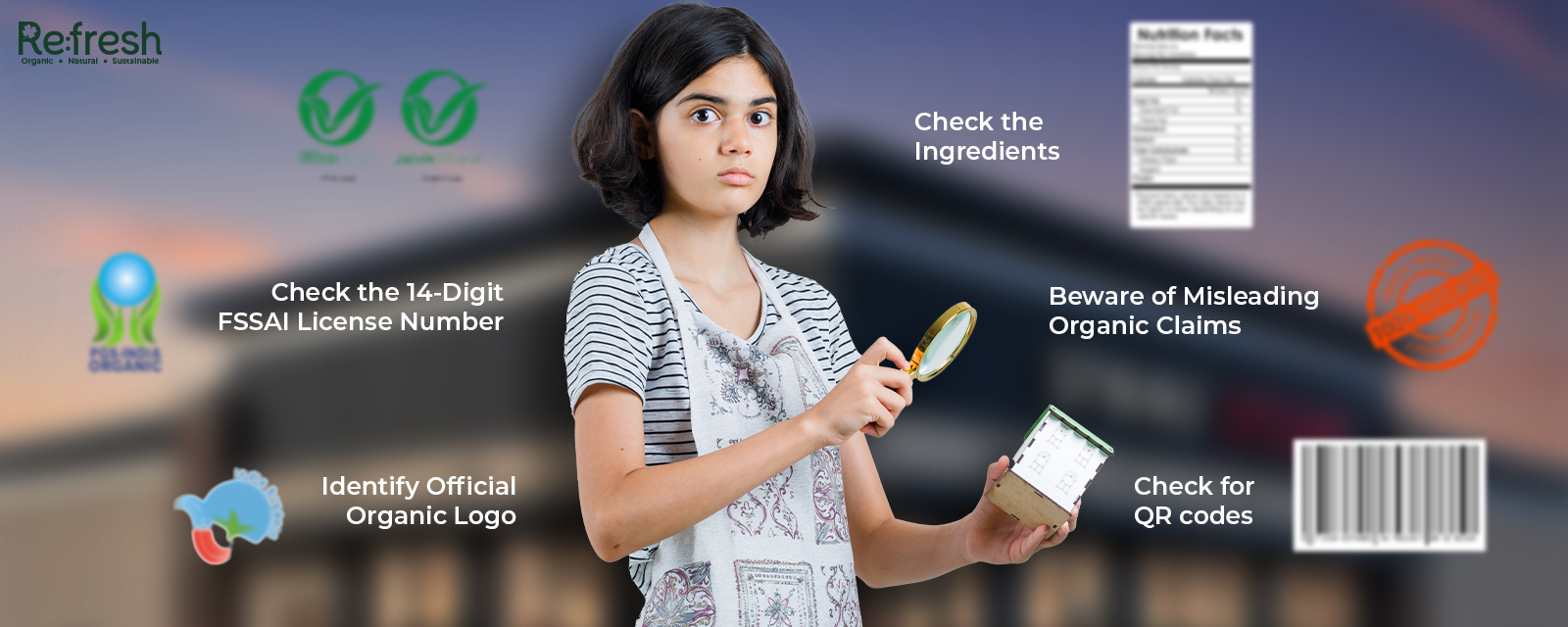
Identify Official Organic Logo:
The simplest way to identify genuine organic products is by checking whether it has the internationally and nationally approved organic certification logos.
Organic certifications are a label for authentic products that are genuinely produced and processed using organic farming.
Only certified organic brands can sell and represent their products as organic products.
Always look for these logos in your organic products:
- Jaivik Bharat Logo
- India Organic Logo
- PGS-India Green Logo


If you’re buying imported organic food, check for globally recognized certified organic badges like USDA Organic and the EU Organic Green Leaf logo.
These organic certifications ensure the product has followed strict farming standards and isn’t just making fake marketing claims.
-
Check the 14-Digit FSSAI License Number:
Fake organic products can also be identified by verifying the details using official government databases like the Indian Organic Integrity Database.
The FSSAI number will help confirm if the brand is registered as an Indian organic brand and follows the organic certification standards of quality.
Never trust a label blindly. Real certified organic products will clearly mention:
- 14-digit FSSAI number
- Name of certifying agency (e.g., INDOCERT)
- Certification number
If any product just claims to be “organic’ or “natural” but is missing the FSSAI number, then it’s a red flag.
-
Beware of Misleading Organic Claims:
If you want to buy a genuine, certified organic product and the product says:
- “Natural”
- “Chemical-free”
- “Toxin-free”
- “Eco-friendly”
- “Pure”
- “Healthy Choice”
They are not certified organic, as it requires an organic certification and real health.
These words are made by the brand marketing team to convince you that the product is as good as organic, while avoiding any legal battle.
A product can be “natural” and still contain pesticides or GMO ingredient but a genuine organic product will only have clean ingredients with the proof of certification.
-
Check the Ingredients:
According to Indian organic standards, a product must contain at least 95% organic ingredients to be certified organic.
Real organic ingredients are grown without chemical fertilizers, pesticides, hormones, or GMO seeds.
Even if you see an organic certification, check the ingredients label carefully to know whether a product is truly organic certified.
Look for:
- “Certified Organic” ingredients
- Clear labeling like 100% Organic or 95% Organic Ingredients
If the product has ingredients that sound too chemical, technical, or artificial, Google it and you’ll know the difference.
Read More: How the Indian Government is Promoting Organic Farming
-
Check for QR codes:
These days, organic brands believe in transparency and provide their customers with insider information on how their products are made.
You can check:
- QR codes
- Batch numbers
- Traceability codes
Scanning them often reveals:
- Where the crop was grown
- Harvest date
- Residue test reports
- Farmer cooperative details
If a brand is proudly sharing their sourcing information and how their brand is making the organic products, it’s a good sign. If they hide it, question it.
-
Quick Buyer Tips to Avoid Fake Organic:
Use this simple checklist while shopping:
- Look for Jaivik Bharat / India Organic / PGS-India
- Verify FSSAI & certification number
- Avoid products relying only on “natural” and “healthy” claims
- Read the ingredients thoroughly and Google them to know more. Buy certified Organic ingredients only.
- Prefer brands with QR traceability
- Research the brand’s credibility
- Be cautious of unbelievably cheap “organic” deals
-
Conclusion:
Organic certification is like a passport that proves how an organic product was sourced, made, and made available in the market.
A genuine organic label will have verified certification logos, traceable numbers, and documented proof - not just pretty packaging and emotional words.
Learning how to read labels, spot official certifications, verify FSSAI numbers, and question vague marketing terms empowers you to choose truly genuine organic food.
The next time you shop, let knowledge guide your basket - your health, money, and trust deserve nothing less.
Explore More From Naturopedia
The Story of India’s First Organic Farm: Ambrosia Organic Farm
-

You're Probably Storing These 10 Everyday Foods the Wrong Way
August 19th, 2026 -
 August 17th, 2026
 -

Organic vs Regular Spices: Are Organic Spices Really Better?
August 14th, 2026 -

What Did Lord Krishna Really Eat? 7 Favorite Foods for Janmashtami
August 12th, 2026 -
 August 10th, 2026