
6 Science-Backed Wheatgrass Benefits You Should Know!
Wheatgrass is often called a green powerhouse as it contains many nutrients and antioxidants.
Wheatgrass is essentially the young shoots of the wheat plant that have been used for decades as a natural way to support overall health and wellness.
From fitness enthusiasts to diabetic patients, many people are including wheatgrass juice or powder in their daily diet for extra nutrients.
Whether you’re looking to add more greens, support digestion, or improve daily energy levels, wheatgrass has gained attention as a natural and effective option.
In this blog, we’ll explore what wheatgrass really is, wheatgrass powder benefits, and how to add it to your daily routine.
Wheatgrass Nutritional Profile
Wheatgrass from the family of Triticum aestivum is usually 7–10 days after sprouting, before full development.
With over 70% of chlorophyll, wheatgrass is often called “green blood” due to its dark green color.
Acocording USDA, one tablespoon of organic wheatgrass powder contains:
- Energy: 25 calories
- Protein: 1 g
- Carbohydrates: 6 g, or 2% of an adult’s daily requirements or daily value (DV)
- Fiber: 4 g, or 14% of DV
- Calcium: 24 milligrams (mg)
- Iron: 1 mg, or 6% of DV
- Vitamin K: 86 micrograms, or 70% of DV
Studies have emphasized the abundance of proteins, antioxidants, vitamins, and minerals in wheatgrass.
(Tip: amounts vary by growing method, harvest time, and whether you take juice vs. powder.)
Health Benefits of Wheatgrass
-
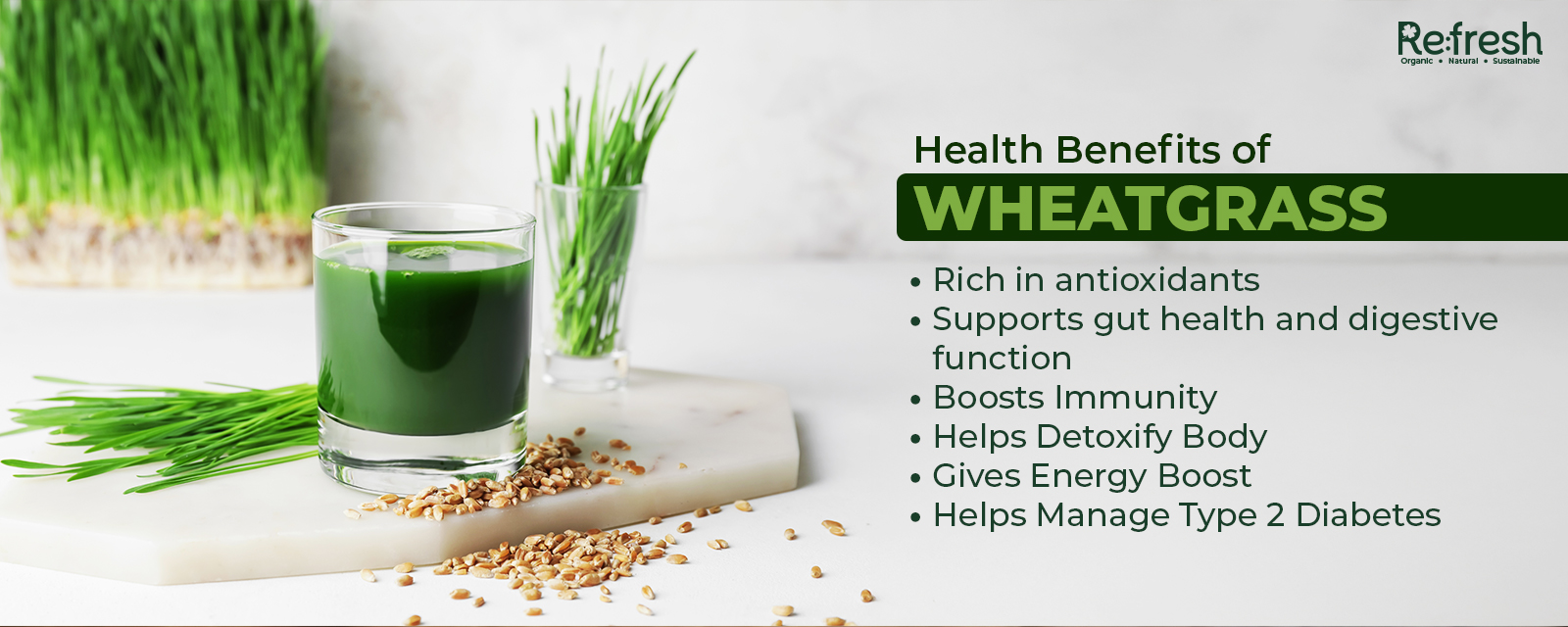
Rich in antioxidants:
Wheat grass powder benefits people who have high inflammation and suffer from chronic diseases like rheumatoid arthritis.
Wheatgrass contains chlorophyll, flavonoids, and phenolic acids that help neutralize free radicals in the body and reduce inflammation.
Research shows that wheatgrass extract can significantly reduce oxidative damage in cells and improve antioxidant enzyme activity.
-
Supports gut health and digestive function:
Wheatgrass is often used as a digestive supplement as it contain high quality amino acids and proteins that help boost your gut health.
Potential digestive benefits include:
- Supporting healthy gut lining
- Reducing inflammation in the intestines
- Improving bowel regularity
- Helping nutrient absorption
-
Boosts Immunity:
Wheat grass powder contains diverse vitamins A, C, zinc, iron, and antioxidants that support a strong immune system.
By reducing inflammation and providing nutrients, wheatgrass juice benefits immune cell function.
A 2020 study found that wheatgrass juice has positive effects on our immune system, especially for people undergoing chemotherapy.
-
Helps Detoxify Body:
Most herbal drinks are consumed to feel detoxification after a long duration of junk and unhealthy diet.
The nutrients in wheatgrass can help your kidneys and liver function efficiently in getting rid of impurities and stored toxins.
One study mentioned that chlorophyll in wheatgrass juice can detoxify the body.
-
Gives Energy Boost:
Wheatgrass juice is made from the sprouts of the wheat seeds, which are a good source of energy.
This is because wheatgrass is essentially a source of carbohydrates with an abundance of vitamins, minerals, and fewer calories.
You can replace your calorie-dense, high-sugar energy drinks with wheatgrass juice for a daily energy boost.
-
Helps Manage Type 2 Diabetes:
Homeopathy and holistic medicines use wheatgrass to help diagnose type 2 diabetes.
Since inflammation plays a role in chronic diseases like diabetes, wheatgrass can help lower oxidative stress in patients.
A 2016 study on rats, for example, found that wheatgrass raised insulin levels and helped lower blood glucose.
Read More: How Amchur Powder Benefits Gut Health and Immunity Naturally
How to use wheatgrass juice
For people who never had wheatgrass juice, start small (a teaspoon or 1 oz shot) to assess tolerance.
Fresh wheatgrass juice has live enzymes and nutrients:
- Shots (1–2 oz) of fresh wheatgrass juice - most common.
- Powder added to smoothies or water - easier to store.
- Capsules for people who dislike the taste.
Safety & cautions
- Wheatgrass powder has high vitamin K content, which may interfere with blood thinners (warfarin)
- Since cross-contamination is possible, people with wheat allergy or celiac disease should be careful.
- Raw wheatgrass juice can carry bacterial contamination if it’s not grown hygienically.
Consult your healthcare professional before including wheatgrass powder in your diet.
Conclusion:
Wheatgrass is a nutrient-rich microgreen with abundant antioxidant and anti-inflammatory properties to boost overall health.
You can easily include wheat juice or powder in your diet, whether it’s a morning smoothie or a lunch salad recipe.
If you take blood thinners, have a wheat allergy, or are pregnant, check with a healthcare professional before adding wheatgrass to your routine.
-

You're Probably Storing These 10 Everyday Foods the Wrong Way
August 19th, 2026 -
 August 17th, 2026
 -

Organic vs Regular Spices: Are Organic Spices Really Better?
August 14th, 2026 -

What Did Lord Krishna Really Eat? 7 Favorite Foods for Janmashtami
August 12th, 2026 -
 August 10th, 2026