
Why You Feel Bloated and Exhausted Even After Eating Healthy Foods
You switched to a healthy diet, cut junk food, added many superfoods, and stopped eating all processed foods.
But you still feel bloated, tired, or sleepy after meals?
This is a common problem many people face when they start eating clean and adopt a healthy lifestyle.
Science says that how your body processes the food matters more than what you actually eat.
In this blog, we tell you real, science-backed reasons behind this and how to fix this. Read on.
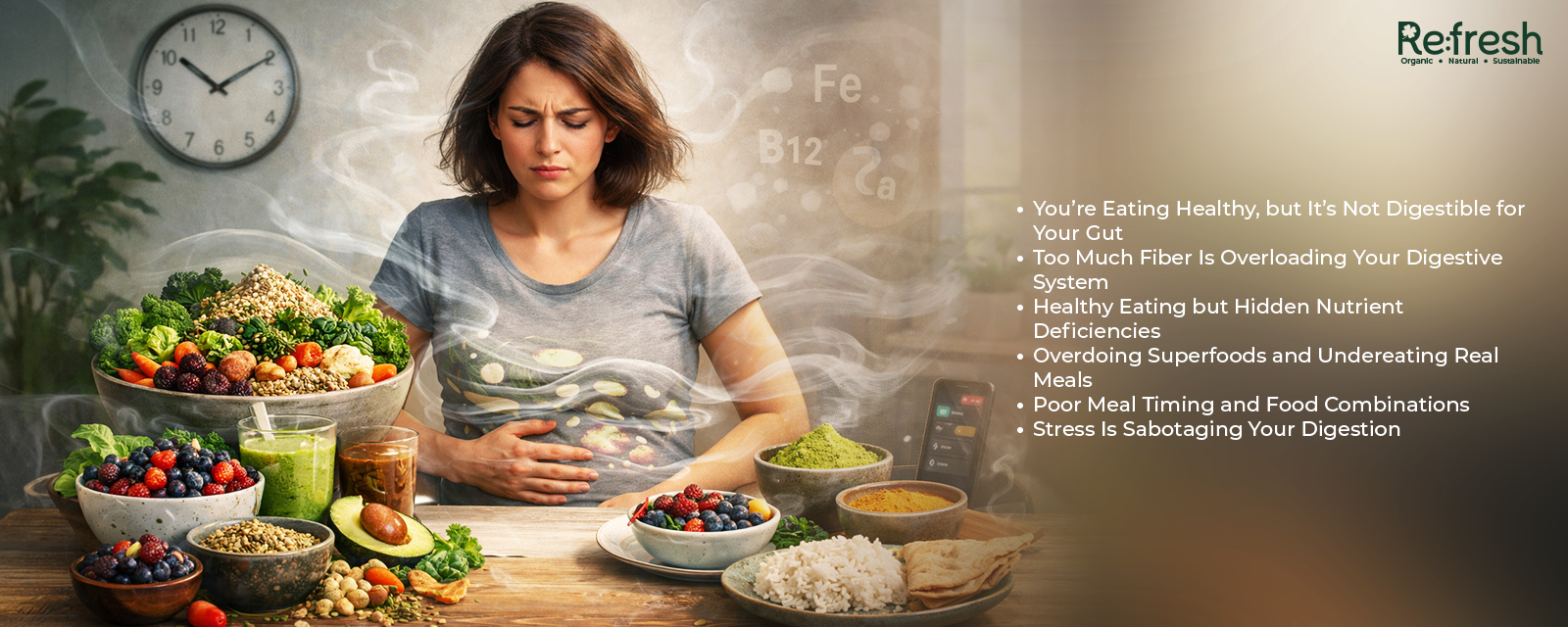
1. You’re Eating Healthy, but It’s Not Digestible for Your Gut
A food is healthy, but that doesn’t mean it’s easier to digest. Raw salads, beans, cruciferous vegetables, and sprouts are nutrient-rich but require strong digestive enzymes.
If your gut is weak, these foods will cause gas, bloating, and fatigue after eating, as they’ll sit longer in your stomach.
Common triggers:
- Excess raw vegetables
- Too much fiber intake suddenly
- Daily salads without cooked meals
2. Too Much Fiber Is Overloading Your Digestive System:
Fiber feeds your gut bacteria, but increasing it suddenly through seeds, whole grains, fruits, and salads can overwhelm them.
Instead of improving digestion, excess fiber ferments in the intestine, leading to bloating, heaviness, and low energy levels.
If you suddenly increased:
- Seeds (chia, flax, pumpkin)
- Whole grains
- Legumes
- Fruits + salads together
Your gut may not be ready for excess fiber.
3. Healthy Eating but Hidden Nutrient Deficiencies:
In India, over 50-60% of the population suffers from protein, iron, vitamin D3, and vitamin B12 deficiencies.
These essential nutrients directly affect oxygen delivery and every production, which explains why you may feel tired even after eating healthy food.
A healthy diet without balance can leave your body under-nourished.
Read More: Tired or Moody? Unexpected Symptoms of Vitamin D Deficiency You Shouldn’t Ignore
4. Overdoing Superfoods and Undereating Real Meals:
Superfoods like chia seeds, protein bars, and smoothies are meant to supplement your meals, not replace them.
Extremely low calories and incomplete nutrition can cause energy crashes and digestive discomfort.
5. Poor Meal Timing and Food Combinations:
Are you putting together healthy food together without reading the science behind it?
Mixing too many foods, eating fruits lightly after meals, or eating heavy dinners can slow down your digestion.
This so-called “healthy practise” will disrupt your normal gut rhythm and can result in:
- Bloating
- Acidity
- Fatigue after meals
6. Stress Is Sabotaging Your Digestion:
Chronic stress is the number one reason behind most issues, and if you’re extremely stressed, a healthy diet will not work for you.
A rushed or anxious state will reduce digestive enzyme secretion and slow gut movement, leading to bloating and low energy.
How to fix this?
Identify common foods that trigger gas and bloating. You can keep a diary to track your symptoms.
If you’re introducing a new food in your diet, start with one serving a week and increase the amount gradually to let your gut adjust.
Some people are sensitive or allergic to dairy, gluten, or certain legumes - even if they’re considered healthy.
These sensitivities can show up as bloating, tiredness, or brain fog, rather than obvious digestive pain.
Conclusion:
Feeling tired, heavy, or bloated despite eating healthy doesn’t mean your diet is wrong; it means you need refinement.
Healthy eating is not about perfection, crash diets, trends, or superfoods; it’s about digestion, balance, adequacy, and sustainability.
When food supports your gut and energy - not just nutrition labels - you’ll feel lighter, stronger, and more energised.
True health begins when your body actually absorbs what you eat.
-

You're Probably Storing These 10 Everyday Foods the Wrong Way
August 19th, 2026 -
 August 17th, 2026
 -

Organic vs Regular Spices: Are Organic Spices Really Better?
August 14th, 2026 -

What Did Lord Krishna Really Eat? 7 Favorite Foods for Janmashtami
August 12th, 2026 -
 August 10th, 2026