
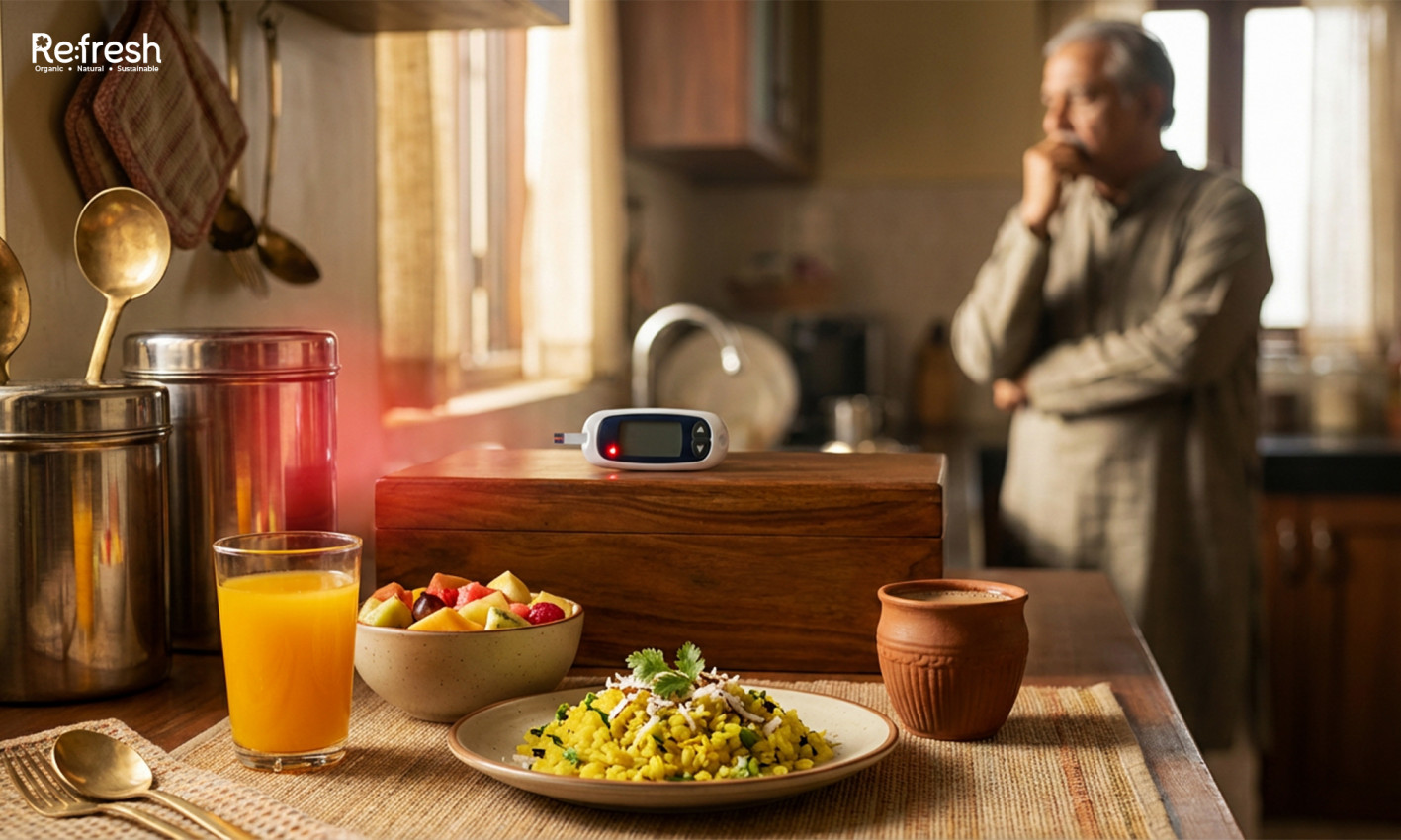
The 'Healthy' Morning Ritual That's Quietly Spiking Your Blood Sugar Before 9 am
Most Indians wake up with high blood sugar, and they don’t even realise it.
We skip the sweets, drink some fresh juice, eat a light breakfast and head out for a productive day.
But we don’t realise that some morning habits that spike blood sugar go unnoticed in the morning.
In this blog, we’re not telling you another diabetes story, but about the habits we've convinced ourselves are healthy that are working directly against us.
Body Wakes Up With High Blood Sugar
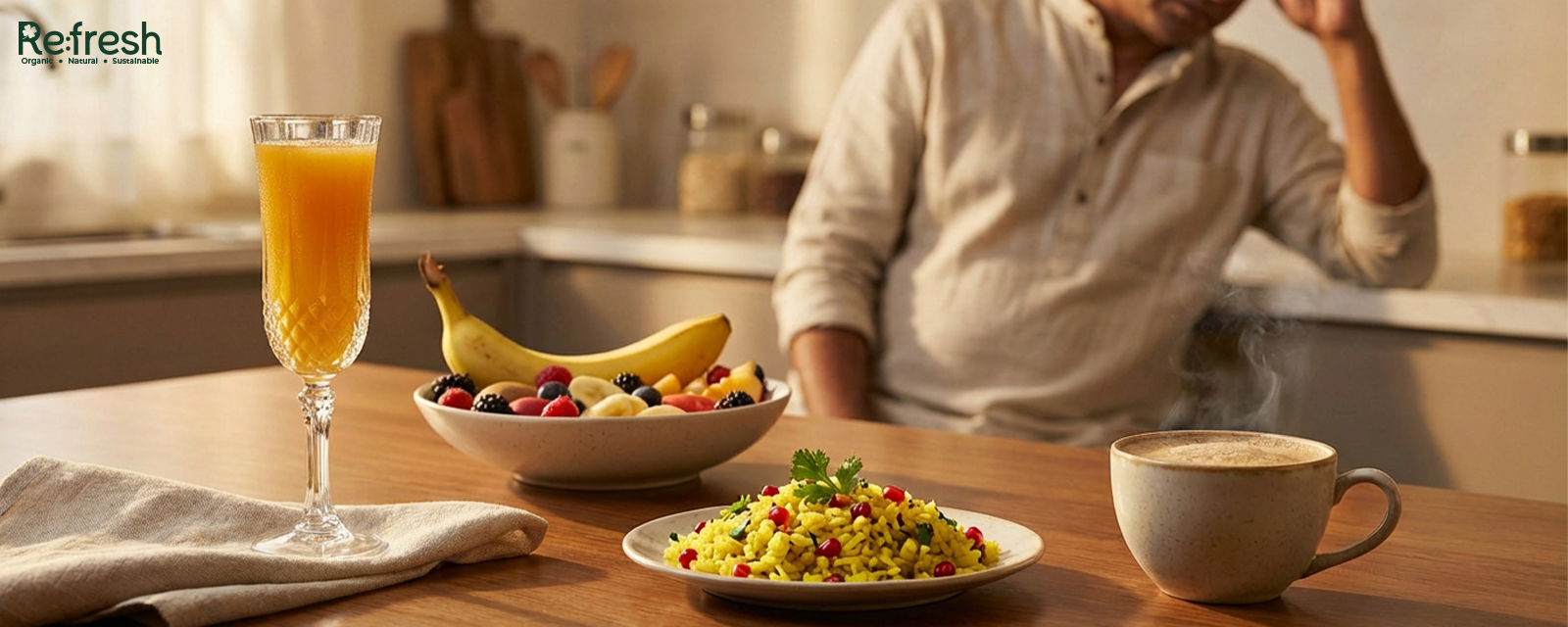
Between 4 am and 8 am, your body naturally floods itself with cortisol and growth hormone.
These signals tell your liver to release stored glucose, aka glycogen - giving you energy to wake up and function.
It's called the dawn phenomenon, and it happens every single day, whether you eat or not.
Research published in the American Journal of Clinical Nutrition found that, compared to dinner, breakfast meals trigger a 20-30% higher glucose spike.
Your morning gut is reactive, and most of us are feeding it the wrong things that spike our blood sugar.
India now has over 101 million diabetics, according to a 2023 Lancet report — the highest of any country in the world.
Insulin resistance builds up slowly and doesn’t show symptoms until it's very late.
These Morning Habits are Unhealthy
-
Fruit Juice on an Empty Stomach
Most people like having fresh fruit juice because it feels healthy, but it isn’t.
Fresh mosambi juice feels like it doesn’t have any fibre, it's just concentrated fructose that hits your bloodstream with nothing to slow it down.
A 250ml glass of orange juice contains roughly 24g of sugar and zero fibre. That's a near-immediate glucose spike.
Start eating the whole eat and you’ll feel the difference.
-
A Banana or Fruit Bowl, Eaten Alone
A ripe banana has a glycemic index between 51 and 72. Eaten alone on an empty stomach, it spikes blood sugar sharply and drops it just as fast - leaving you hungry again by 10 am.
Pair it with curd, peanut butter, or a boiled egg, and the glucose response is completely different.
If you pair the banana with some protein and fats, it’ll slow down the absorption of glucose.
Start eating the whole eat and you’ll feel the difference.
-
Poha, Upma, or Idli Without Protein
Indian comfort breakfasts feel light, familiar, and easy, but they’re almost entirely carbohydrates with a high glycemic load.
Adding protein sources like dal, curd, or coconut chutney helps them digest rapidly and send blood sugar climbing quickly.
The ICMR has specifically flagged refined-carb-heavy Indian breakfasts as a significant driver of postprandial glucose spikes and insulin resistance over time.
-
Two Cups of Chai With Sugar
Your Masala tea has two teaspoons of sugar per cup, approximately 8-12g of sugar.
Since you already have high blood sugar, the tea can increase your cortisol further.
Try delaying caffeine for 90 mins after you wake up and start your morning with a high-protein and high-fat breakfast.
-
Skipping Breakfast Entirely
Some people fast till noon, trying to lose weight or simply because they don’t feel hungry in the morning.
Your body already fasts for at least 8-9 hours while sleeping, and skipping breakfast can push your liver to release more glucose.
This raises your blood sugar further. A small, protein-rich meal within 1–2 hours of waking consistently shows better glucose control across the day.
Click here: Blood sugar friendly organic foods
Read More: Skipping Breakfast and Late Lunch? The Biggest Mistake that Weakens Your Bones
Fix Your Morning in 4 Simple Swaps
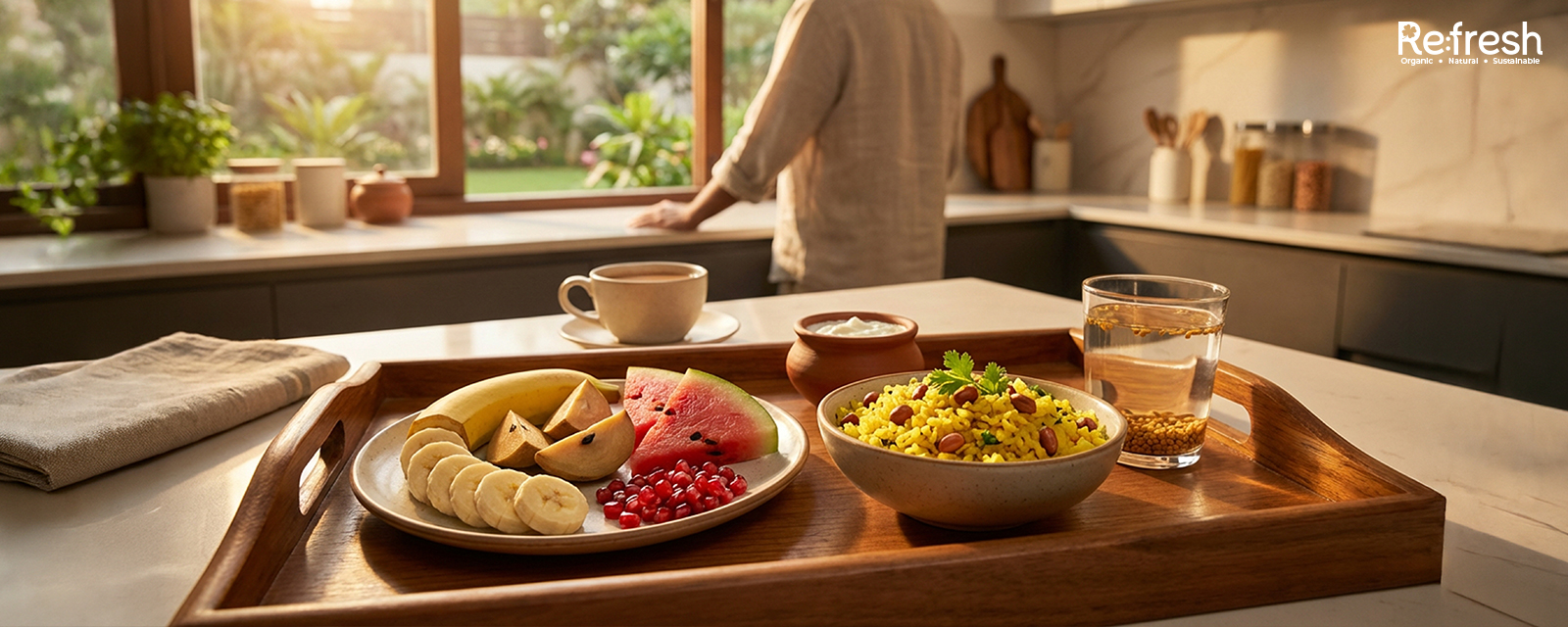
- Swap the juice for the whole fruit, like a chickoo, banana, watermelon, or any seasonal fruit.
- Add protein to every breakfast, like more peanuts to poha, curd with upma, or paneer with your paratha.
- Try overnight-soaked methi seeds in warm water first thing. Clinical studies show fenugreek reduces fasting blood glucose by up to 13.4% - an old Ayurvedic habit that holds up under a microscope.
- Have chai after eating, not before. This single shift reduces the sugar-on-empty-stomach effect significantly.
The Bottom Line
Foods aren’t inherently unhealthy; bananas, poha, and chai have been part of Indian mornings for generations.
But our lifestyles have changed. We’ve become sedentary, stressed, and are eating a sugar-heavy diet.
You can set the tone of your body with rightful habits. A blood sugar spike before 9am triggers a crash before noon, a craving by afternoon, and fatigue by evening.
If you repeated your cycle daily, that’s how insulin resistance quietly builds over the years.
One better breakfast won't fix everything, but forming healthy habits every single morning adds up faster than most people think.
FAQs
-
What causes blood sugar to spike in the morning?
Your body naturally releases cortisol and growth hormone between 4-8 am, signalling the liver to dump glucose into your blood. This happens before you eat - add a high-carb breakfast on top, and the spike compounds fast.
-
Is fruit juice bad for blood sugar levels?
Yes - juicing removes all the fibre, leaving concentrated sugar that hits your bloodstream almost instantly. A 250ml glass of orange juice contains ~24g of sugar with nothing to slow it down. Eat the whole fruit instead.
-
What is the dawn phenomenon?
The dawn phenomenon is a natural early - morning rise in blood sugar caused by hormones - cortisol, glucagon, and growth hormone - that signal your liver to release glucose as you wake up. It happens in every person, diabetic or not.
-
Best Indian breakfast options for stable blood sugar?
Pair your carbs with protein and fat - eggs with poha, curd with upma, paneer with paratha. Protein slows glucose absorption and flattens the spike. A carb-only breakfast, however light, is the problem.
-
Does skipping breakfast raise blood sugar?
It can. During the dawn phenomenon window, prolonged fasting pushes the liver to release more glucose on its own - a process called hepatic glucose output. For many people, skipping breakfast raises morning blood sugar, not lowers it.
-

You're Probably Storing These 10 Everyday Foods the Wrong Way
August 19th, 2026 -
 August 17th, 2026
 -

Organic vs Regular Spices: Are Organic Spices Really Better?
August 14th, 2026 -

What Did Lord Krishna Really Eat? 7 Favorite Foods for Janmashtami
August 12th, 2026 -
 August 10th, 2026