
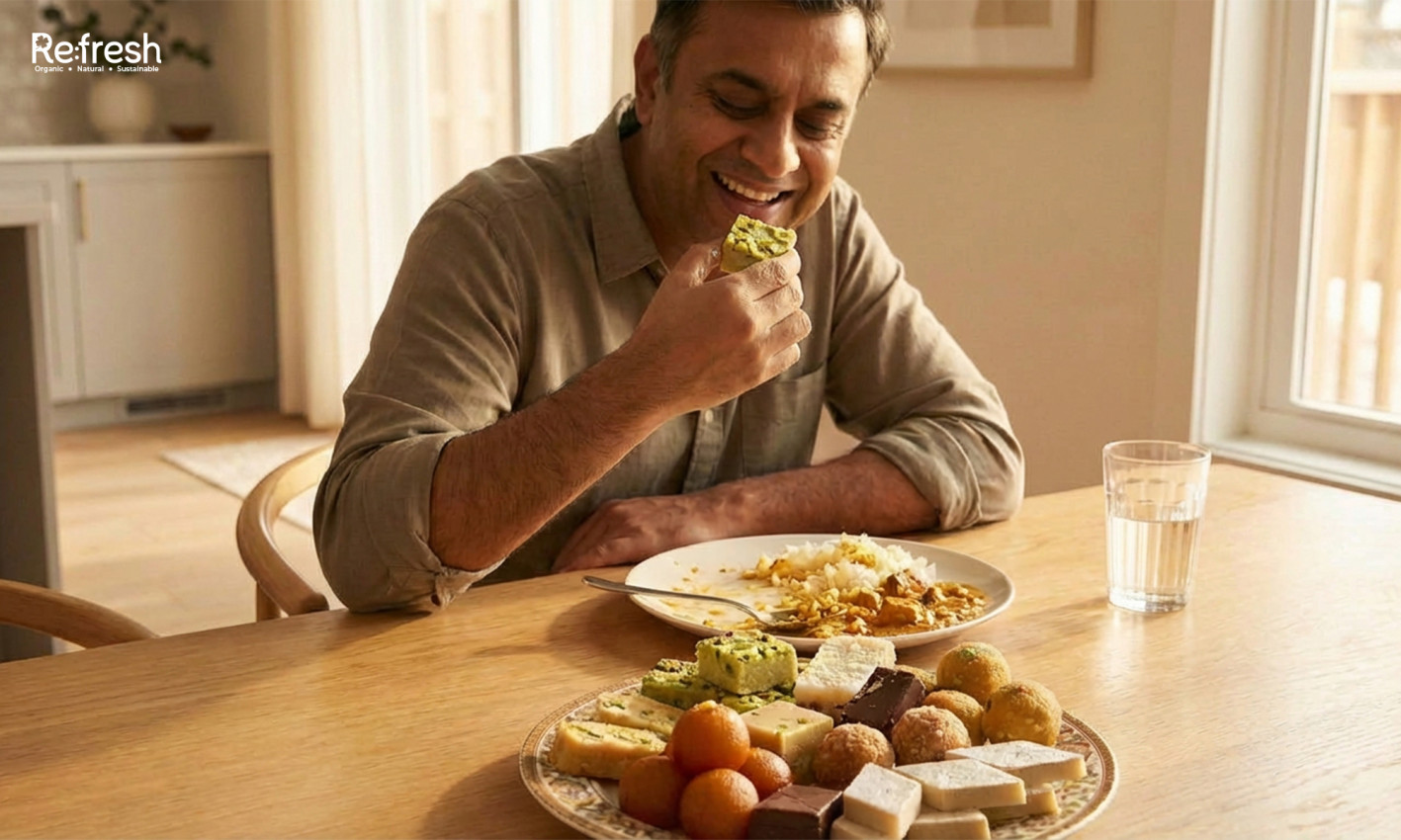
Why do we crave something sweet after meals - Explained
Imagine this, you finish a full meal. You’re not hungry, yet there’s a persistent urge to get something sweet - for something sweet - a piece of chocolate, a biscuit, or an indian sweet, maybe.
It feels harmless, almost a natural craving that comes by and goes away if you don’t eat anything sweet sometimes.
But these post-meal sugar cravings aren’t always a habit, but signals that your meal may have lacked.
In this blog, we’re exploring the habit of post-meal sugar cravings and the biology behind this.

Sweet Craving or Blood Sugar Spike?
Health experts suggest that post-meal sugar cravings shouldn’t be written off as just culture or traditions. It may signal metabolic problems.
Since many people experience a strong desire to eat something sweet after meals, emerging scientific insights suggest a metabolic imbalance.
Once you understand the biology, the pattern starts to make sense.
Most Indian meals are especially rich in refined carbohydrates like rice or roti that cause a sudden rise in blood sugar levels.
Rising blood sugar after a meal is a normal process until it becomes frequent and uncontrolled.
- The body releases insulin to bring sugar levels down.
- If the meal lacks protein and fibre, this process happens too quickly.
- Blood sugar spikes fast and drops just as quickly.
As a result, even after eating, your body experiences a sudden rise in cravings.
And your brain, looking for the fastest solution, signals for sugar.
Reactive Hypoglycemia: The Craving Cycle
The rapid rise and fall in blood sugar is called reactive hypoglycemia .
- It doesn’t always present as a medical condition.
- Most people experience it as a strong, hard-to-ignore sweet craving after food.
Your brain interprets the sudden drop in energy as a need for a quick fuel, which usually calls for sugar.
The Missing Nutrient: Protein
One of the biggest drivers of post-meal cravings is low-protein intake.
Indian diets are mostly carb-rich and seriously lack protein.
Protein plays several key roles:
- Slows down digestion
- Stabilizes blood sugar levels
- Increases satiety (feeling full)
Without enough protein, your body doesn’t feel satisfied and seeks quick energy sources (sugar).
Read More: 3 High-Protein Indian Recipes for a Healthier You
Protein also influences satiety hormones like GLP-1 and peptide YY, which signal fullness to your brain.
Meals with 20-30 grams of protein can significantly reduce post-meal cravings.
How Your Gut Microbiome Shapes Cravings
Your gut is full of microbiome that affects your cravings and mood your whole life.
Your gut microbiome adapts to what you eat frequently and over time.
- Diets high in simple carbs promote sugar-loving bacteria
- These bacteria can influence your cravings
- This creates a reinforcing cycle of sugar consumption
So, post-meal sugar cravings aren’t just willpower; they are biologically influenced.
It’s also Habitual:
Some people have the habit of eating something sweet when they feel different emotions like stress, anxiety, nervousness, or just joy.
Your post-meal sugar cravings can become psychological in many ways:
- Eating becomes linked with a reward (dessert)
- The brain releases dopamine after meals
- This creates a learned behaviour over time
Even then, biology and behaviour are connected. When blood sugar is stable, these cravings tend to weaken.
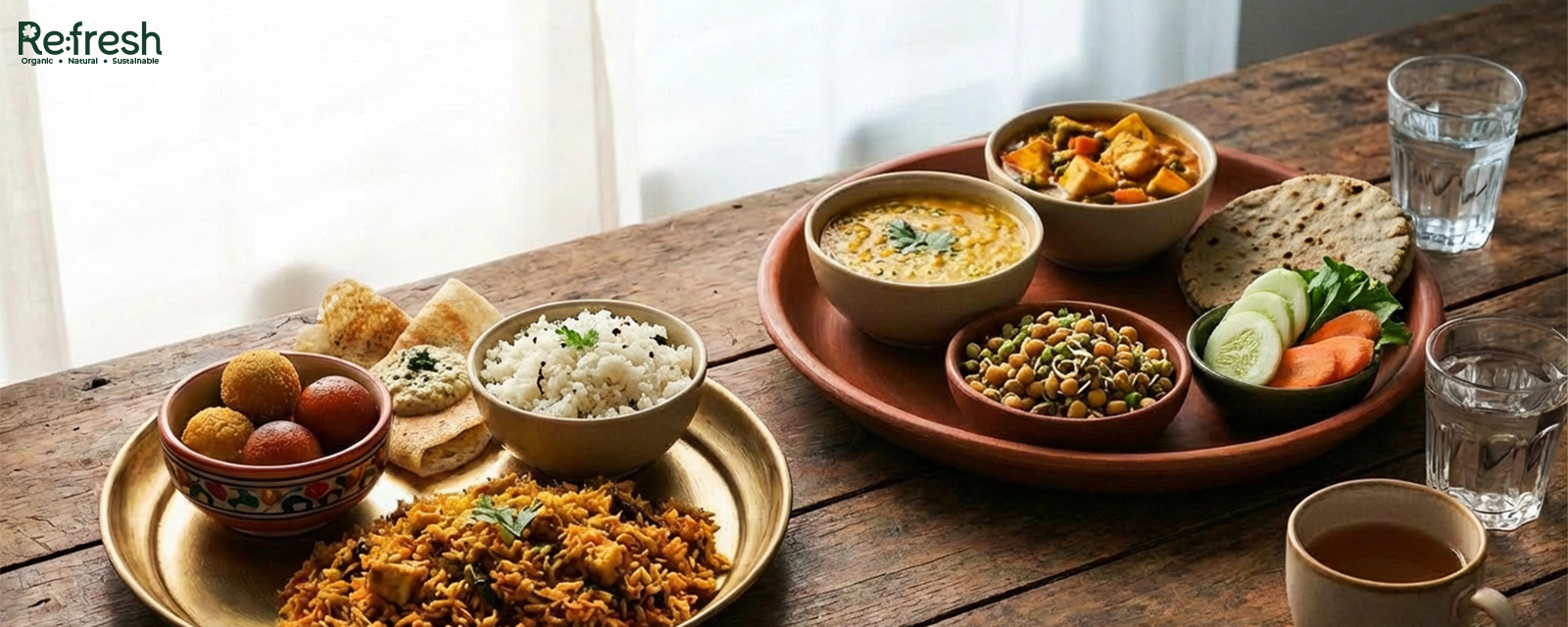
How to reduce Post-Meal Sugar Cravings?
You don’t need to completely cut out sweets, as that may hamper your mood and productivity.
Focus on small and effective shifts to build a stronger balance in your life.
- Improve your meal composition by including protein sources like dal, paneer, tofu, and fibre-rich vegetables.
- Even mild dehydration can mimic post-meal sugar cravings. Stay hydrated and aim for 2-3 litres of water a day.
- Build a proper sleep schedule, as poor sleep increases hunger hormones and leads to higher sugar cravings
- Work on a stronger willpower by dissociating sugar from reward.
The Bottom Line
Post-meal cravings aren’t just something you can get rid of in a day, it require a multifunctional approach.
Your body is reacting to unstable blood sugar, low protein diet, or struggling from a learned sugar equals to reward behaviour.
Fix your meal timings and add more protein while following a healthy sleep schedule and adequate hydration.
Balance your plate, and your biology starts working with you, not against you.
Read More From Naturopedia
How Walking Can Lower Your Blood Pressure in Just 15 Minutes, According to Experts
Best Diet for PCOS and PCOD to Manage Weight, Periods, and Hormones
How Ultra-Processed Foods are Fueling India’s Obesity and Diabetes Crisis
-

You're Probably Storing These 10 Everyday Foods the Wrong Way
August 19th, 2026 -
 August 17th, 2026
 -

Organic vs Regular Spices: Are Organic Spices Really Better?
August 14th, 2026 -

What Did Lord Krishna Really Eat? 7 Favorite Foods for Janmashtami
August 12th, 2026 -
 August 10th, 2026