
Are Oats Really Healthy? 6 Science-Backed Benefits of Oatmeal You Should Know
For years, oats have been marketed as the “perfect healthy breakfast” but are oats really healthy for you?
From overnight oats and protein oatmeal to oats chilla, oats are everywhere in Indian breakfast plates.
Oats can absolutely be a nutrient-rich breakfast option - especially when you choose minimally processed varieties like rolled oats or steel cut oats.
If you’ve ever wondered whether oats hype is real or just another wellness trend, this one's for you.
In this blog, we’re breaking down the actual health benefits of oats, the best types of oats, and whether oats really help in calorie control.
What Are Oats Made Up Of?
Oats (Avena sativa) are whole grains, primarily made up of complex carbohydrates, plant-based protein, healthy fats, and high amounts of soluble fiber (especially beta-glucan).
They are packed with vitamins like B1, magnesium, iron, phosphorus, zinc, and antioxidants that support heart health, digestion, satiety, and energy levels.
One cup (81 g) of rolled oats provides 10.7 g of protein, making it a great vegetarian source of protein.
Unlike refined breakfast cereals, oats retain much of their bran and germ, which is why they provide better satiety and slower energy release.
This combination makes oatmeal a balanced breakfast choice for many people.
6 Health Benefits of Oatmeal:
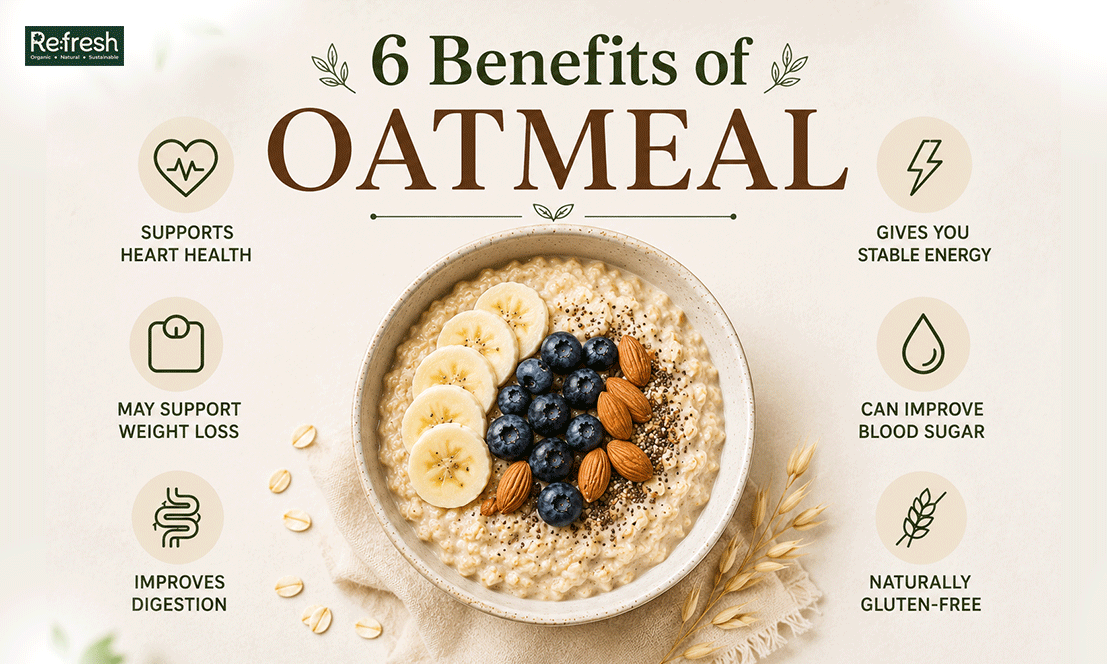
Oats Support Heart Health
Oats contain a powerful type of fiber, a soluble fiber called beta-glucan that forms a gel-like substance in the digestive tract that helps remove “LDL” or bad cholesterol from the body.
A review published in the American Journal of Clinical Nutrition (PubMed) found that consuming oat beta-glucan can reduce LDL (“bad”) cholesterol by around 7% on average.
Oats also contain antioxidants called avenanthramides, which may help reduce inflammation and support healthy blood circulation.
As oats digest slowly, they help you feel satiated for long, stabilizing blood sugar levels, which is important for long-term heart health.
Oats May Support Weight Loss
One of the biggest benefits of oats is their ability to increase fullness and help in appetite management.
The starch in oats is of three types:
- Rapidly digested starch: This type is quickly broken down into glucose.
- Slowly digested starch: This form is broken down and absorbed more slowly. This is the most common type of starch found in oats.
- Resistant starch: This type functions like fiber, escaping digestion and becoming a feast for your good gut bacteria. Great for gut health.
Many people also consume oats with milk for weight loss because the protein in milk further improves satiety, reducing unnecessary snacking.
Read More: High Protein Summer Salad with 55g Protein | Refresh Your Life
This makes oats useful for calorie control and appetite management.
Oats Improve Digestion
The beta-glucan in oatmeal is a prebiotic that supports healthy bowel movements and feeds beneficial gut bacteria like Lactobacillus and Bifidobacterium.
For most healthy adults, around 40-60 grams of oats per day is considered a balanced amount for daily consumption.
If your diet is low in fibre, adding oats gradually and drinking enough water can improve your digestion.
A healthy gut microbiome is now linked to everything from better immunity to improved mood and mental clarity.
Oats Give You Stable Energy Levels
Unlike sugary breakfast cereals that spike your blood sugar quickly, oats release energy gradually due to their complex carbohydrates and fiber content.
The complex carbohydrates and fibre in oats may help maintain stable energy levels and reduce frequent hunger cravings.
This is one reason oats are often recommended as a breakfast food for sustained focus, productivity, and appetite control.
Oats Can Improve Blood Sugar
Frequent high blood sugar levels can increase your risk of type 2 diabetes and can affect almost every major organ system in the body.
Type 2 diabetes usually results from decreased sensitivity to the hormone insulin.
One of the biggest problems is that excess glucose damages blood vessels and nerves, increasing the risk of conditions like heart disease, stroke, kidney disease, and nerve damage.
Oats can help lower your blood sugar levels due to beta-glucan, which forms a thick gel that delays the emptying of the stomach and glucose absorption.
Oats Are Naturally Gluten-Free
Pure oats are naturally gluten-free and may be suitable for many people with celiac disease, provided they are certified gluten-free. Though contamination can occur if oats are processed with wheat or rye.
This is why people sensitive to gluten often prefer certified gluten-free oats for safer consumption.
How to Add Oats in Your Diet?
Oats are incredibly versatile and can be used in both sweet and savoury meals, making them easier to consume consistently as part of a healthy diet.
From classic overnight oats to high protein oats recipes, there are countless ways to enjoy them throughout the day.
Some of the best ways to eat oats include:
- Overnight oats with milk, nuts, and chia seeds
- Protein oatmeal with Greek yogurt or protein powder
- Oats and milk breakfast bowls
- Rolled oats smoothies
- Oats chilla with vegetables
- Oats pancakes
- Savoury oats recipes with paneer and spices
Because oats are so adaptable, they fit easily into weight loss diets, fitness meals, and quick breakfast routines.
If you want to make the most of these recipes, starting with a clean, organic base helps - you can find certified organic rolled oats and other organic breakfast options at Refreshyourlife.
Rolled Oats vs Steel Cut Oats vs Instant Oats
Not all oat products are equally healthy because processing levels vary.
The type of oats you choose can affect texture, cooking time, digestion, and overall nutrition. Let’s understand each.
- Steel Cut Oats: Steel cut oats are the least processed form of oats with a chewy texture. They take longer to cook, and usually have a lower glycaemic response because they digest more slowly.
- Rolled Oats: Rolled oats are steamed and flattened for faster cooking while still retaining most of their nutrition. They offer a good balance of convenience, texture, and fibre, making them ideal for overnight oats, oatmeal bowls, and high protein oatmeal recipes.
- Instant Oats: Instant oats are the most processed type. They cook quickly but digest faster and often contain added sugar, flavouring, or preservatives in packaged varieties.
For most people trying to juggle life with responsibilities, rolled oats provide the best combination of nutrition, convenience, and versatility.
The Bottom Line:
So, are oats really healthy? Absolutely — and scientific evidence supports this.
From heart health and blood sugar balance to weight management and gut support, oats health benefits are backed by decades of solid nutritional science.
To make your oatmeal more balanced and filling, combine oats with protein, healthy fats, and fibre-rich toppings.
Balanced oatmeal meals containing protein, fibre, and healthy fats can improve satiety and overall meal quality.
The key is to choose minimally processed varieties like organic rolled oats from Refreshyourlife, pair them well, and make them a consistent part of your routine rather than a short-lived trend.
Frequently Asked Questions:
-

You're Probably Storing These 10 Everyday Foods the Wrong Way
August 19th, 2026 -
 August 17th, 2026
 -

Organic vs Regular Spices: Are Organic Spices Really Better?
August 14th, 2026 -

What Did Lord Krishna Really Eat? 7 Favorite Foods for Janmashtami
August 12th, 2026 -
 August 10th, 2026