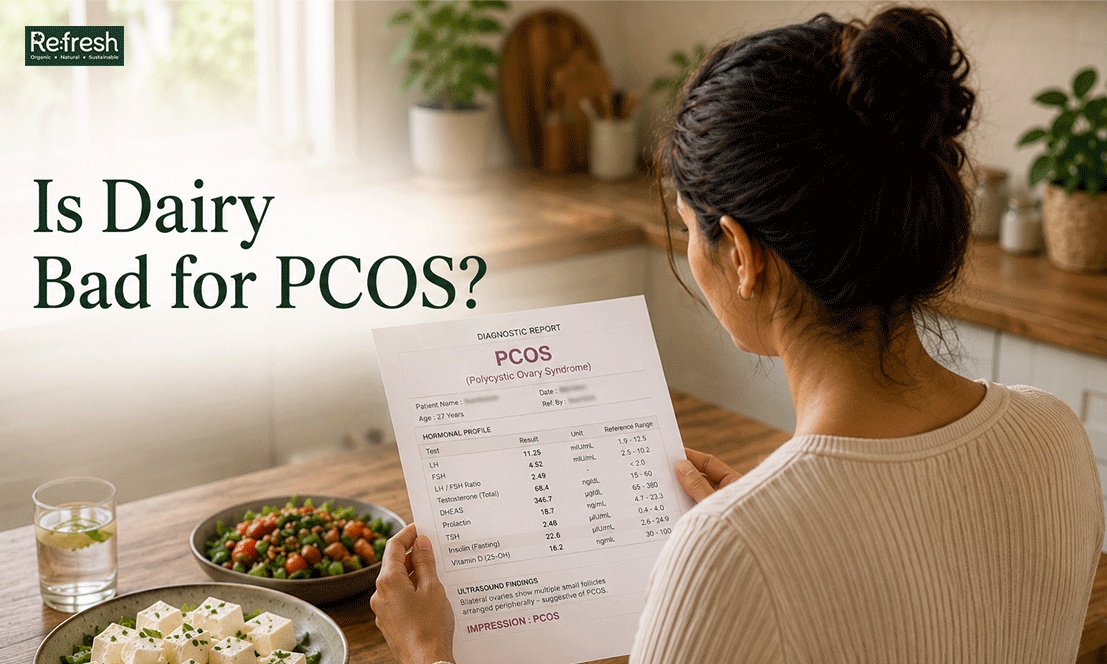
Is Dairy Bad for PCOS? Here's What the Science Says
You must have heard health influencers say on Instagram “Cut out dairy immediately.”
Polycystic ovary syndrome (PCOS) affects 170 million women during their reproductive years alone.
And many women in the comments report how their skin cleared, their cycles regulated, and their life transformed - all because they gave up milk.
Sounds convincing, right?
But here’s the thing: science tells a different story and we’ve gathered the evidence to give you the exact story.
If you have PCOS (polycystic ovary syndrome) or PMOS - and you're wondering whether you need to say goodbye to your morning chai, your dahi, and your paneer for good, read this blog first.
What Is PMOS (PCOS) and Why Does Diet Matter?
PCOS or Polycystic Ovarian Syndrome is one of the most common hormonal conditions affecting every 1 in 10 women of reproductive age worldwide.
However, after a multistep global consensus process recognising that the condition is much more complex than just an ovarian disorder or irregular periods, the name was changed to PMOS.
Polyendocrine Metabolic Ovarian Syndrome is a metabolic and hormonal condition - not just a “period problem” and most women with PMOS deal with a combination of insulin resistance, endocrine disorders, metabolic dysfunction, elevated androgens (male hormones), inflammation, and disrupted ovulation.
PMOS affects multiple hormonal systems, metabolism, and long-term overall well-being of women.
PMOS Symptoms in Females
PCOS symptoms often start around the first menstrual period or they may also develop later as you age.
The symptoms of PCOS vary based on individual biological conditions.
Some people with PCOS may have very severe symptoms, while others have mild symptoms or no symptoms at all.
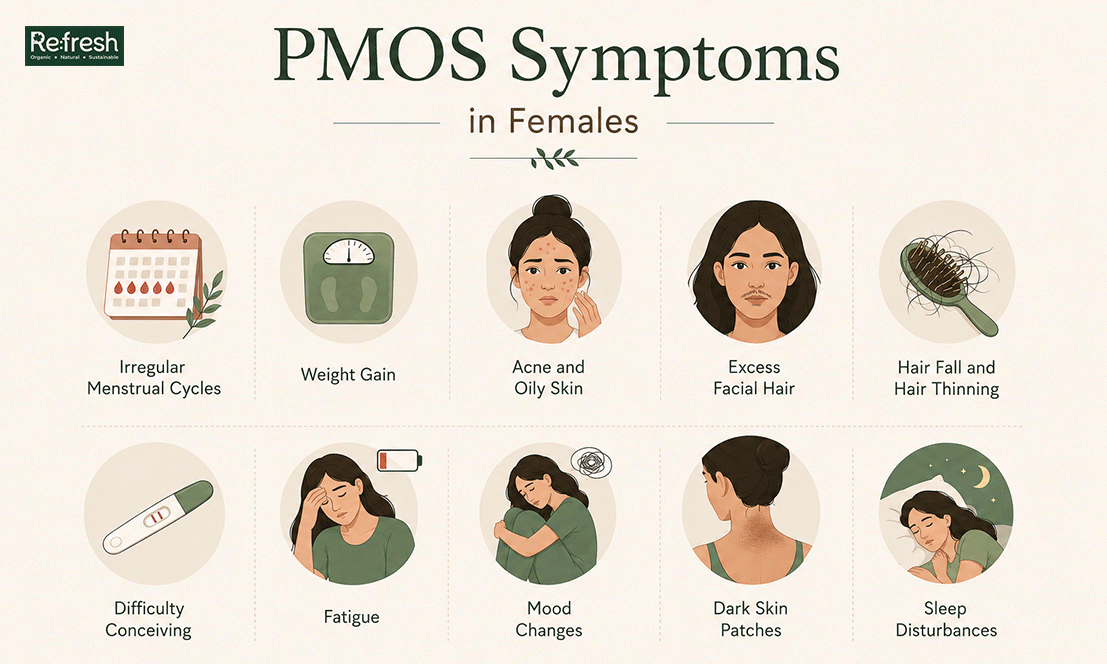
A diagnosis of PCOS or PMOS is made when you have at least two of these symptoms:
- Irregular Menstrual Cycles
- Weight Gain
- Acne and Oily Skin
- Excess Facial Hair
- Hair Fall and Hair Thinning
- Difficulty Conceiving
- Fatigue
- Mood Changes
- Dark Skin Patches
- Sleep Disturbances
PMOS symptoms are generally more serious in people with obesity.
Use an ovulation calendar and track your pms symptoms along with the period cycle to decide if you should see a gynecologist.
Since PMOS is an endocrine and metabolic disorder, your diet matters and almost every one of these factors is influenced by what you eat.
How Dairy Affects PCOS - The Science Behind It
Let’s analyse the relationship between dairy and PCOS with some scientific evidence.
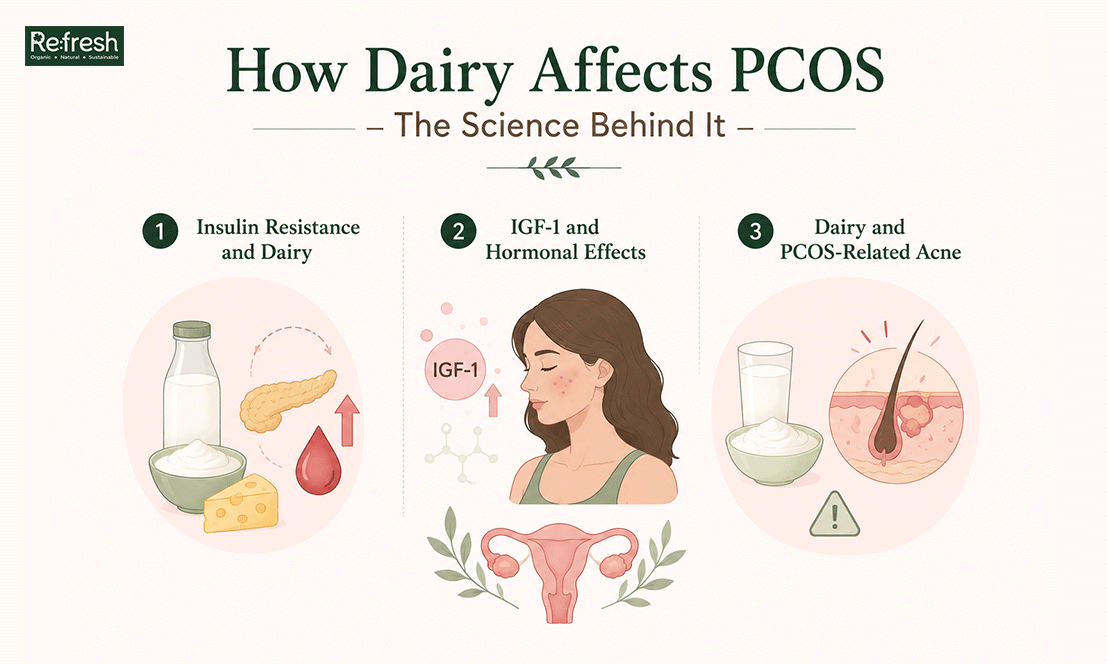
Insulin Resistance and Dairy:
Insulin resistance is one of the most common symptoms present in women with PCOS, regardless of their body weight.
This condition occurs when your cells stop responding to insulin and the pancreas increases the production, raising insulin levels, which in turn stimulates the ovaries to produce more androgens.
So what does dairy have to do with it?
A systematic review of the relationship between dairy intake and insulin resistance found that the relationship is not straightforward.
While full-fat dairy may support insulin sensitivity, flavoured dairy products with added sugar may worsen metabolic health markers.
Dairy products with high amounts of sugar, frozen desserts, flavoured yogurts, flavoured milk, and condensed milk are likely more disruptive than plain dahi or a glass of whole milk because of their added sugar content.
IGF-1 and Hormonal Effects
Milk naturally contains nutrients and proteins that can slightly increase a hormone in the body called IGF-1 (Insulin-like Growth Factor-1).
IGF-1 is a growth and development hormone, but it can also interact with hormones involved in acne and oil production.
This may be one of the reasons that certain women with PCOS notice worse acne or oily skin after consuming large amounts of milk, especially skim milk.
However, the research is still mixed, and scientists do not currently agree that dairy directly worsens PCOS symptoms in everyone.
Women who already have high androgen levels - which can cause symptoms like acne, facial hair growth, or irregular periods - may try reducing dairy and monitoring the effects.
Dairy and PCOS-Related Acne:
Women with irregular periods find acne to be one of the most distressing symptoms of PCOS, and many feel that dairy worsens their acne.
A meta-analysis on dairy intake and acne vulgaris found that skim milk and low-fat milk showed a stronger association with acne than full-fat or fermented dairy options like curd or kefir.
It may happen as IGF-1 hormone can increase sebaceous gland activity, especially in women with PCOS.
You can try reducing your intake of skimmed milk and analyse the effect after a few weeks.
Read More: Best Diet for PCOS and PCOD to Manage Weight, Periods, and Hormones
Which Dairy Is Actually Safe for PCOS?
When we say “dairy is bad for PCOS,” we villainise an entire food group and treat all dairy products the same - even though research shows different types of dairy may affect hormones, insulin resistance, acne, and the menstrual cycle differently.
Some dietary changes for PCOS may lead to improvements in metabolic health markers, but the overall evidence quality is still considered moderate-to-low.
What matters more is the type of dairy you consume and how your body responds to it.
Sweetened and processed dairy products - such as flavoured milkshakes, flavoured yogurts, sweetened lassi, and condensed milk - tend to contain higher amounts of added sugar and may contribute to larger blood sugar and insulin spikes, which can be relevant for women managing PCOS symptoms, irregular periods, PMS symptoms, or weight gain.
- Skim and low-fat milk have shown a stronger association with acne in some observational studies. Try reducing your intake and talk to your gynaecologist to understand its impact.
- Full-fat dairy can be consumed in moderation as studies have linked it to better insulin sensitivity and improved ovulatory health.
- Fermented dairy products like plain dahi and unsweetened kefir may support gut health and are often better tolerated by some women with PCOS, especially those dealing with inflammation, digestive discomfort, or menstrual cramps.
- Ghee and paneer are natural sources of diverse nutrients and protein for vegetarians and you can include them in a balanced diet (if you don’t have an issue).
If you're looking for a pure, certified option like traditional bilona method A2 cow ghee, free from chemicals and additives - explore Refreshyourlife’s wide collection that fits naturally into a PMOS-supportive diet.
So the real question is not simply, “Should I stop dairy for PCOS?” The more useful question is: “What kind of dairy am I consuming - and how does it affect my hormones, acne, ovulation, menstrual cycle, and overall health?”
Fermented Dairy and Gut Health in PCOS:
Fermented dairy products like curd or yogurt may be a suitable dairy option for many women with PCOS.
A systematic review on probiotics, prebiotics, and synbiotics in PCOS found that probiotic interventions may improve insulin sensitivity markers, inflammation markers, and gut microbiome composition in women with PCOS.
Fermented dairy products like plain dahi, yogurt, kombucha may contain live cultures, depending on processing.
Keeping your gut healthy may play a role in PCOS symptoms, and fermented foods like dahi may help support microbial diversity and gut health.
This is especially relevant in the Indian context, where plain dahi has been a part of the meal for generations.
If you're looking for organic, certified dairy-adjacent options - including A2 ghee, organic millets, or clean grocery staples that support an anti-inflammatory lifestyle - you can explore verified products at Refreshyourlife, where every listing is certified and curated.
Worth Considering if You Have PCOS:
- If you have significant acne: reducing dairy intake for 6–8 weeks under professional guidance may help identify whether dairy worsens your symptoms.
- If you have severe insulin resistance: some individuals may prefer experimenting with lower dairy intake alongside a low glycaemic diet under professional guidance.
- If you have lactose intolerance: this is separate from PCOS - but discomfort from dairy is a valid reason to reduce it.
The Bottom Line:
The honest answer to “is dairy bad for PCOS?” depends on the type of dairy, the overall quality of your diet, and your individual symptoms.
Fermented and minimally processed dairy - especially plain dahi - may fit well into a balanced PCOS-friendly diet for many individuals.
Sweetened and highly processed dairy products should be consumed in moderation, particularly in people managing insulin resistance or acne.
And above all, obsessing over one single food is rarely the most powerful approach, because PMOS is a complicated metabolic disorder.
Getting enough sleep, managing stress, staying active, and eating a broadly balanced diet will likely have a larger impact on metabolic and hormonal health than eliminating one food group alone.
Frequently Asked Questions
-

You're Probably Storing These 10 Everyday Foods the Wrong Way
August 19th, 2026 -
 August 17th, 2026
 -

Organic vs Regular Spices: Are Organic Spices Really Better?
August 14th, 2026 -

What Did Lord Krishna Really Eat? 7 Favorite Foods for Janmashtami
August 12th, 2026 -
 August 10th, 2026