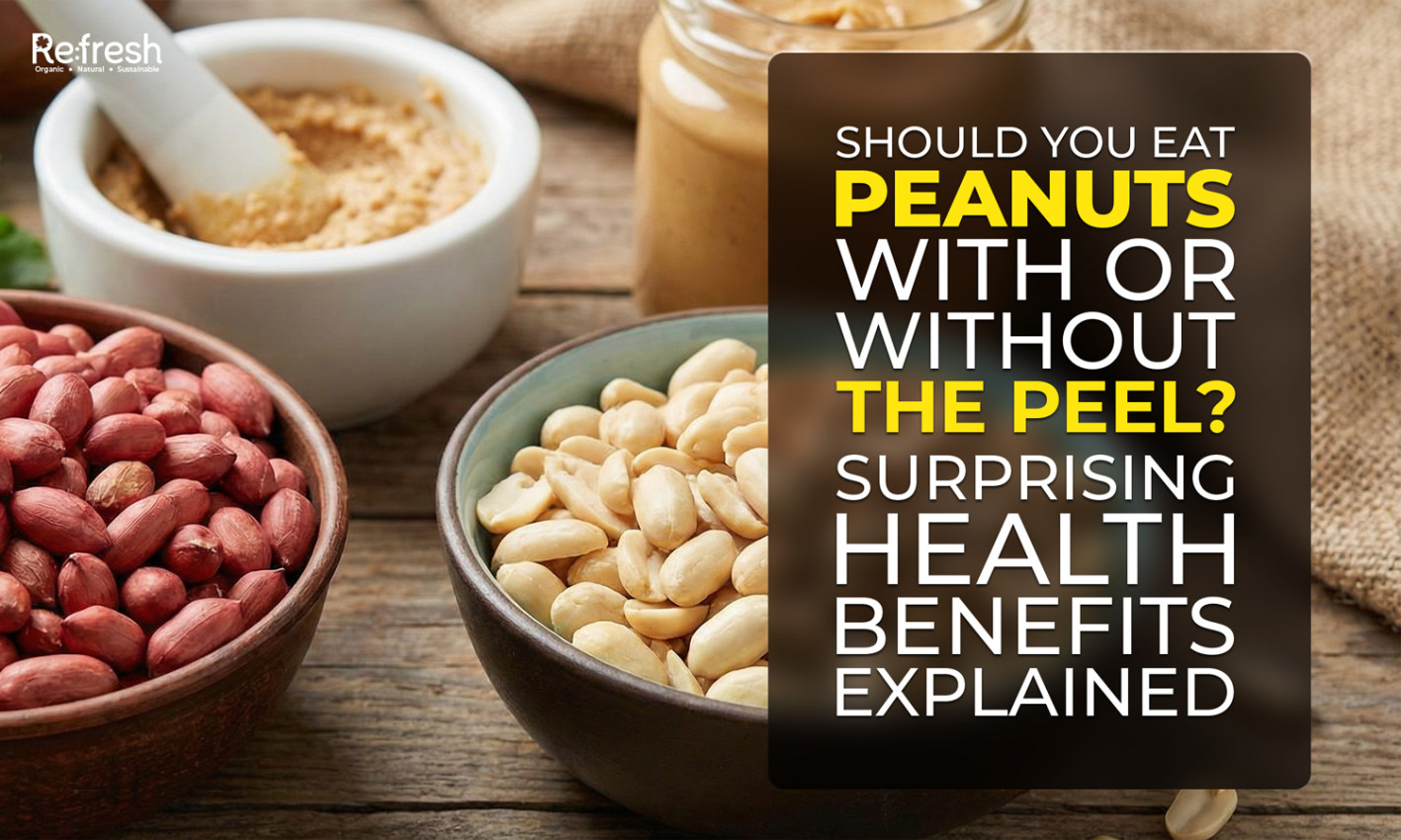
Should You Eat Peanuts With or Without the Peel? Surprising Health Benefits Explained
Peanuts or groundnuts have become an ideal healthy snack option for most people in India.
They are crunchy, protein-rich, and you can find them in many popular Indian dishes. We often discard the peanut peel.
But should you eat peanuts with or without their peel? Many people don’t know that the reddish-brown skin is packed with nutrients and has many health benefits.
In this blog, we break down the science, peanut benefits, drawbacks, and practical tips so you can eat peanuts the right way for your health.
How Healthy are Peanuts?
Organic Peanuts are nutrient-dense, being a powerful source of plant protein, healthy fats, fiber, vitamins, minerals, and bioactive compounds.
While the groundnut kernel is what we eat the most, the peanut peel benefits the micronutrient and antioxidant profile.
Nutritional Profile of 100 g of peanuts (1)
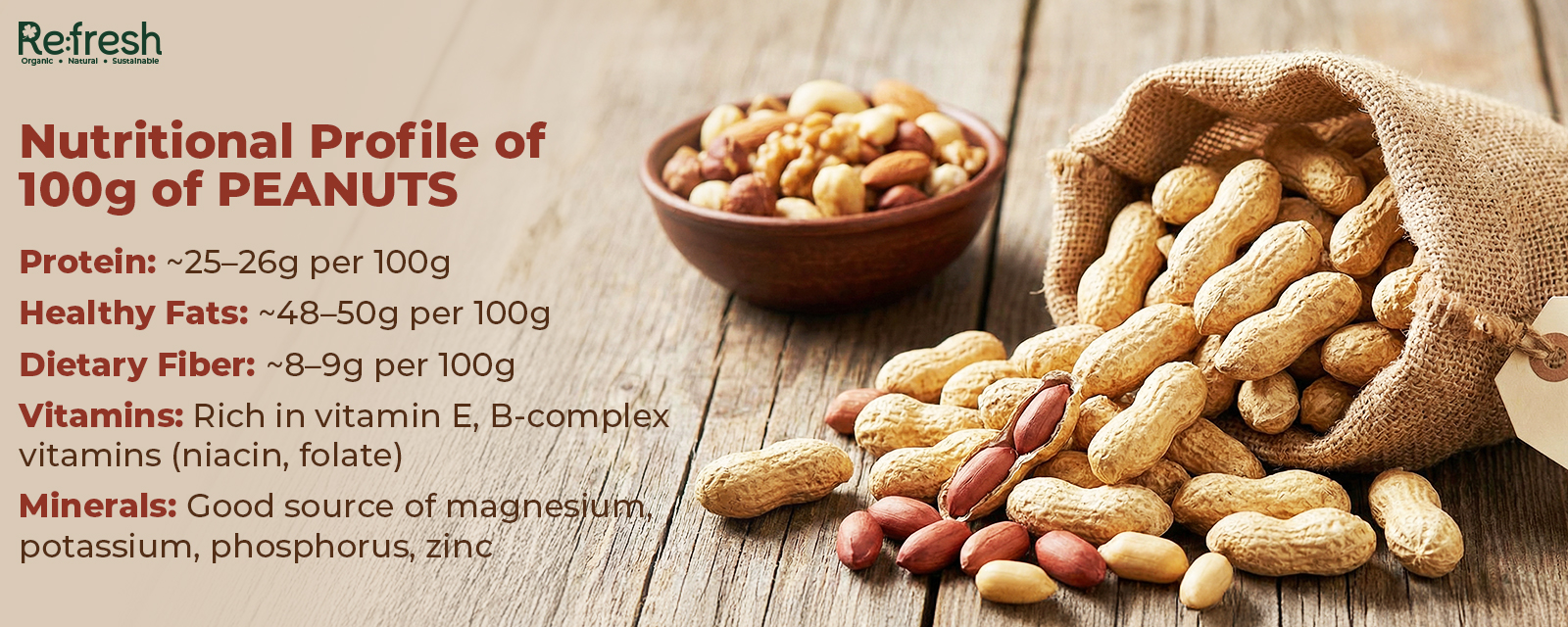
- Protein: ~25–26 g per 100 g, supporting muscle health and satiety
- Healthy fats: ~48–50 g per 100 g, mainly monounsaturated and polyunsaturated fats that support heart health
- Dietary fiber: ~8–9 g per 100 g, with additional fiber contributed by the peel
- Vitamins: Rich in vitamin E, B-complex vitamins (niacin, folate)
- Minerals: Good source of magnesium, potassium, phosphorus, zinc
Peanuts are high in fats; in fact, most peanuts are grown to make groundnut oil.
Organic peanut butter is also a great source of vegan protein and diverse nutrients.
Is Peanut Peel healthy?
The reddish skin of the peanuts is especially rich in:
- Polyphenols and flavonoids (powerful antioxidants)
- Resveratrol, a compound also found in grapes and berries
- Tannins, which contribute antioxidant and anti-inflammatory effects
Antioxidants help our bodies reduce oxidative stress, support gut health, improve metabolic health, and strengthen the body’s natural defense system.
Research shows that most of the antioxidants in peanuts are in their skin.
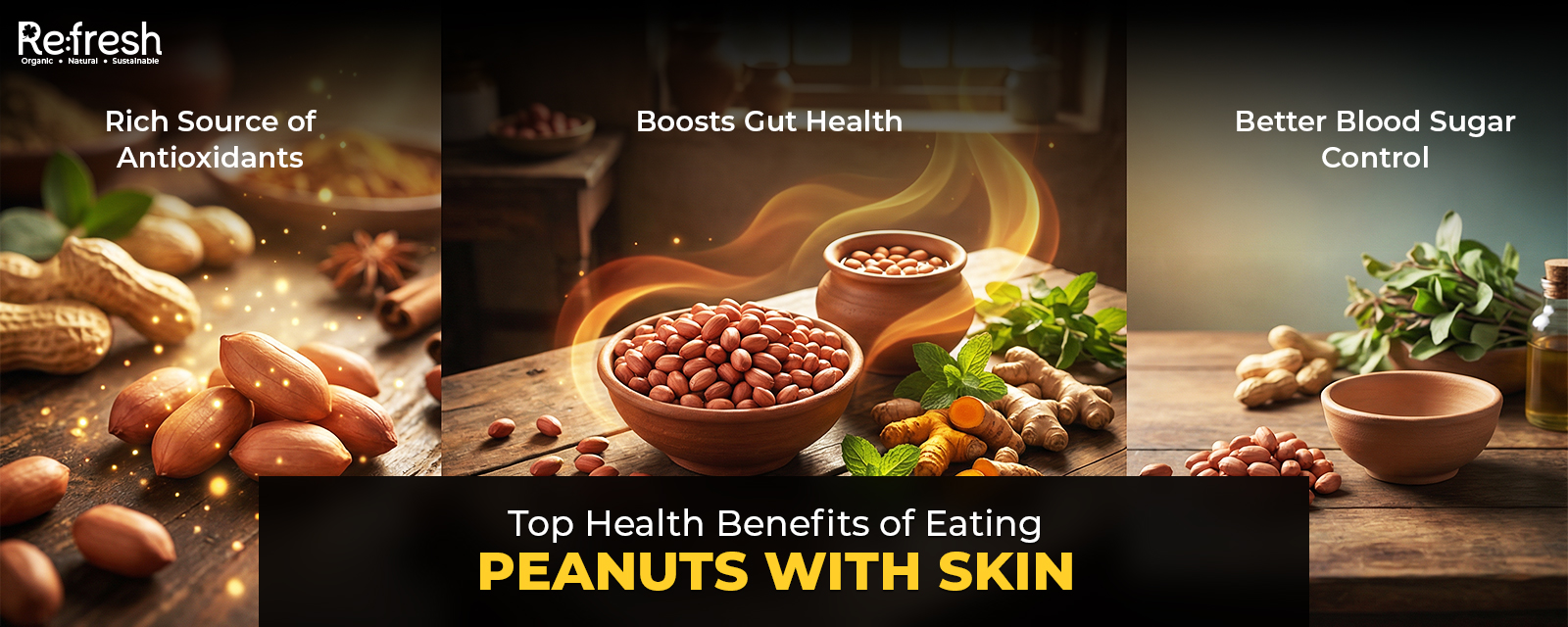
Top Health Benefits of Eating Peanuts With Skin:
-
Rich Source of Antioxidants:
Peanut skin contains loads of antioxidants like polyphenols, resveratrol, and flavonoids that help neutralize excessive free radicals in your body. (1)
An antioxidant-rich diet is linked to a 15-20% reduced risk of coronary heart disease and other cardiovascular diseases. (1)
Peanuts have antioxidants as abundant as green tea and grape skins, indicating strong potential for health benefits.
-
Boosts Gut Health:
Peanut skin has dietary fiber that feeds the good gut bacteria and supports regular bowel movements.
When the beneficial bacteria feed on fermented fiber, they produce SCFAs like butyrate, which:
- Nourish colon cells
- Strengthen the gut lining
- Reduce inflammation in the colon
Regular consumption of dietary fiber, especially from peanut skin, can help you prevent constipation and snack guilt-free.
-
Better Blood Sugar Control:
Nuts, especially peanuts, provide healthy fats and protein, protecting your heart from unnecessary strain.
Fiber with antioxidants from peanut skin slows carbohydrate absorption.
Peanuts are also a rich source of niacin or vitamin B3, which has been linked to heart disease. (1)
Read More: Gut Health Expert Explains The Right Way To Eat Chia Seeds
Things to Consider Before Eating Peanut Peel:
While peanut skins are nutritious, they’re not for everyone. Here are some limitations of peanut skin.
-
Bitter Flavor:
Most people find peanut skin to be bitter in taste, which can affect the overall enjoyment of having peanuts.
-
Digestive Sensitivity:
If you have a sensitive stomach or IBS symptoms, adding extra fiber can cause you mild bloating.
-
Allergies:
Allergy to peanuts is a common concern, and better to avoid peanuts entirely if you’re allergic.
The Bottom Line:
Having peanuts with skin is scientifically proven to improve your intake of varied nutrients and essential antioxidants.
Choose unsalted or lightly roasted peanuts with their skin for maximum health benefits.
Start with small servings if you’ve never eaten peanut skin. You can also pair them with fruit, yogurt, or salads for a balanced snack.
However, personal preference and digestive tolerance matter - if the skin upsets your stomach or taste buds, peeled peanuts still offer excellent nutrition.
Ultimately, choose the option that keeps peanuts enjoyable and beneficial for your daily diet.
-

You're Probably Storing These 10 Everyday Foods the Wrong Way
August 19th, 2026 -
 August 17th, 2026
 -

Organic vs Regular Spices: Are Organic Spices Really Better?
August 14th, 2026 -

What Did Lord Krishna Really Eat? 7 Favorite Foods for Janmashtami
August 12th, 2026 -
 August 10th, 2026