
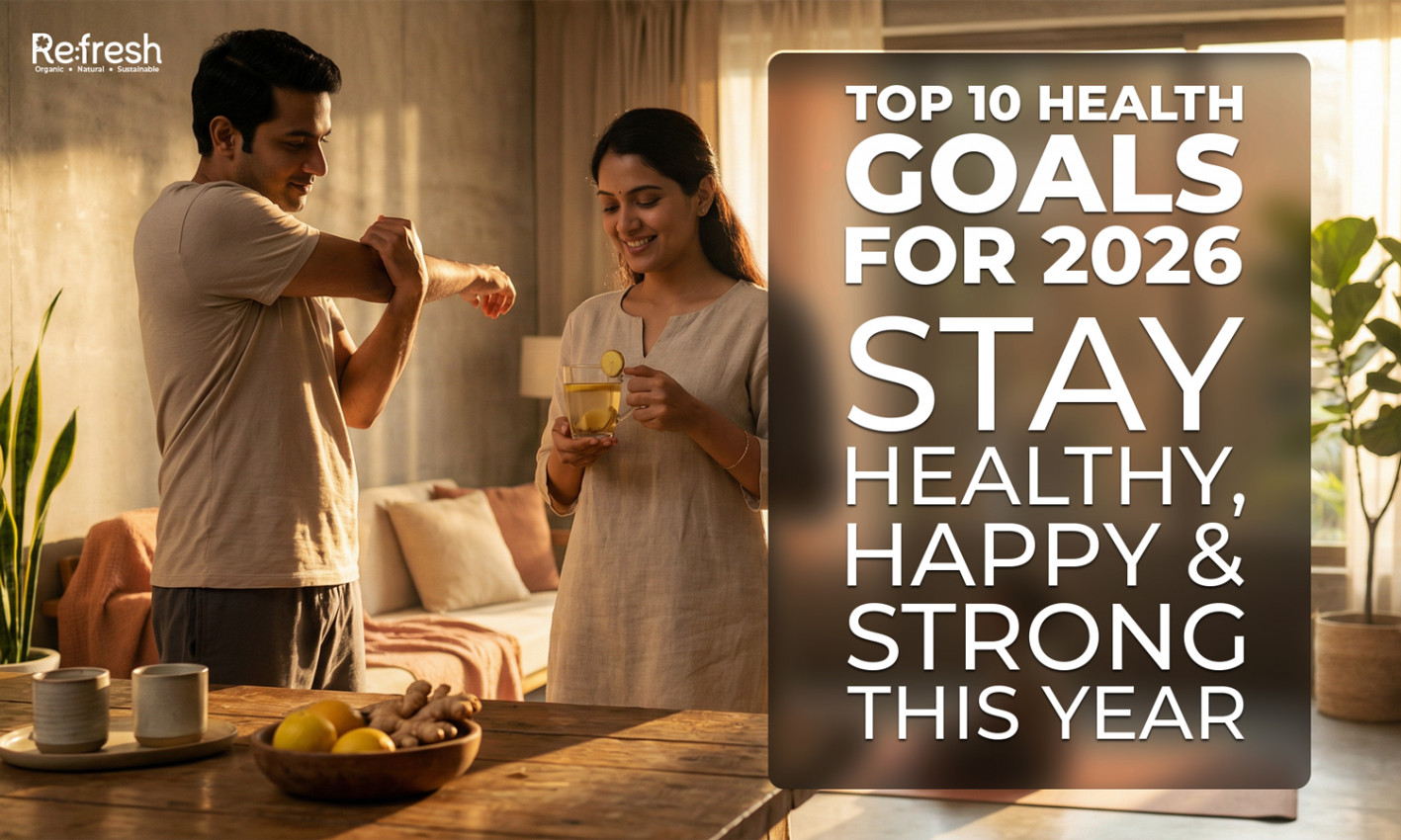
Top 10 Health Goals for 2026: Stay Healthy, Happy & Strong This Year
2026 is here, and this can be the turning point of your life if you set smart health goals - helping you care for your body, mind, and overall well-being.
With an ever-changing lifestyle and rising stress levels, your body needs a schedule to perform its best.
In the new year 2026, you can adopt practical habits that nurture both physical and mental health.
In this blog, we give your top 12 health goals and how to keep them - the right way.

1. Prioritize Daily Physical Activity:
Physical activity is one of the best goals you can achieve to boost your health and reduce your risk of cardiovascular disease.
Why it matters: Exercise has powerful health benefits like strengthening muscles and bones, reducing stress, boosting immunity, and helping maintain a healthy weight.
How to do it:
Whether it’s walking, yoga, gym workouts, sports, or dancing, you can choose any type of movement and be consistent with your workout.
- Aim for 30 minutes of moderate exercise daily.
- Use step goals (e.g., 8,000 steps/day).
- Try strength training twice a week.
Avoid overexerting yourself and start small, like 5 minutes and a 10-minute walk.
2. Eat a Balanced, Whole-Food Diet:
A balanced, nutritious diet fuels your energy, supports immunity, and helps your body function at its best.
Why it matters: A variety of nutritious foods provides essential vitamins, minerals, antioxidants, and fiber that protect your heart, support digestion, balance weight, and reduce the risk of chronic diseases.
How to do it:
Plan simple, realistic meals instead of strict crash diets by filling your plate with diverse colors from all food groups.
- Fill half your plate with seasonal vegetables at major meals.
- Include lean proteins like milk products, pulses, lentils, eggs, chicken, or tofu.
- Prefer whole grains such as brown rice, oats, and millets.
- Limit processed foods, packaged snacks, and excess sugar.
Divide your whole plate into 3 parts of protein, vegetables, and whole grains witha source of probiotics to support overall health.
3. Improve Sleep Quality:
Quality sleep is the only way for your brain to rest, repair, and reset after a day of mental activity to recover, and overall health.
During deep sleep, the brain clears waste products, strengthens memory and learning pathways, and restores energy for better focus and decision-making.
Why it matters: Deep sleep supports hormonal balance, improves memory, prevents fatigue, strengthens the immune system, and regulates mood swings.
How to do it:
- Aim for 7–9 hours of sleep daily.
- Maintain a fixed sleep and wake-up routine.
- Avoid screens at least 1 hour before bedtime.
- Create a calm sleep environment - dim lights, cool room, quiet surroundings.
You can try simple bedtime rituals like reading, meditation, journaling, or light stretching.
4. Practice Mindful Stress Management:
Chronic stress is the root cause of multiple health problems, and every 1 in 2 Indians has experienced stress that negatively influenced their daily life.
Managing stress is the single most important gift you can give your body, as it helps improve quality of life and supports a happier body.
Why it matters: Chronic stress affects your heart, digestion, mental health, and overall well-being, leading to burnout and exhaustion if ignored.
How to do it:
- Take short relaxation breaks during the day.
- Practice deep breathing, stretching, journaling, or meditation.
- Spend time in nature to relax your mind.
- Talk to someone you trust when feeling overwhelmed.
- Learn to say no and avoid overburdening yourself.
Starting with just 5 minutes of breathing exercises can calm your nervous system after a long day.
5. Increase Your Water Intake:
Water plays a key role in electrolyte balance, the transportation of nutrients, and body temperature control in the body.
Most people do not consume enough water, and this negatively influences their overall health.
Why it matters: Drinking enough water supports the efficient function of our organs, improves concentration, prevents dehydration, and helps flush toxins from the body.
How to do it:
- Aim for at least 2-3 litres of water every day.
- Start your day with a glass of water.
- Carry a water bottle and take frequent sips.
- Add lemon, mint, or fruits if plain water feels boring.
You should increase or decrease your water intake according to exercise and weather conditions.
6. Focus on Heart Health:
Heart disease cases are rising sharply worldwide, with India becoming the diabetic capital of the world.
A healthy heart supports long life, strong stamina, and better day-to-day functioning.
Why it matters: Improving cardiovascular health reduces the risk of heart disease, stroke, and high blood pressure and improves overall life quality.
How to do it:
- Stay physically active and include cardio exercises like walking or cycling.
- Choose heart-healthy foods: whole grains, nuts, seeds, fruits, and vegetables.
- Limit fried foods and high salt intake.
- Avoid smoking and reduce alcohol.
Invest in a good blood pressure monitor, and get your cholesterol and sugar checked every 6 months.
Read More: Are You at Risk of Heart Disease? Study Links These Foods to a Healthier Heart
7. Prioritize Mental Health:
Between career, family, and life struggles, we often ignore our mental health.
Your mental state defines how you think, take action, feel emotions, and remain calm in harsh life conditions.
Why it matters: A good mental well-being improves emotional stability, resilience, happiness, ability to handle relationships and challenges.
How to do it:
- Make time for hobbies and activities you love.
- Stay connected with friends and family.
- Practice gratitude regularly.
- Allow yourself to rest without guilt.
Sometimes, our willpower to improve isn’t enough to handle some mental conditions, and you should definitely seek professional help when needed.
8. Reduce Screen Time:
Worldwide, the average person spends a total of 6 hours and 38 minutes looking at a screen each day. (1)
More screen time increases damage to your eyes, brain rot, deteriorating mental health, and a bad posture.
Why it matters: Excess screen time leads to eye strain, poor sleep, neck pain, and increased anxiety due to constant digital exposure.
How to do it:
- Set limits for social media and entertainment.
- Take short breaks every 30 - 40 minutes.
- Avoid screens before bedtime.
- Replace screen time with reading, hobbies, or walking.
You can follow a 20-20-20 rule to reduce eye strain; every 20 mins, look 20 feet away for 20 seconds.
9. Quit Unhealthy Habits:
If you let go of your unhealthy habits, you can have a healthy 2026.
Most people are stuck in a loop of habits that drain our energy, keep us un-motivated and procrastinate on every important task.
Why it matters: Reducing smoking, alcohol, junk food, or late-night habits protects your lungs, liver, heart, brain, and overall well-being.
How to do it:
- Identify your triggers and gradually cut back.
- Replace harmful habits with healthier alternatives.
- Seek support from friends, family, or experts.
- Track progress to stay motivated.
Habits like smoking and alcoholism take the longest time to go away, but make sure you choose your health this year.
10. Schedule Regular Health Checkups:
Diseases don’t pop up immediately; they’re a result of long-term ignorance of signs and symptoms.
Preventive health care helps detect problems early and keeps you aware of your health status.
Why it matters: Early detection helps prevent complications, ensures timely treatment, and keeps your health on track.
How to do it:
- Get annual health checkups.
- Monitor blood sugar, BP, cholesterol, and weight.
- Follow your doctor’s guidance when needed.
- Keep records of your health reports.
For starters, you can get a full-body test done to understand the basics of your health and where you need to focus.
Practical Checklist for 2026 health goals:
Keep this as a quick reference:
- Drink enough water
- 30 minutes of daily activity
- 7-9 hours of quality sleep
- Meditate & manage stress
- Healthy, balanced diet
- Heart health monitoring
- Limit screen time
- Annual health checkups
Print it or save it to track weekly!
The Bottom Line:
The New Year 2026 is an opportunity to reset your life and consciously invest in your physical health, mental strength, and daily well-being.
Follow these 12 practical health goals, and you can create sustainable habits that fit into real life, not just short-term resolutions.
Together, these small yet powerful actions can lead to a healthier, happier, and more balanced life.
Explore More From Naturopedia
What Really Happens When You Shower Right After Eating?
New Research suggests that Viral Infections can Increase Your Risk of Heart Attack and Stroke
Cardiac Arrest or Heart Attack? Know the Warning Signs Before It’s Too Late
-

You're Probably Storing These 10 Everyday Foods the Wrong Way
August 19th, 2026 -
 August 17th, 2026
 -

Organic vs Regular Spices: Are Organic Spices Really Better?
August 14th, 2026 -

What Did Lord Krishna Really Eat? 7 Favorite Foods for Janmashtami
August 12th, 2026 -
 August 10th, 2026