
Cancer Awareness Day 2025: Tests, Signs & Early Detection for All Cancers
Every year on World Cancer Awareness Day, we are reminded of the profound grief that cancer leaves behind for individuals, families, and societies.
In 2022, nearly 20 million new cancer cases and about 9.7 million cancer-related deaths were recorded worldwide.
These figures speak of a global health crisis where early detection is our secret weapon to save lives.
Early diagnosis can help treat cancer successfully before it starts showing symptoms and, therefore, save many families from suffering.
In this blog, we delve into why early detection of cancer is important, the symptoms to watch out for, and the essential screening tests.
How Early Detection Can Save Lives?
The World Health Organization (WHO) emphasizes that with early diagnosis, the best possible care can be provided at the earliest stage.
With later stages, cancer can spread widely in the body, lowering the chances of a successful treatment.
Years of research have shown that half of those cancers are diagnosed at an advanced stage, reducing their access to successful treatment and reducing survival chances. (1)
Early detection can come in two simple terms:
- Cancer Screening: testing people who have no symptoms of cancer to find cancer early.
- Raising awareness of signs and symptoms to ensure access to diagnostic services when symptoms appear.
When both are aligned, early detection can also help people save money spent on advanced cancer treatments.
What tests can help detect or identify cancer?
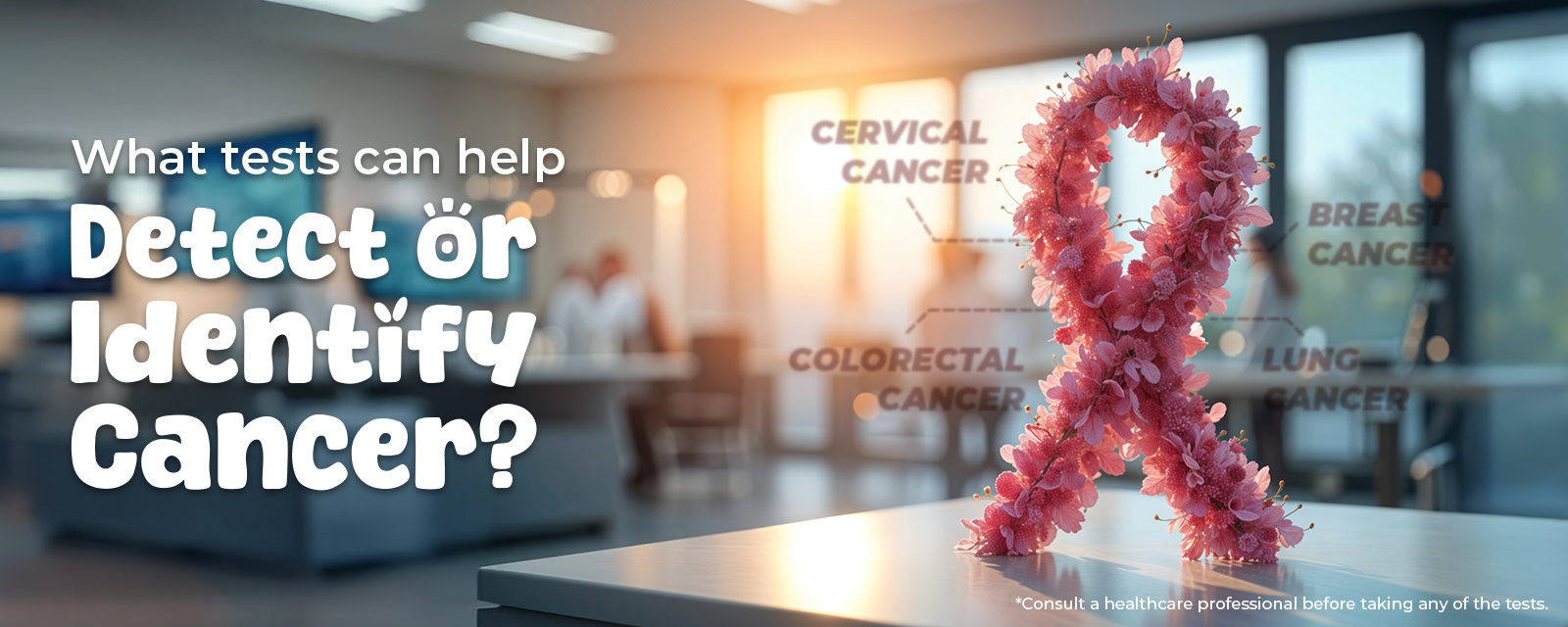
No matter what the internet tells you, there’s no single test to detect all cancers.
Given below are evidence-based screening tests for certain cancer types for early detection:
- Breast cancer:
- Cervical cancer:
- Colorectal cancer:
- Lung cancer:
- Other Cancer tests:
Mammography is the standard test to detect breast cancer, a major type of cancer that affects women.
Experts recommend that women get themselves screened after age 40. Additionally, clinical breast exams and self-exams can aid earlier detection of breast cancer.
For cervical cancer, a pap smear test and human papillomavirus (HPV) testing in women can help detect abnormal cells to prevent this life-threatening cancer.
This test can be taken from the age of 21 to 65, generally for women who have some symptoms, as directed by their physician.
A vital HPV vaccine can also be taken to prevent cervical, vaginal, vulva, penis, anus, and throat cancers. (1)
There are several screening tests to identify any abnormalities in our colon, including colonoscopy, sigmoidoscopy, and stool tests, that can reduce the risk of dying from colon cancer.
People from the age of 45 through 75 are at the highest risk of colorectal cancer and should get regular screening.
Generally, heavy smokers are at risk of lung cancer and should get CT scans to know about their condition.
People with a long history of smoking should definitely get themselves checked for lung cancer.
Several other complementary tests can detect cancers, especially for people at risk.
There is an alpha-fetoprotein blood test to test for liver cancer and a CA-125 test for ovarian cancer.
People should also get their skin examined if they see any drastic change or a condition recurring multiple times.
PSA or prostate-specific antigen can also detect tumor markers in your blood for prostate cancer. However, the risks involved with these tests are far more talked about, and one should always talk to their healthcare provider before making any decision.
Early signs and symptoms that should not be ignored
Although there are no “Clear” early signs of cancer, the symptoms show up gradually as the tumor develops.
Being aware of and observing any major change in your body with timely medical follow-up makes a difference. Some things to watch out for:
- Unexplained weight loss, fatigue, or weakness daily.
- A strange new lump or thickening of muscles in your breasts, testicles, or other soft-tissue area
- Persistent flu, hoarseness, or chest pain lasting for more than a few weeks.
- Changes in your digestion or bladder habits, like blood in stool, prolonged constipation, or diarrhea.
- Unexplained vaginal bleeding
- Persistent swallowing or breathing difficulty
- An injury, burn, or sore that does not heal (on skin or other site)
- Unusual changes in the color or texture of your skin.
It is important to note that these symptoms do not always mean cancer and can be a different problem.
However, a prompt medical follow-up can help you detect the problem and solve it early.
The Bottom Line
Cancer is one of the leading causes of mortality worldwide, but early detection can improve the chances of a successful treatment.
People should know their personal risk profile (age, family history, lifestyle) and seek medical advice if they experience persistent symptoms.
Maintaining a healthy weight, avoiding tobacco and alcohol, staying active, and eating a well-balanced diet to support your overall health.
On this Cancer Awareness Day, early detection isn't just a medical principle - it's a proven lifeline.
Get more authentic information here https://www.cancer.org/cancer/diagnosis-staging.html
Explore more from Naturopedia:
Cardiologist Recommended 5 Heart-Healthy Cooking Oils for Indians ‘backed by science, not trends’
Cardiac Arrest or Heart Attack? Know the Warning Signs Before It’s Too Late
Not Just Alcohol! These 6 habits are Silently Damaging Your Liver!
-

You're Probably Storing These 10 Everyday Foods the Wrong Way
August 19th, 2026 -
 August 17th, 2026
 -

Organic vs Regular Spices: Are Organic Spices Really Better?
August 14th, 2026 -

What Did Lord Krishna Really Eat? 7 Favorite Foods for Janmashtami
August 12th, 2026 -
 August 10th, 2026