
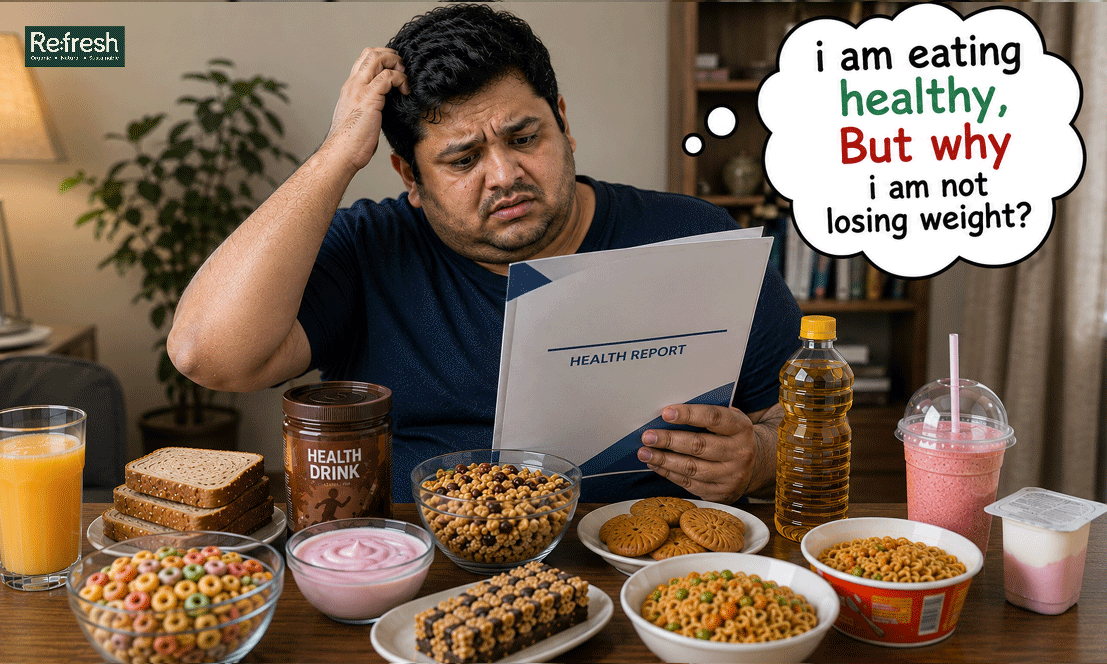
10 Foods Indians Think Are Healthy But Aren't!
Many packaged foods are marketed using terms like “natural”’, “high-protein”, and “healthy”.
But studies have found that such marketing claims can influence customer choices even when the products contain high amounts of sugar, salt, fats, or harmful additives.
There are many foods that Indians consider healthy but contain excess sugar, refined flour, unhealthy fats, or hidden calories.
While these products are not necessarily harmful in moderation, consuming them regularly can derail your fitness goals.
In this blog, we’re breaking down 10 healthy foods that are unhealthy and some of these names might surprise you.
Healthy Foods That Are Unhealthy: 10 Foods Indians Commonly Misjudge
1. Fruit Juices:
The debate around fruit juice vs whole fruit continues for a good reason.
The problem with fruit juice is that squeezing juice out of a fruit removes most of the fiber naturally present in fruit.
Fresh fruit juice contains concentrated natural sugars with much less fiber than whole fruit that hits your bloodstream fast, leading to a rapid rise in blood sugar levels.
A Better Choice: You should consume whole fruits instead of fruit juice.
A single guava (100g) can provide you :
Source: USDAFoodData Central
- 5.4g of dietary fiber (excellent for gut health)
- 2.6g of protein
- 228mg of Vitamin C (253% of your daily value)
- 417mg Potassium (aids in heart health)
- 49µg of folate
This leads to better satiety as more chewing improves fullness and better blood sugar control.
Smart Pick: Some people love convenient and fresh juices and RefreshYourLife’s Cold-pressed juices made from certified organic fruits without artificial preservatives or added sugar is a delicious treat.
2. Multigrain or Brown Bread:
Many consumers think brown bread is healthy because they assume it is made from whole grains but the truth is shocking.
Most commercially sold multigrain bread in India is primarily made from refined flour (maida) with small amounts of oats, flaxseed, or wheat bran mixed in - just enough to earn the "multigrain" label.
One consumer education document notes that “Brown bread” may not be made from atta (whole wheat flour) and just have the name because of the natural caramel color added to it.
It is important to note these ingredients in the label:
- Refined wheat flour listed first
- Added sugar
- Emulsifiers and preservatives
A Better Choice: Look for "100% whole wheat" breads where whole wheat flour is the first ingredient - not just brown-coloured refined flour.
3. Malted Health Drinks:
For decades, Indian moms believed that certain chocolate powders mixed with milk will increase their children’s height and make them healthy.
These popular malted health drinks can contain around 50% added sugar which is not healthy for a growing body.
A landmark 2024 study found that reducing sugar exposure during the first 1,000 days of life - from conception to age 2 - was associated with a 35% lower risk of type 2 diabetes and a 20% lower risk of high blood pressure later in adulthood.
Regular consumption of such sugary drinks can affect gut health, insulin response, and appetite regulation over time.
A Better Choice: You can easily make ragi porridge, banana shake with milk, and many other nutritious recipes available online.
But we know the hassle of making drinks from scratch!
Smart Pick: A child’s morning drink should contain nutritious whole grains, millets, and everything that’s actually healthy for them.
And that’s exactly what this RefreshYourLife’s Organic Chocolate Health Mix has.
Certified organic, sweetened with jaggery, and free from synthetic additives.
4. Flavored Yogurt
When people search for healthy low fat yogurt, they often overlook the amount of flavour and sugar it can have.
Plain yogurt is an excellent source of protein and beneficial bacteria. However, flavored versions frequently contain:
- Added sugar
- Artificial flavors
- Stabilizers
- Thickeners
A single serving of flavored yogurt can contain 4 teaspoons of added sugar with artificial fruit flavours, stabilisers, and thickeners like modified starch or carrageenan.
A Better Choice: Buy plain, unsweetened yogurt and add a spoonful of natural honey, granola, or fresh fruit at home.
5. Refined Vegetable Oils
Refined vegetable oils are often promoted as a heart-friendly alternative to traditional fats.
Vegetable oils are not inherently bad but the process of industrial refining strips away natural nutrients and generates oxidised compounds.
Many refined vegetable oils are particularly high in omega-6 fatty acids.
Since most Indians consume relatively little omega-3 from sources such as fatty fish, flaxseeds, chia seeds, and walnuts, this imbalance may promote low-grade chronic inflammation over time.
In contrast, cold-pressed oils are extracted through a gentle process without high heat and chemicals that preserve their natural nutrients, flavors, and aromas, often preferred by some consumers.
Experts recommend rotating different cold-pressed cooking oils and pairing them with omega-3-rich foods.
Smart Pick: Traditional cooking fats like cold-pressed mustard oil (kachi ghani), coconut oil, and A2 cow ghee are traditional choices commonly used in Indian cooking.
6. Store-bought Granola:
Many people consider granola healthy but you would be surprised to know that most of it is made by coating oats and dried fruits in vegetable oils and significant amounts of added sugar.
Commercial granola often contains:
- Added sugars
- Vegetable oils
- Syrups
- High calorie density
While oats, nuts, and seeds are nutrient-dense ingredients, granola sold in the market is not as “healthy” as you think.
Muesli vs oats vs granola:
Organic Plain Rolled Oats are the cleanest option. Rich in fiber, protein, antioxidants, and amino acids, these versatile grains support heart health, weight management, and healthy living.
If you can find clean muesli and granola with no added sugar, no preservatives or additional additives, that is also a good option.
7. Multigrain Biscuits:
Digestive biscuits are one of the most misleading foods marketed as healthy.
If you read the label carefully, most digestive and multigrain biscuits contain refined wheat flour, palm oil or partially hydrogenated fats, significant sodium, and added sugar - sometimes all four.
If the products contain maida and vegetable oils, they do not provide meaningful fibre and “digestive” is just a marketing claim, not to any meaningful fibre benefit.
As awareness grows, you can find recipes to make homemade healthy cookies on the Internet easily.
But if you love a healthy packet of millet cookies, you’re at the right place.
Smart Pick: Biscuits made from millets (jowar, bajra, ragi) and sweetened with jaggery or coconut sugar are genuinely different.
RefreshYourLife's Organic Cookies feature whole grain biscuits made without maida, refined sugar, or synthetic preservatives.
8. Packaged Fruit Smoothies
Packaged smoothies are positioned as a breakfast option or a post-workout drink, but most drinks are essentially sugars packed with milk.
Store-bought smoothies can contain ingredients you don’t need in a healthy smoothie:
- Concentrated fruit puree
- Added sugars
- Artificial colors and flavours
- Stabilizers
With very little fiber and protein, these smoothies are certainly not as “healthy” as you think.
A homemade smoothie made with whole fruit, plain dahi or yogurt, milk, and no added sugar is a completely healthy recipe.
Smart Pick: Or, if you want a dairy-based drink that's genuinely clean, look for options made from A2 Flavoured Milk with natural flavours and no sulphur-treated sugar.
9. Protein Bars & Energy Bars:
The demand for protein bars has exploded in recent years due to people asking for high-protein snack options.
Commercial protein bars have two problems:
- A large number of “healthy” protein bars can contain up to 10–20 g of added sugar per bar.
- Many protein bars are ultra processed as they can contain protein isolates, sugar alcohols, artificial sweeteners, emulsifiers, flavors, and stabilizers.
Strong research has consistently linked higher UPF consumption to an increased risk of obesity, cardiovascular disease, type 2 diabetes, and other chronic health conditions.
A Better Choice: For real nutrition or a post-workout snack, you can have whole fruits, a bowl of sprouts, roasted peanuts, or plain dahi with fruit.
10. Instant Atta Noodles:
Many people think that choosing instant atta noodles is a significantly healthy alternative to maida noodles.
Whether the label says atta, multigrain, or vegetable, it still contains palm oil, thickeners, and some part refined flour.
Smart Pick: Whole-grain noodles made from wheat or millets such as jowar, ragi, and bajra are genuinely different in fibre content, glycaemic response, and nutritional profile.
No maida, no refined flour base, and no misleading label.
If you're looking to make the switch, these Organic Jowar Millet Noodles at RefreshYourLife won’t disappoint.
Summing-Up
The most effectively misleading marketing in the food industry is with the words “healthy” and “natural”.
Fruit juice, multigrain bread, granola, protein bars - each sounds like a healthy choice but when you look closely, it is not as healthy as it may sound.
However, there are clean products in the market which keep the promise of health and that is clearly visible on their label.
Reading the ingredient list carefully can save you from these fake healthy foods.
For those looking for cleaner alternatives, explore RefreshYourLife's range of organic foods, cold-pressed juices, traditional oils and ghee, wholesome biscuits, health mixes, and dairy beverages made with carefully selected ingredients.
The goal isn't perfection. It's learning to look beyond the packaging and make informed choices that truly support your health.
Frequently Asked Questions:
-

You're Probably Storing These 10 Everyday Foods the Wrong Way
August 19th, 2026 -
 August 17th, 2026
 -

Organic vs Regular Spices: Are Organic Spices Really Better?
August 14th, 2026 -

What Did Lord Krishna Really Eat? 7 Favorite Foods for Janmashtami
August 12th, 2026 -
 August 10th, 2026