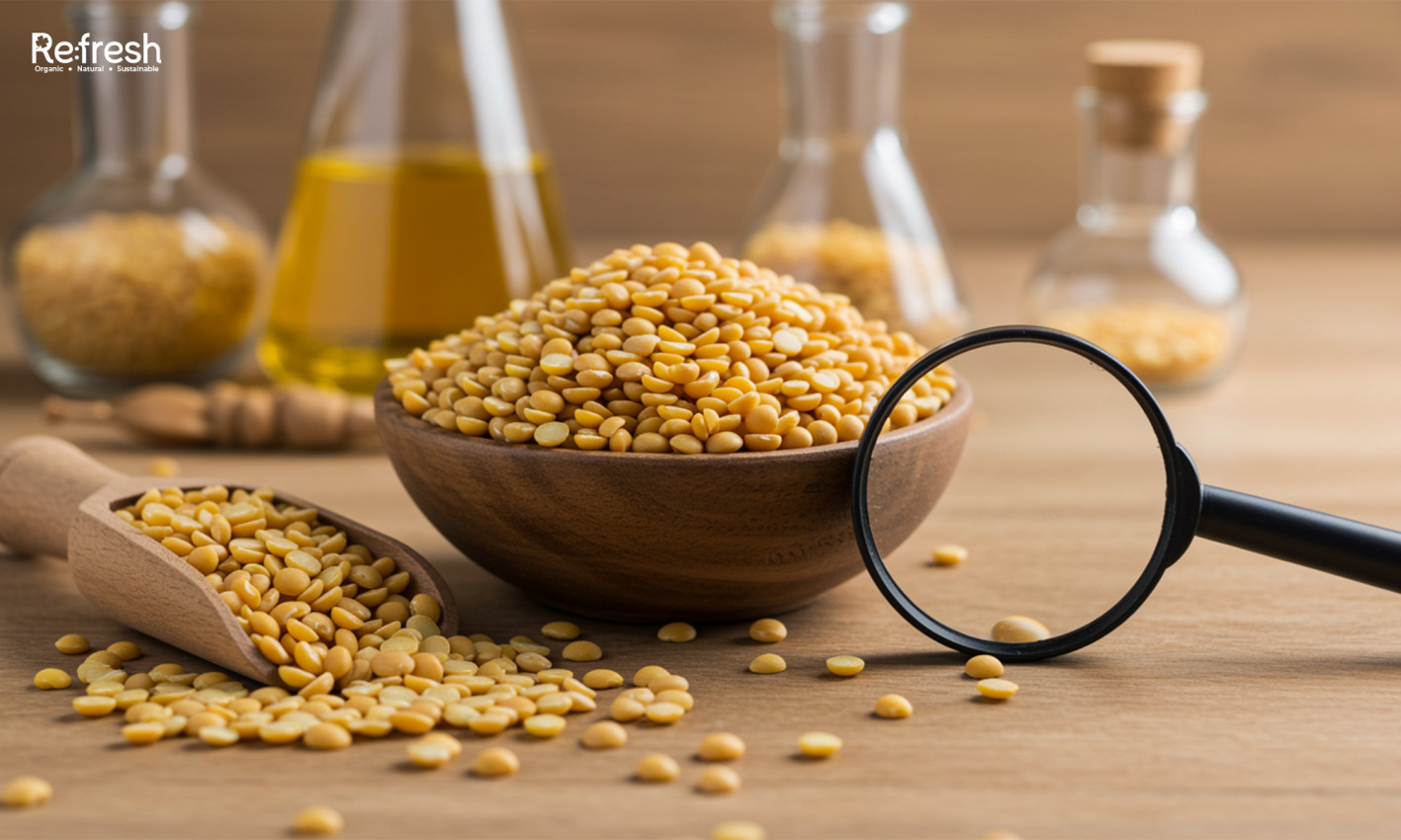
Is Your Toor Dal Safe? Hidden Adulterants Found in India’s Most Common Dal
North Indians cook toor dal or arhar ki daal almost every day, for the humble “dal chawal” we all love.
We trust toor dal to be simple, purest, and the most reliable parts of a home-cooked meal.
But recent food safety findings suggest that what looks clean and nourishing on your plate may not always be as untouched as we assume.
Toor dal is a daily staple, deeply rooted in Indian kitchens, which makes the matter concerning for Indian’s health.
In this, we’ll understand the recent testing data from food safety authorities that deserves closer attention.
What FSSAI and Studies Have Found in Toor Dal?
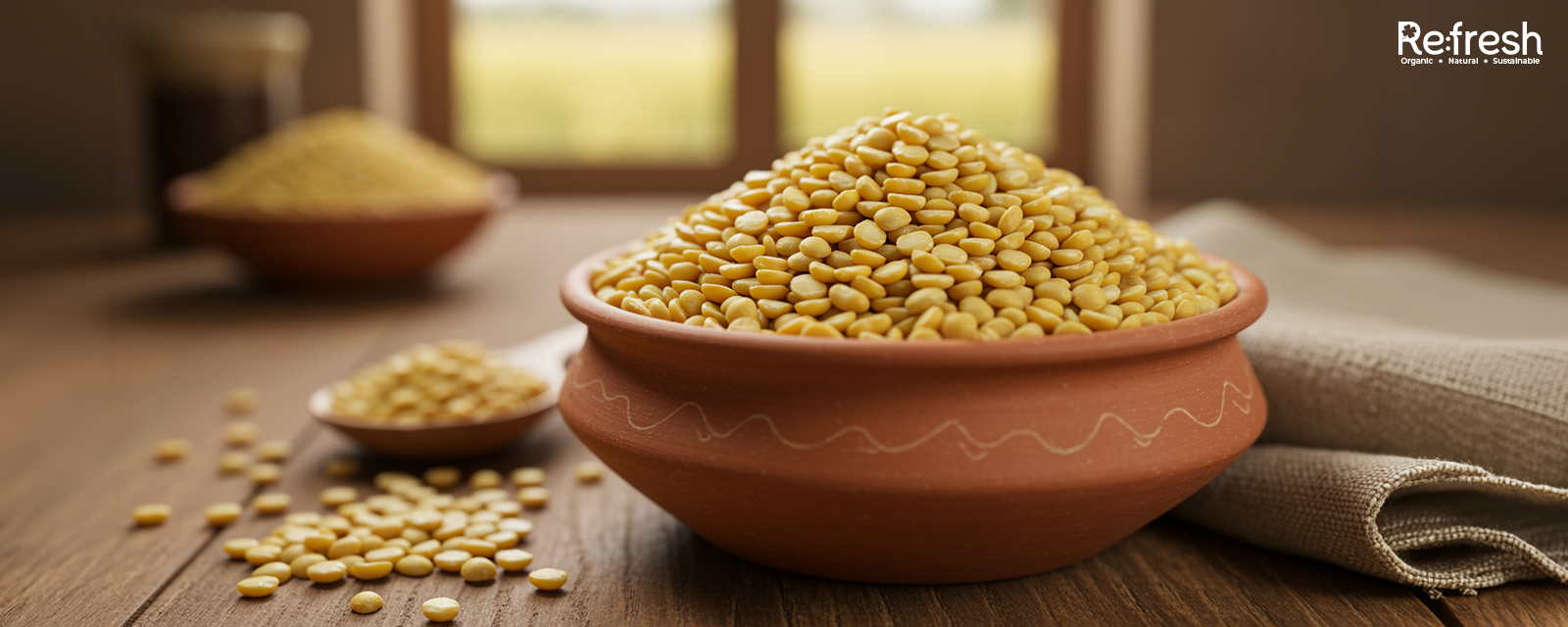
The Food Safety and Standards Authority of India (FSSAI), which is responsible for monitoring food safety standards in the country, regularly conducts surveillance and testing of commonly consumed food items, including pulses, through its national food safety programs.
FSSAI has commonly reported a pattern that cannot be ignored:
According to FSSAI’s official consumer guidance on pulses:
-
Sellers may be using non-permitted food colors such as metanil yellow to enhance the visual appearance of toor dal.
-
Loose or unbranded pulses are more vulnerable to such practices due to lack of quality checks
-
They encourage consumers to perform simple tests at home to detect adulteration.
When you purchase loose tuvar dal, you are highly vulnerable to adultration and poor quality.
The Most Common Issues Found in Toor Dal
-
Metanil Yellow: The Illegal Dye You Cannot See
One of the most concerning and most common adulteratnts found in arhar ki daal is metanil yellow, a non-permitted synthetic dye.
It is used to enhance the visual appearance of toor dal, making it appear brighter, fresher, and more uniform in color.
Experimental Studies ( 1 , 2 ) on metanil yellow have shown multiple potential health risks including:
- DNA damage
- Altered brain neurotransmitters
- Impaired learning
- Increased Inflammation
Single time exposure won’t harm you but since Indians eat tuvar daal almost everyday, it can have real health implications.
-
Mineral Polishing of Arhal Dal:
If you shop arhal ki daal frequently, you must’ve noticed that some varieties look brighter than others, almost polish to perfection.
This shiny appearance is often not natural and sellers polish the dal with mineral oil polishing, to improve visual appeal and shelf life.
Naturally processed dals like Natureland arhal dal will have a slightly rough texture and matte finish, while polished dals appear brighter.
While food-grade oils in controlled quantities are not necessarily harmful, the concern arises when lower-grade mineral oils, which may contain compounds like polycyclic aromatic hydrocarbons (PAHs), are used, especially in cost-sensitive supply chains.
Even if you wash and cook your arhar dal, some of this low-grade polish can sneak into your plate, increasing your exposure.
We need natural, whole, and minimally processed food, not the polished one.
-
Pesticide Residue:
Imagine this, you checked for metanil yellow adulteration and mineral oil polishing, finally buying arhal ki daal that’s free of both.
But unlike dyes or polish, you cannot spot pesticide residue, making it one of the more complex concerns in the context of toor dal adulteration.
Toor dal cultivation in India often involves the use of pesticides to protect crops from pests like pod borers, which can significantly damage yield, especially in major growing regions.
A 2024 analysis of Indian food baskets found that approximately one-third (33%) of samples contained detectable residues, with 16% of certain commodity groups exceeding MRLs.
How can we ever detect pesticides in our food before buying? That’s sounds difficult and which is why buying organic toor dal has become a simple option for many people.
Read More: Why You Should Include Toor/Arhar Dal in Your Diet!
How to Check Toor Dal Purity at Home
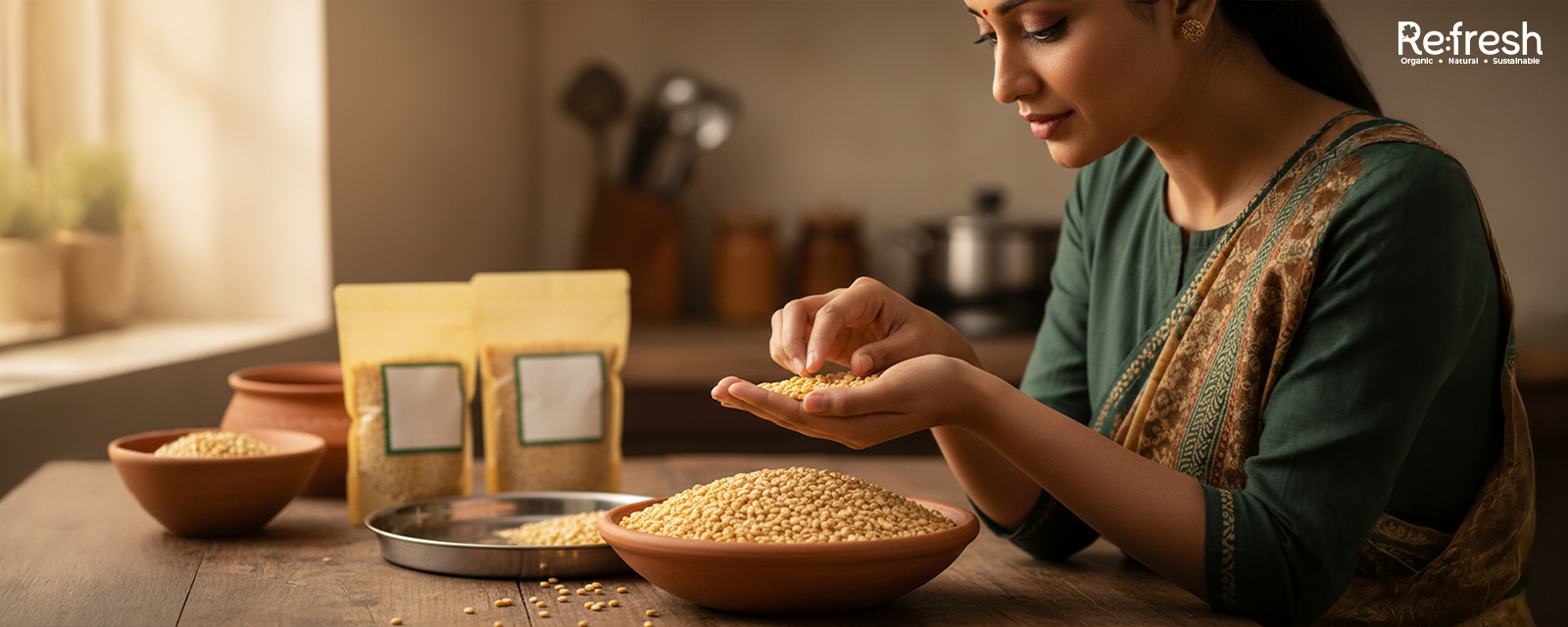
You don’t need special equipments to perform basic toor dal purity tests. Here are two easy tests to do at home:
-
Water Test (for synthetic dye):
-
Rub Test (for polishing):
Add 2 tablespoons of toor dal to a glass of water and leave it undisturbed for a few minutes.
If the water turns distinctly yellow, it may indicate the presence of an artificial dye.
Rub a small quantity of arhal dal between your palms.
If it feels unusually smooth, slippery, or leaves an oily residue, it may be polished.
These are not definitive tests, but they are practical first steps in identifying obvious issues.
How to Choose Pure Toor Dal?
You don’t need to fear every toor dal after you read this. By choosing better and doing informed checks, you can avoid toor dal adulteration.
Here are simple but effective steps:
- Prefer packaged and tested brands over loose, unverified sources.
- Check for natural and organic certifications like India organic, FDA approved, USDA Organic, EU Organic, PGS India, and so on. Read More.
- Check for FSSAI license and proper labeling
- Choose whole (sabut) dal, which is less prone to surface adulteration
- Always wash thoroughly 2–3 times and soak before cooking
- Rotate brands or sources instead of relying on a single supplier
These small adjustments can significantly reduce long-term exposure.
The Bottom Line:
Arhal ki daal remains one of the most important and a major protein source for most of the Indians.
However, modern food supply chains are more complex than just “Farm to plate” as adulteration levels are at full time high.
There’s a greater need for awareness and slightly careful decision making at the consumer level.
Because when a food is consumed almost every day, even minor improvements in quality and sourcing can have a meaningful impact - not immediately, but steadily over time.
And in the context of long-term health, that difference matters.
Read More From Naturopedia
Organic vs Chemical Fertilizers in India: Complete Guide to Benefits, Risks & Best Choice (2025)
If You Still Think Foods Are ‘Good’ or ‘Bad,’ Read This Before Your Next Meal
Best Foods for Menopause Relief: What to Eat During Menopause
-

You're Probably Storing These 10 Everyday Foods the Wrong Way
August 19th, 2026 -
 August 17th, 2026
 -

Organic vs Regular Spices: Are Organic Spices Really Better?
August 14th, 2026 -

What Did Lord Krishna Really Eat? 7 Favorite Foods for Janmashtami
August 12th, 2026 -
 August 10th, 2026