
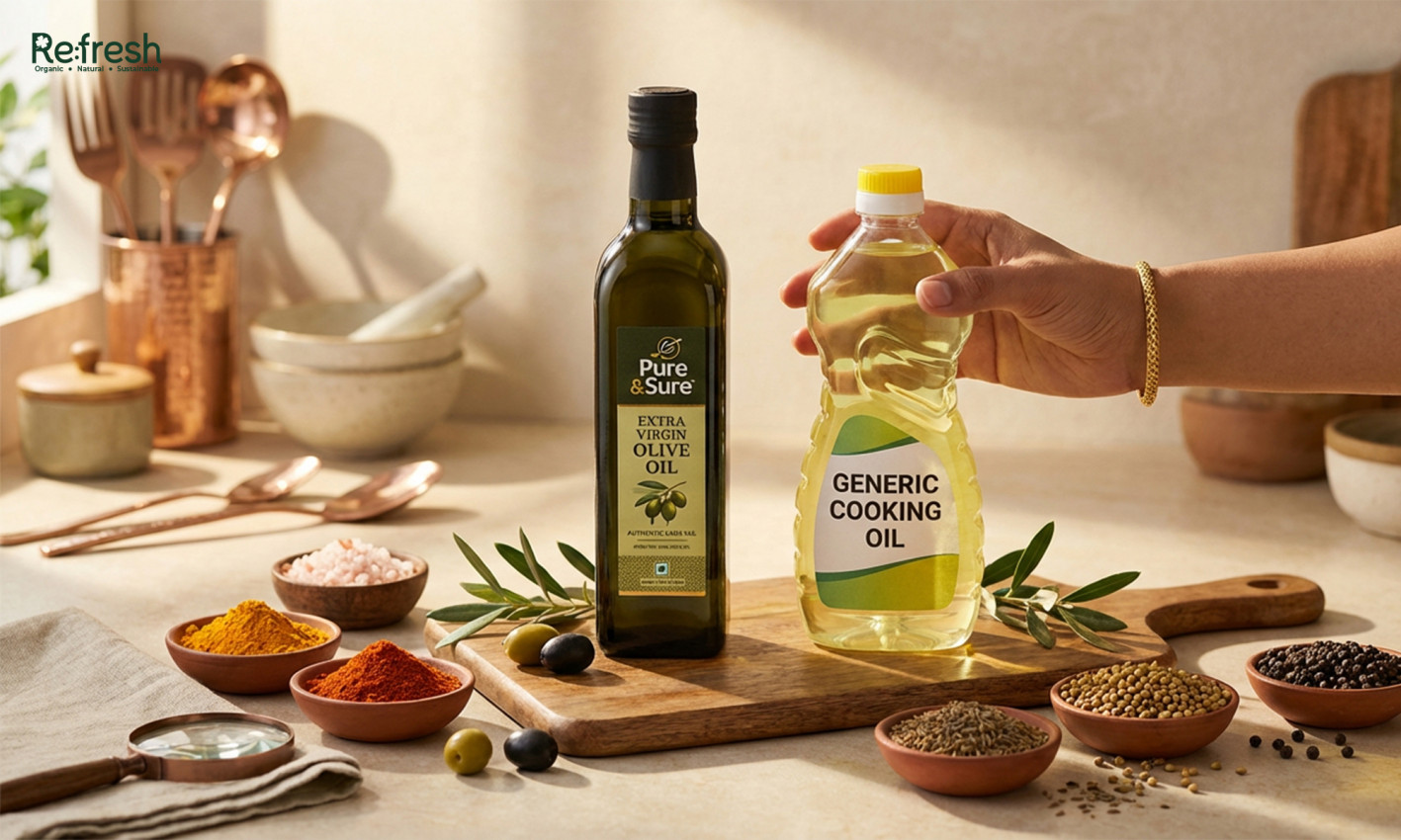
Is Your Olive Oil Fake? EVOO Label Guide for Indians
IN 2023, Spanish and Italian authorities seized thousands of olive oil bottles that were ready to be shipped globally without being pure or extra virgin.
More and more health-conscious Indians are reaching for extra virgin olive oil as it's a better choice than many refined oils.
India imports most of its olive oil and since most of us don't read labels, we may be getting scammed in the name of extra virgin olive oil.
If a bottle says "Pure Olive Oil" on the front, it doesn't mean it's actually extra virgin olive oil and a closer look at the label will tell you that.
People choose the wrong olive oil often and in this blog, we're telling you how to avoid such scams.
1. What Does "Extra Virgin" Actually Mean?
Extra virgin olive oil is the least processed form of olive oil, extracted directly from fresh olives without using any heat or chemical treatment.
To qualify as Extra Virgin Olive Oil, it must meet the International Olive Council parameters:
- Free acidity of oleic acid below 0.8%
- No refining or chemical treatment
- No sensory defects in taste or smell
The best extra virgin olive oil will fully retain its natural polyphenols and antioxidants due to strict purity standards of the IOC.
In simple terms, EVOO is a fresh, natural oil from the olive fruit, which explains the amazing health benefits of this oil.
1.1 Types of Olive oil:
In India, FSSAI regulates olive oil labelling and there are many types of olive oil available in the market.
| Type of Olive oil | How it's made | Quality level | Nutritional Value | Best Use |
|---|---|---|---|---|
| Extra Virgin Olive Oil | Cold-pressed, no heat or chemicals | Highest quality | Rich in antioxidants (polyphenols), healthy fats | Raw use, dressings, low-heat cooking |
| Virgin Olive Oil | Cold-pressed, slightly higher acidity than EVOO | High quality (below EVOO) | Fewer beneficial compounds than EVOO | Low-heat cooking |
| Refined Olive Oil | Processed with heat and chemicals to remove defects | Lower quality | Most antioxidants removed during refining | High-heat cooking |
| Pure Olive Oil | Blend of refined olive oil + small amount of virgin/EVOO | Medium quality | Moderate nutrition (better than refined alone) | General cooking |
| Olive Pomace Oil | Extracted from leftover pulp using solvents and heat | Lowest quality | Very low nutritional value | High-heat cooking (not ideal for health) |
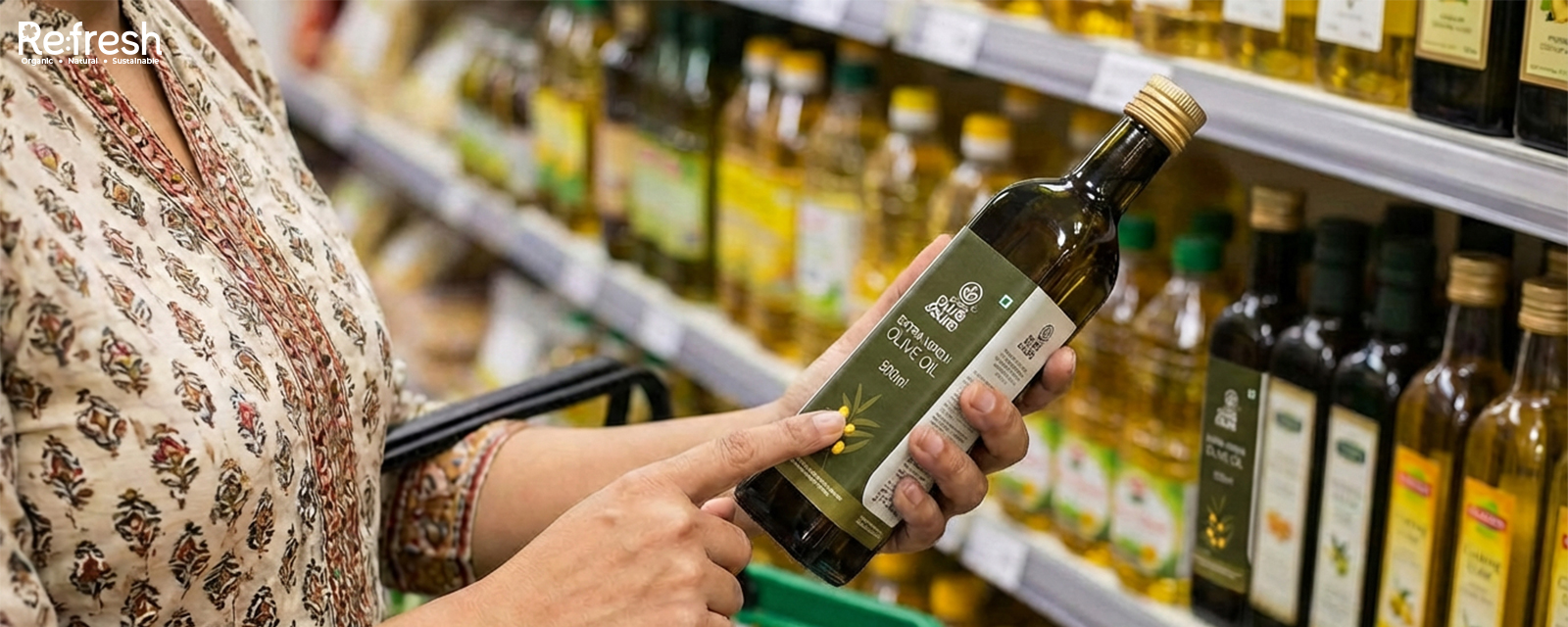
2. How to Choose the Best Extra Virgin Olive Oil:
With so many options in the market, consumers tend to get confused and buy the wrong type of olive oil.
Follow along to learn how to choose the best extra virgin olive oil.
2.1 What Does "Pure" or "Light" Olive Oil Actually Mean?
Most olive oil brands design their label to attract as many customers as possible and not to tell you the truth.
Words like "pure," "light," or even cold-pressed olive oil can sound premium but they are not "Extra Virgin Olive Oil".
Look for the clear words "Extra Virgin" and it should be explicitly mentioned all over the label.
For example, look at this Organic Olive oil from Pure & Sure, you can see EVOO clearly mentioned and nothing else.
2.2 Olive Oil Harvest Date Vs. Expiry date:
Extra virgin olive oil is not like grains or pulses, it degrades with time and weather.
Expiry date matters, but if you want a good quality EVOO, find details on when the olives were harvested, and ideally, you want something that is within 12 to 18 months of that date, because that's when the antioxidant levels and flavour are still intact.
If the bottle only mentions a vague "best before" data with no information about olive fruit harvest, that's a red flag.
2.3 "Packed in Italy" vs "Made in Italy" - Are They the Same Thing?
Spain and Italy are amongst the world's largest producers of extra virgin olive oil, with Spain alone contributing nearly 40–50% of global production.
A lot of people assume that if the EVOO bottle says "packed in Italy," or "Spanish olive oil, it must be "made in Italy or Spanish, but these are not the same.
Your extra virgin olive oil should clearly mention the country the oil is harvested and processed in, making it easier for users to trace the origin and quality.
2.4 Why Does Olive Oil Come in Dark Glass Bottles?
Extra virgin olive oil is extremely sensitive to light and heat, which means the olive oil bottle should be able to protect its nutrients.
The best olive oil brands will always store their EVOO in dark glass bottles, typically green or brown, because this helps prevent oxidation, like this Organic EVOO bottle from Refreshyourlife.
So the next time you're shopping, avoid EVOO with clear plastic packaging which allows light exposure and can degrade the oil.
2.5 How to Tell If Your Olive Oil Is Real or Fake at Home?
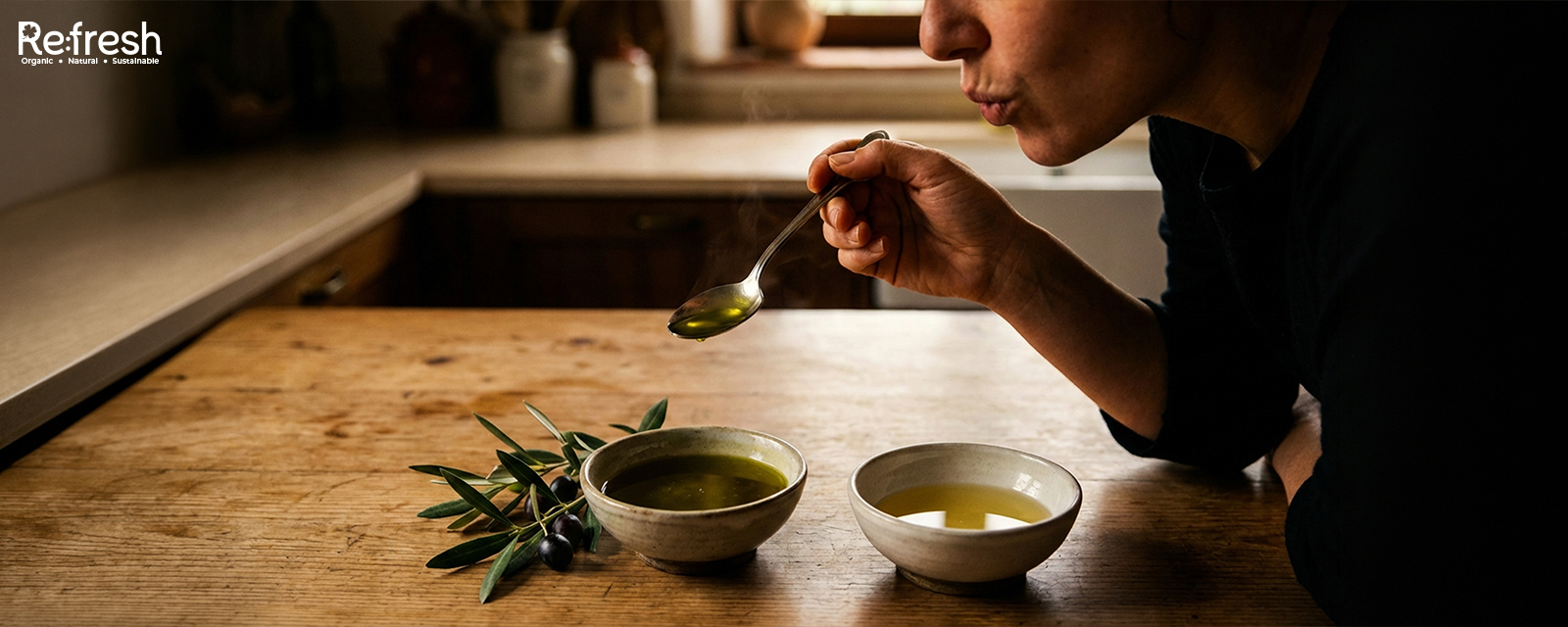
You can easily test if your olive oil is real or fake at home by tasting it, because real EVOO has a very distinct sensory profile that you start recognising over time.
Fresh extra virgin olive oil smells slightly fruity or grassy, with a mild bitterness or acidic feel and it often leaves a light peppery sensation at the back of your throat, which is actually a sign of healthy polyphenols.
If your pure olive oil tastes completely neutral, flat, or greasy, it usually means that the oil has been refined or it has lost its nutritional value.
2.6 What Is the IOC Seal on Olive Oil and Can You Trust It?
IOC or International Olive Council is an international standard and a quality seal that indicates that your products meet chemical and sensory (taste) requirements.
Along with the IOC certification, there are several other organic certifications like India Organic, Jaivik Bharat, PGS-India, and International certifications like EU organic and USDA.
Read More: What are the Organic Certifications in India
2.7 How Much Should Good Extra Virgin Olive Oil Actually Cost in India?
Making extra virgin olive oil is a labour-intensive process which involves careful harvesting, minimal processing, and quick extraction, which adds up to the cost of the final product.
If you Google, the cost of olive oil in India ranges anywhere between ₹600 to ₹1,500 per litre, depending on whether it's organic or a premium olive oil brand.
The finest cold-pressed extra virgin olive oil with organic certifications at Refreshyourlife will be worth your money.
So when you spot EVOO at a significantly cheaper price, it may not be genuine extra virgin olive oil due to dilution, refining, or lower-grade oil being marketed as premium.
3. Extra Virgin Olive Oil is great for your health:
Whether your EVOO is organic or comes in premium packaging, it should be fresh, transparent about its harvest date, and minimally processed.
Olive oil offers potential anti-inflammatory benefits that protect your heart, brain, and metabolic health.
Extra Virgin Olive Oil is rich in monounsaturated fats (oleic acid) and polyphenols, it helps reduce "bad" LDL cholesterol, lowers blood pressure, and reduces the risk of stroke and chronic diseases.
Switching to extra virgin olive oil is a healthy positive step, but remember to identify its purity through taste, aroma, and label clarity.
A real shift happens in awareness and this is why choosing oils that are cold-pressed, unrefined, and transparently sourced makes a real difference.
That's exactly the standard we follow at RefreshYourLife - offering a range of cold-pressed, unrefined oils you can trust.
If you liked this blog, explore more content that actually helps you live better.
Sunflower Oil Health Benefits: Should You Use It Daily? Ghee, Cooking oil, or Butter: Which is the most Healthier? Know Why these Heart-Healthy Cooking Oils are a must for your pantry-

You're Probably Storing These 10 Everyday Foods the Wrong Way
August 19th, 2026 -
 August 17th, 2026
 -

Organic vs Regular Spices: Are Organic Spices Really Better?
August 14th, 2026 -

What Did Lord Krishna Really Eat? 7 Favorite Foods for Janmashtami
August 12th, 2026 -
 August 10th, 2026