5 Underrated Summer Fruits with Surprising Health Benefits
1. Jamun:
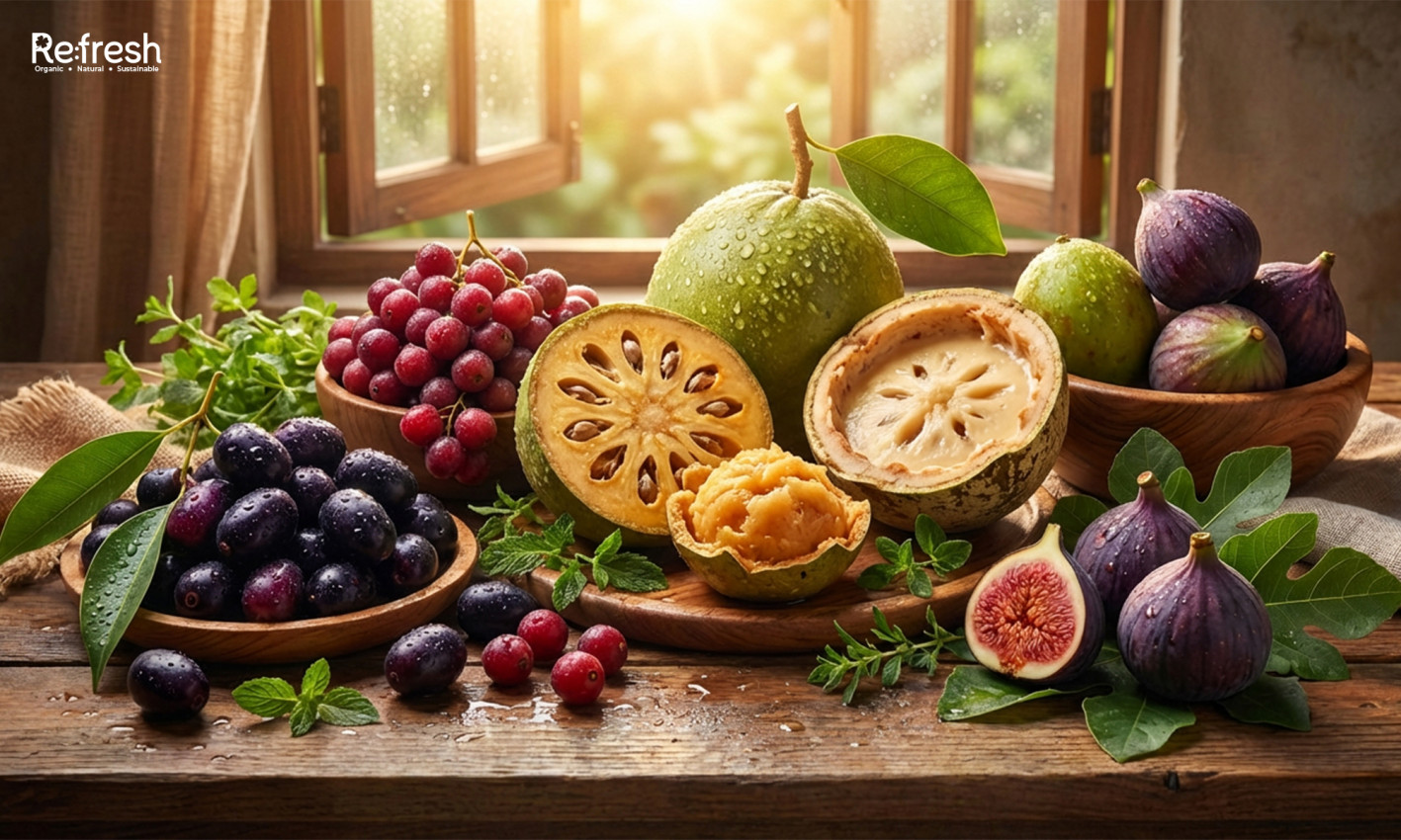
Recognizable for its deep purple hue and tangy-sweet taste, jamun is one of India’s most iconic seasonal fruits.
Jamun is rich in antioxidants, particularly anthocyanins, the compounds responsible for its dark color.
These antioxidants can help combat oxidative stress in your body and may support overall cellular health.
This summer fruit will also provide a good amount of fiber, vitamin C, iron, and potassium, making it a good addition to your diet.
Jamun is also valued in the ancient Ayurvedic system for its role in supporting metabolic health.
Pro tip: Jamun can taste astringent, so try sprinkling with black salt for a better flavour.
2. Phalsa:
This small purple fruit is often sold in local markets during peak summer.
Phalsa or Indian Sherbat berry resembles grapes in size and shape and offers a refreshing flavor in this hot weather.
You can make cooling summer drinks and sherbets as phalsa is a powerhouse of vitamins and minerals.
Nutritionally, phalsa contains antioxidants and vitamin C, which help support immunity and skin health.
It has a natural, tangy taste, which makes it a great alternative for those who prefer less sugary fruits.
Pro tip: Phalsa can spoil quickly; that’s why it is not widely available in supermarkets, which may explain why many younger consumers have never tried it.
Read More: These Fruits Can Help Build Muscles and Boost Muscle Recovery
3. Bael (Wood Apple):
Wood apple or bael may not look appealing, but do not judge this fruit by its hard shell.
Bael has been used in traditional Indian medicine for centuries, especially in remedies related to digestion and gut health.
Inside its rough exterior is a fragrant orange pulp, which is cooling and refreshing in beverages or sherbets.
The fruit contains fiber , antioxidants, and several micronutrients that contribute to digestive health.
Its naturally thick pulp makes it particularly filling, and many households still consider bael drinks a traditional remedy for digestive discomfort during hot months.
4. Mulberries (Shahtoot):
Everyone talks about blueberries, but have you heard of our humble mulberries or shahtoot?/
Mulberries are one of the most nutrient -dense summer fruits thata raely makes it to the mainstream media.
These delicate berries can have shades of red, purple, and black and have a sweet-tart flavor similar to blackberries.
Shahtoot is a source of vitamin C, iron, and plant compounds that help reduce inflammation in your body.
Pro tip: Mulberries contain fiber, which will support your digestion and gut health in summers.
5. Tadgola (Ice Apple):
Popular in coastal parts of India, tadgola or ice apple is one of the most refreshing fruits you can eat in the summer.
Tadgola is harvested from palm trees and is actually the translucent seed kernel of the palmyra palm fruit.
It has a unique, jelly-like flesh with a sweet, mild taste and a high water content, making it extremely hydrating in hot weather.
With hydration, ice apple also has small amounts of electrolytes and micronutrients, making it a practical seasonal food during extreme heat.
Pro tip: Tadgola is subtly sweet, so you can enjoy it as a light afternoon snack
Why Eating Seasonal Fruits Matters?
In Ayurveda, we have a concept called “Ritucharya”. It calls for eating what is available in the season and avoiding what is not seasonal.
Indians have been eating seasonally for thousands of years to support better nutrition and variety in their diet.
Seasonal produce is fresh, nutrient-rich, and naturally aligned with the changing weather.
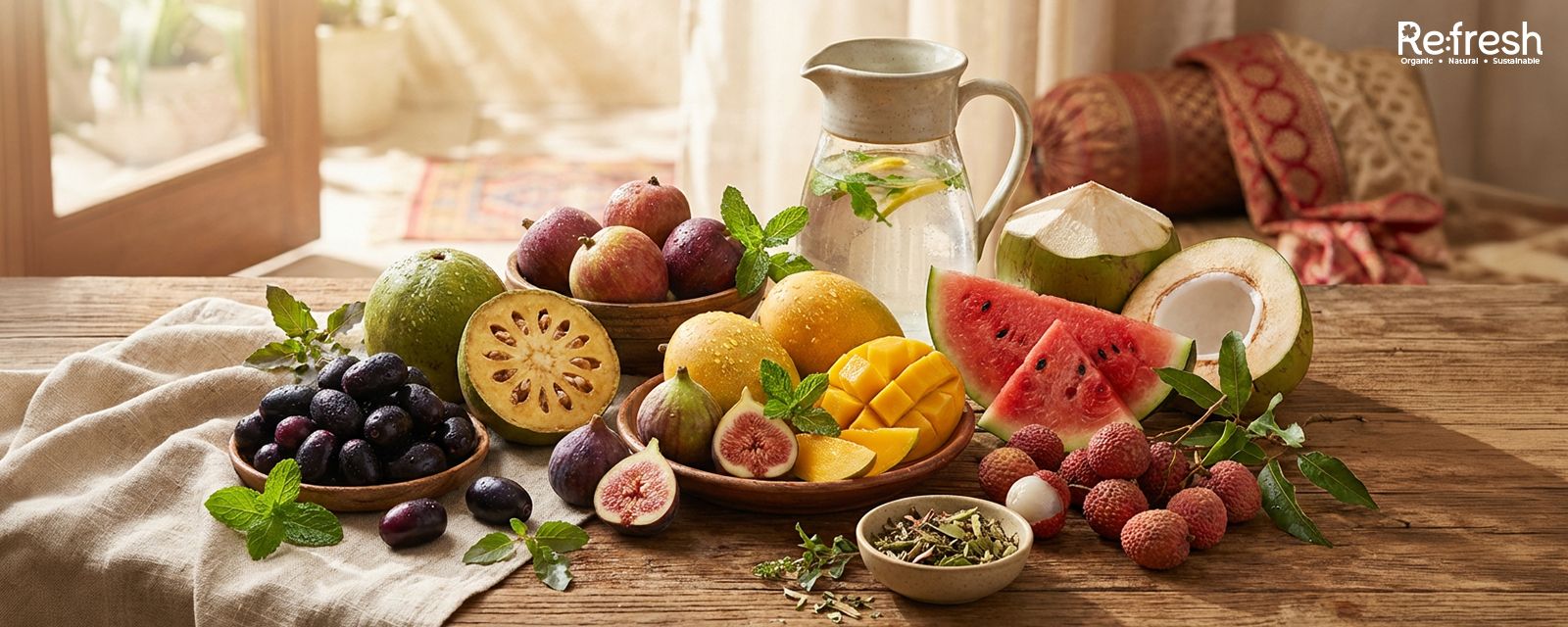
Many traditional summer fruits, for instance, tend to be water-rich, refreshing, and easy to digest, making them particularly suitable for hotter months.
The Bottom Line:
Mangoes and watermelon may be your staples for summer, but trying underrated hydrating fruits will bring diversity to your plate.
Jamun, phalsa, bael, mulberries, and tadgola all offer unique flavors, nutrients, and traditional wellness benefits for your body.
So the next time you shop, remember this blog and look beyond the obvious fruits in your locality.
Wait, remember to buy organic summer fruits this season:)
-
 May 20th, 2026