

7 Anti Inflammatory Foods to Lower Inflammation Naturally
People in their 20's and 30's are being diagnosed with diabetes and the time is ticking for India.
Inflammation is the body's natural defense against an injury, stress, or infection, but it can sometimes become chronic and lead to harmful outcomes.
But inflammation becomes a problem when it lingers in your body for months and years, quietly increasing the risk of diabetes, heart disease, and even fatigue in young adults.
Your lifestyle and diet decides whether this chronic inflammation stays in your system.
So, how to reduce inflammation in the body?
With the right anti-inflammation foods, your plate can actively protect your health and lower the risk of cardiovascular diseases.
Let's understand these foods and the science of inflammation in more detail.

1. What is inflammation and how does it increase your diabetes risk?
Remember how your elbow swells when you accidentally fall off your bike? That's inflammation working to protect you.
But chronic inflammation doesn't protect you, it disrupts hormones, damages cells, and interferes with insulin function.
When your body has chronic inflammation, it enters a state of continuous immune activation, releasing pro-inflammatory cytokines such as TNF-α and IL-6, which directly interfere with insulin signalling and blood sugar regulation.
In simple terms, these inflammatory molecules disrupt how insulin functions within your cells and reduce glucose absorption into cells, increasing your blood sugar.
Chronic inflammation reduces the activity of the glucose transporter GLUT4, leading to elevated blood sugar levels.
Over time, this leads to:
- Elevated blood glucose due to impaired cellular uptake
- Increased visceral fat, which acts as an inflammatory organ
- Progressive insulin resistance and higher risk of Type 2 diabetes
Thus, Type-2 diabetes is not just a metabolic disorder, but a disease driven by chronic inflammation.
This is where an anti-inflammatory diet becomes critical. With this list of natural anti-inflammatory foods, you can start lowering it.
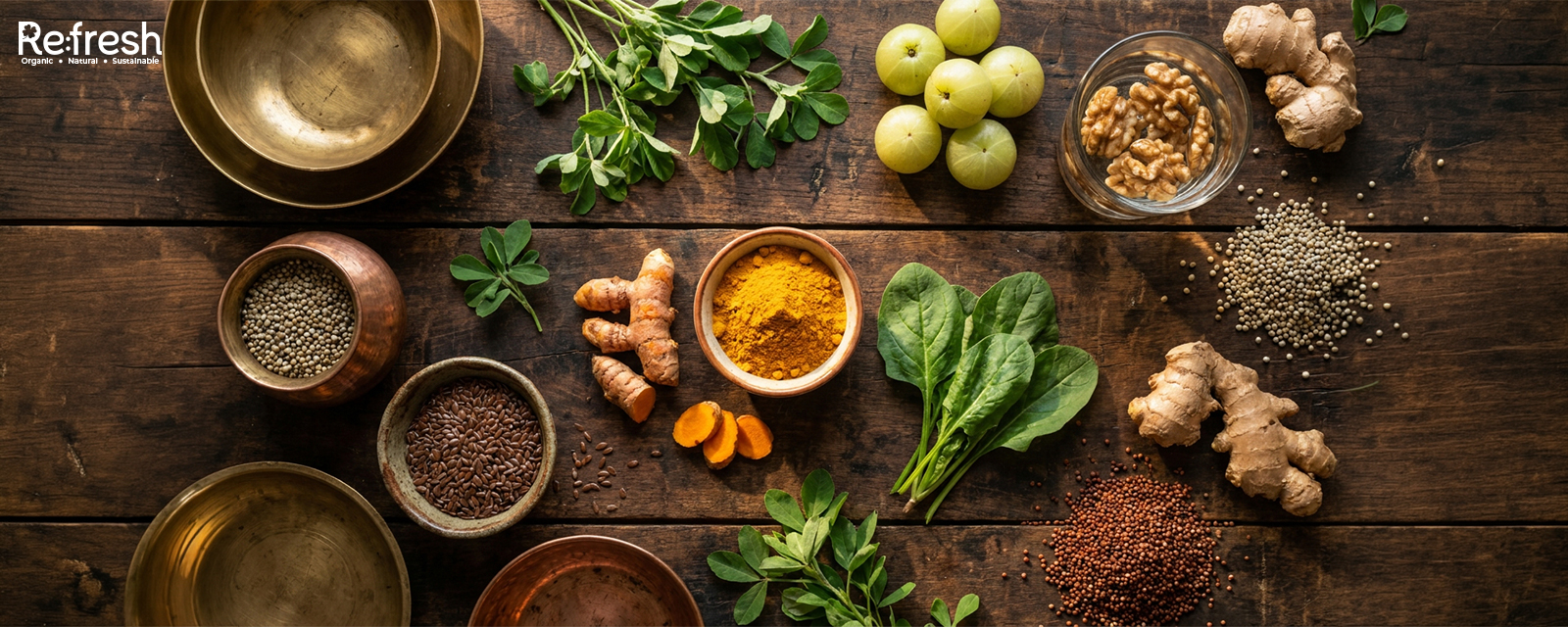
2. 7 Foods That Lower Inflammation Naturally
2.1 Turmeric or Haldi
Turmeric, with its bioactive compound curcumin, is a powerful anti-inflammatory ingredient from Indian kitchens.
Haldi or turmeric blocks cytokines, the proteins that trigger inflammation and also neutralize free radicals that lead to oxidative stress.
If you combine turmeric with black pepper, its bioavailability can increase by as much as 2000%.
But local turmeric powder has bioavailability issues and most of what you consume won't even be absorbed.
This is why using clean, unadulterated, organic turmeric becomes important — like this one from Refreshyourlife.
2.2 Leafy Greens
Green leafy vegetables such as spinach, amaranth, bathua, methi, and kale have a complex matrix of antioxidants, including flavonoids, carotenoids, and vitamin C, which work synergistically to significantly lower your inflammation.
Green leafy vegetables are also a great source of fiber and phytonutrients, which help nourish beneficial gut bacteria, directly influencing immunity.
Over time, consistent intake of leafy greens has been associated with reduced levels of inflammatory markers like CRP (C-reactive protein), making it one of the best anti-inflammatory foods.
2.3 Flaxseed or Alsi
Flaxseeds are one of the richest plant-based sources of alpha-linolenic acid (ALA), a type of omega-3 fatty acid that plays a crucial role in reducing pro-inflammatory molecules.
Including organic flaxseeds in your regular anti-inflammatory diet can help shift your body to a more balanced state.
Additionally, flaxseeds contain lignans and fiber, which further contribute to improved gut health and metabolic function - both of which are deeply connected to insulin sensitivity and diabetes risk.
In India, the intake of refined oils is high, which increases omega-6 levels and may promote inflammation when not balanced with omega-3s.
2.4 Amla or Indian Gooseberry
Amla or Indian gooseberry is exceptionally rich in vitamin C, with about 600-700 mg vitamin C in a 100g serving.
Vitamin C is one of the best anti-inflammatory foods and reduces oxidative stress that supports a balanced immune system.
Amla also supports a healthy metabolism, making it a powerful addition to a natural anti-inflammatory approach rooted in traditional diets.
But where would you find fresh amla in summers? Try certified Organic Amla Extract, harvested from premium organic farms, our amla juice is free from synthetic additives and pesticides.
📖 Read More: Amla Benefits: Discover Why This Indian Gooseberry is a Nutritional Powerhouse
2.5 Ginger or Adrak
Ginger, as used in almost every Indian household, contains active compounds such as gingerol and shogaol, which have been shown to lower inflammation.
Ginger is also great for digestion as it supports gut mobility and digestion, indirectly balancing your immune system.
Also for people with inflammatory arthritis, ginger is often recommended to reduce systemic inflammation and can be a part of your healthy diet.
Studies suggest 250 mg of ginger, taken three or four times daily, can improve symptoms of rheumatoid arthritis and osteoarthritis.
2.6 Walnuts or Akhrot
Walnuts are a rich source of omega-3 fatty acids, polyphenols, and vitamin E, all of which contribute to lowering inflammation in your body.
Having a handful of soaked walnuts in the morning is critical for preventing inflammation-related damage to blood vessels. (1)
Walnuts are also a great source of healthy fats and antioxidants, making them one of the most convenient and effective additions to a modern anti-inflammatory diet.
With lower levels of inflammation, improved lipid profiles, and better insulin sensitivity, walnuts can reduce your risk of metabolic diseases like diabetes.
2.7 Whole Grains
Fiber, mainly soluble fiber, plays a key role in feeding beneficial gut bacteria, which in turn produce short-chain fatty acids reducing inflammation and managing blood sugar levels.
Whole grains like wheat and millets like bajra, ragi form a gel-like substance in our gut which is easily fermented by microbiota.
People should avoid eating refined grains like maida which can spike blood sugar and trigger inflammatory responses, especially in people with chronic inflammation and elevated blood sugar levels.
Choosing certified organic whole grains ensures you're getting higher fiber and antioxidant density without pesticide residues, making them a cleaner and more effective addition to an anti-inflammatory diet.
3. Habits to Reduce Inflammation in the body
Chronic inflammation is a lifestyle condition and even the best anti-inflammatory foods cannot undo the effects of unhealthy habits.
Here's how to reduce inflammation in the body with a few lifestyle changes.
- Prioritise 7-8 hours of quality sleep as it helps regulate hormones and reduces inflammation in the body over time. These yoga poses can help.
- Staying physically active with a minimum 30 minutes of physical activity on a daily basis boosts metabolic health and plays a key role in managing inflammation.
- Managing stress through practices like yoga and deep breathing is equally important, as chronic stress can trigger inflammatory responses.
- Consistent hydration also supports cellular function and helps flush out inflammatory byproducts.
At the same time, it is important to limit refined sugar, ultra-processed snacks, deep-fried foods, and excess refined oils, as these are common inflammatory foods that can worsen chronic inflammation and increase the risk of metabolic disorders.
These amplify the benefits of even the best anti-inflammatory foods.
4. So, how can you take control of inflammation starting today?
You don't need extreme diets or expensive anti-inflammatory supplements to begin your health journey.
Start with small additions - add turmeric to your dal, swap refined grains for millets, include a handful of walnuts, and choose cleaner, organic ingredients where possible.
The key to reducing chronic inflammation isn't perfection - it's consistently choosing better, cleaner foods every single day.
If you liked this blog, explore more and turn knowledge into daily habits.
Best Diet for PCOS and PCOD to Manage Weight, Periods, and Hormones How Walking Can Lower Your Blood Pressure in Just 15 Minutes, According to Experts Cardiac Arrest or Heart Attack? Know the Warning Signs Before It's Too Late-

You're Probably Storing These 10 Everyday Foods the Wrong Way
August 19th, 2026 -
 August 17th, 2026
 -

Organic vs Regular Spices: Are Organic Spices Really Better?
August 14th, 2026 -

What Did Lord Krishna Really Eat? 7 Favorite Foods for Janmashtami
August 12th, 2026 -
 August 10th, 2026