

Fatty Liver Is Now India’s Most Common Liver Problem: What to Eat & Avoid
Imagine you're a young professional in your 30s with no symptoms. You go for a routine checkup, and the doctor diagnoses you with fatty liver.
You may be fit and feel nothing, but your liver could already be under stress and the latest Lancet Regional Health – Southeast Asia journal gives similar insights about fatty liver disease in India.
Around one-third of individuals were identified with MASLD, or fatty liver disease especially among young, urban adults with sedentary jobs.
This surge in fatty liver is due to our unhealthy lifestyle habits, hidden sugars, and ultra-processed food consumption, which is also rising at a rapid rate.
But the good part? Fatty liver is one of the few lifestyle conditions that can often be reversed - especially in its early stages - with a nutritious diet and consistent movement.
In this blog, we're talking about fatty liver disease and the right fatty liver diet for you.
1. Why are fatty liver cases rising so fast in India?
India has 101 million people living with diabetes and this condition is closely related to fatty liver disease, also known as MASLD (Metabolic Dysfunction-Associated Steatotic Liver Disease).
Fatty liver disease may not show any symptoms for years, and by the time we realise something is wrong, it's already too late.
The Lancet data highlights a worrying shift: younger adults (25–40) are increasingly affected. Why?
- High intake of refined oils and ultra-processed foods
- Sedentary lifestyles and long sitting hours
- Chronic stress and poor sleep
- Excess refined carbs (white bread, bakery foods)
- Sugary drinks and packaged snacks
- Poor gut health
Earlier, fatty liver was mainly caused by alcohol, but cases have now shifted to non-alcoholic fatty liver and our unhealthy lifestyles should be blamed.
2. What is fatty liver disease?
Your liver naturally contains a small amount of fat - it's completely normal.
The steatosis of the liver begins when fat starts accumulating inside the liver cells, accounting for more than 5% of liver weight.
Today, doctors use the term MASLD (Metabolic Dysfunction-Associated Steatotic Liver Disease).
As the name suggests, fatty liver is closely linked to your metabolism, including weight, blood sugar, and daily eating habits.
Fatty liver symptoms may not show up for years or until 75% of the liver is already damaged with inflammation, medically called cirrhosis.
MASLD typically starts as Grade I (early fat buildup), which is still reversible. If ignored, it can move to Grade II and then Grade III, where inflammation and liver stress begin to appear.
The liver is forgiving and it continues to work under extreme conditions, giving us time to revert the damage.
With the right fatty liver diet, medications (under a physician), regular movement, and a few consistent lifestyle shifts, your liver has a strong ability to heal and recover.
3. What are some fatty liver symptoms?
Here's the harsh reality - most people living with a fatty liver will feel completely normal before the damage reaches an advanced stage.
There are no loud fatty liver symptoms, especially in the early stages of fatty liver disease.
But your body may still give subtle hints:
- Persistent fatigue that doesn't improve with rest
- A mild heaviness or discomfort in the upper right abdomen
- Elevated liver enzymes in routine blood tests (often the first clue)
- Gradual weight gain, especially around the belly (fat around liver)
- Brain fog or sluggish digestion
These fatty liver signs are easy to ignore on a busy lifestyle, but they tell you a lot about the underlying steatosis of the liver.
However, a simple abdominal ultrasound is one of the first steps to recognise if you have excess fat around the liver.
4. What should a fatty liver diet look like?
You may have heard about having a Mediterranean diet for fatty liver, which is considered the best for reversing fatty liver and heart-related conditions.
The Mediterranean diet is about a pattern of eating - more whole foods, more plants, better fats, and less sugar.
Now here's the interesting part: this way of eating already exists in traditional Indian kitchens.
Read More: 7-Day Healthy Meal Prep Ideas for Indian Veg Meals (No Hassle!)For Indians, foods like dal, sabzi, roti, and homemade curd can form a balanced plate.
So instead of chasing complicated diets, come back to basics:
- Eat fresh, not packaged
- Cook more, order less
- Focus on quality fats, not quantity
- Build meals around fibre + protein
This is the foundation of any effective fatty liver meal plan.
You can naturally include clean-label, organic staples - like cold-pressed oils, unpolished grains, and chemical-free spices - to reduce toxin load on the liver.
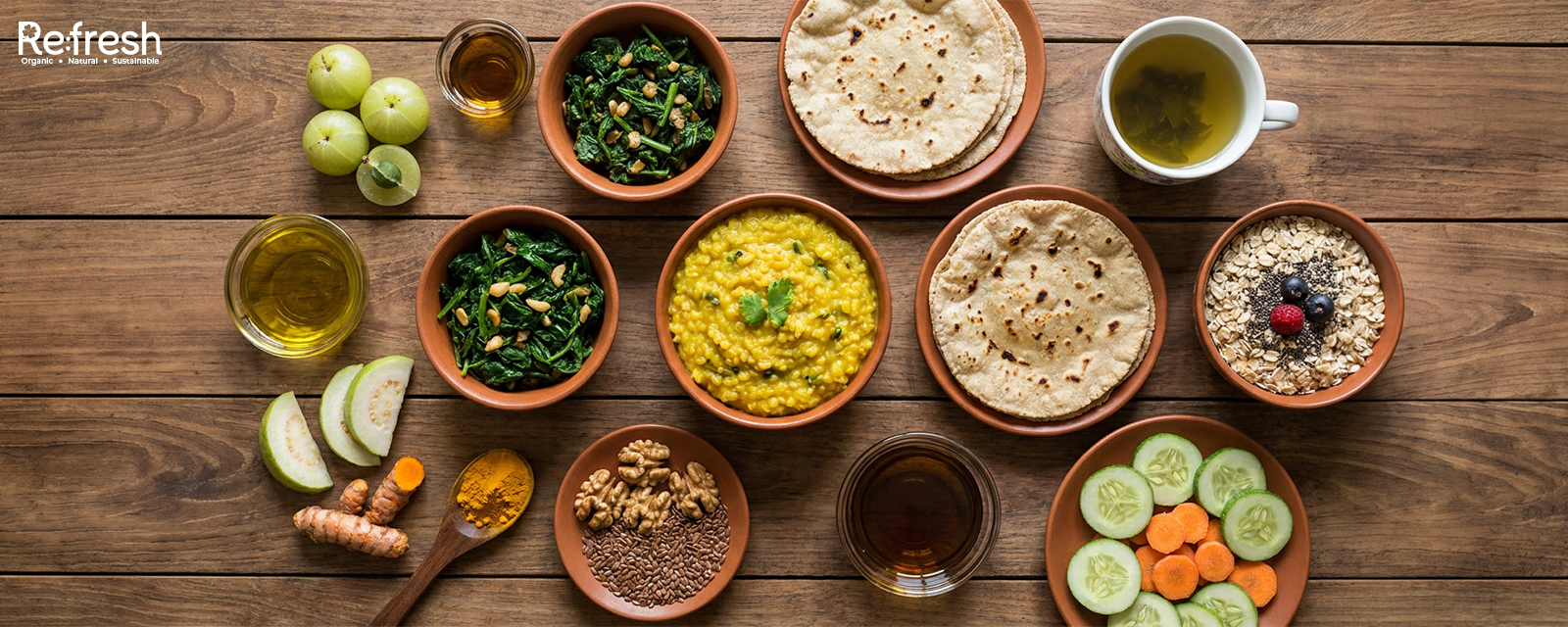
5. Best foods for Liver Health
These food items keep your liver healthy while reducing the fat intake and increasing antioxidant-rich foods to lower inflammation.
| Food Item | Why It Helps |
|---|---|
| Leafy greens (palak, methi, moringa) | Help reduce liver fat and are rich in antioxidants that protect liver cells |
| Whole grains (brown rice, jowar, bajra, oats) | High in fibre, stabilise blood sugar and reduce fat accumulation - key for managing causes of fatty liver |
| Legumes & dals (moong, chana, rajma) | Provide plant protein and fibre, help lower triglycerides and support metabolism |
| Walnuts & flaxseeds | Plant-based omega-3s that support fat metabolism and reduce fat around liver |
| Olive oil / cold-pressed mustard oil | Healthy fats that improve lipid balance and support fatty liver treatment when used in moderation |
| Turmeric (haldi) | Contains curcumin, which may help lower liver enzyme levels seen in fatty liver disease symptoms |
| Black coffee & green tea (unsweetened) | Rich in polyphenols that help reduce liver fat and inflammation |
| Berries & seasonal fruits (amla, jamun, guava) | Packed with antioxidants that fight oxidative stress involved in steatosis of liver |
A quick way to use this: build your plate around 3 things - fibre (grains + veggies), protein (dal, legumes, fish), and healthy fats.
You can also make these meals cleaner by choosing certified organic staples - like whole grains, pulses, and cold-pressed oils - from Refreshyourlife, so your liver isn't dealing with unnecessary additives along with everything else.
That balance is what makes a fatty liver meal plan actually work in real life.
6. What foods should you avoid if you have a fatty liver?
If you're serious about liver disease treatment, you should avoid these foods at all costs:
- Packaged snacks and ultra-processed foods
- Refined oils and reheated frying oils
- Sugary beverages and desserts
- Excess alcohol
- Deep fried foods
These are some of the key foods to avoid with fatty liver, as they worsen fat accumulation and inflammation.
6.1 A Simple Indian Meal Plan for Fatty Liver
- Morning: Overnight oats with chia seeds + seasonal fruit OR methi paratha with curd (one, not three)
- Mid-morning: A handful of walnuts or unsalted roasted chana + green tea
- Lunch: Brown rice / jowar roti + moong dal + palak sabzi + salad with olive oil drizzle
- Evening snack: Sliced cucumber/carrot with hummus OR fruit
- Dinner: Light - Tofu with sautéed vegetables + small cup of dal soup
- Before bed: A small glass of haldi (turmeric) milk - unsweetened

7. How to reverse fatty liver naturally with simple daily habits
Early-stage liver steatosis treatment is largely lifestyle-based. Studies show that losing even 5–10% body weight can significantly reduce liver fat. (1)
These 3 lifestyle habits are what make your fatty liver treatment actually work faster and more sustainably.
Move Your Body:You don't need a strict workout plan. A 30-minute walk, light strength training, or simply reducing long sitting hours can significantly impact liver health.
Strength training can help control blood sugar.
Get 7-8 hours of sleep:Getting 7-8 hours of consistent sleep helps your body regulate hormones and improves how your fatty liver diet works internally.
Irregular sleep and late nights disrupt insulin sensitivity, worsening fat storage in the liver. Stress control helps reduce these triggers.
Manage Your Stress:Chronic stress increases cortisol levels, leading to sugar cravings and increased fat accumulation.
Over time, this contributes to the causes of fatty liver. Simple habits like walking, sunlight exposure, or short breaks during the day can help regulate this.
These are not extreme changes - they're practical, repeatable habits. When combined with a strong fatty liver meal plan, they create the environment your body needs to heal.
8. Your Liver Is More Forgiving Than You Think
Early-stage fatty liver is genuinely reversible with the right fatty liver diet, consistent movement, and a few lifestyle shifts.
You don't need to overhaul your life overnight, but take small, consistent steps.
This includes choosing whole grains over refined ones, cooking more at home, or switching to cleaner, minimally processed, even organic staples from Refreshyourlife can help.
Reducing your daily exposure to additives, pesticides, and low-quality oils simply makes it easier for your liver to function better.
Share this blog with someone you care about, and start with just one swap this week.
Cold pressed oils for liver health
If you liked this blog, stay with us—your journey to better health continues here.
▸ Cancer Cases in India Are Rising Rapidly: Why 2 Million Patients by 2040 Is a Health Wake-Up Call ▸ Best Diet for PCOS and PCOD to Manage Weight, Periods, and Hormones ▸ Can Fenugreek Seeds Lower Blood Sugar? The Truth About Diabetes and Natural Remedies- Constant fatigue
- Mild upper right abdominal discomfort
- Belly weight gain (fat around liver)
- High liver enzymes in tests
- Brain fog or slow digestion
- Follow a clean fatty liver diet
- Cut sugar and processed foods
- Move daily and sleep well
- Clean eating (no ultra-processed foods)
- Daily movement
- Gradual weight loss (5–10%)
- Eating whole, fibre-rich foods
- Avoiding sugar, alcohol, and fried food
- Staying hydrated
- Moong dal chilla
- Vegetable oats
- Eggs with whole grain toast
- Curd with nuts
- Follow a balanced fatty liver meal plan
- Avoid trigger foods
- Stay active and manage stress
-

You're Probably Storing These 10 Everyday Foods the Wrong Way
August 19th, 2026 -
 August 17th, 2026
 -

Organic vs Regular Spices: Are Organic Spices Really Better?
August 14th, 2026 -

What Did Lord Krishna Really Eat? 7 Favorite Foods for Janmashtami
August 12th, 2026 -
 August 10th, 2026