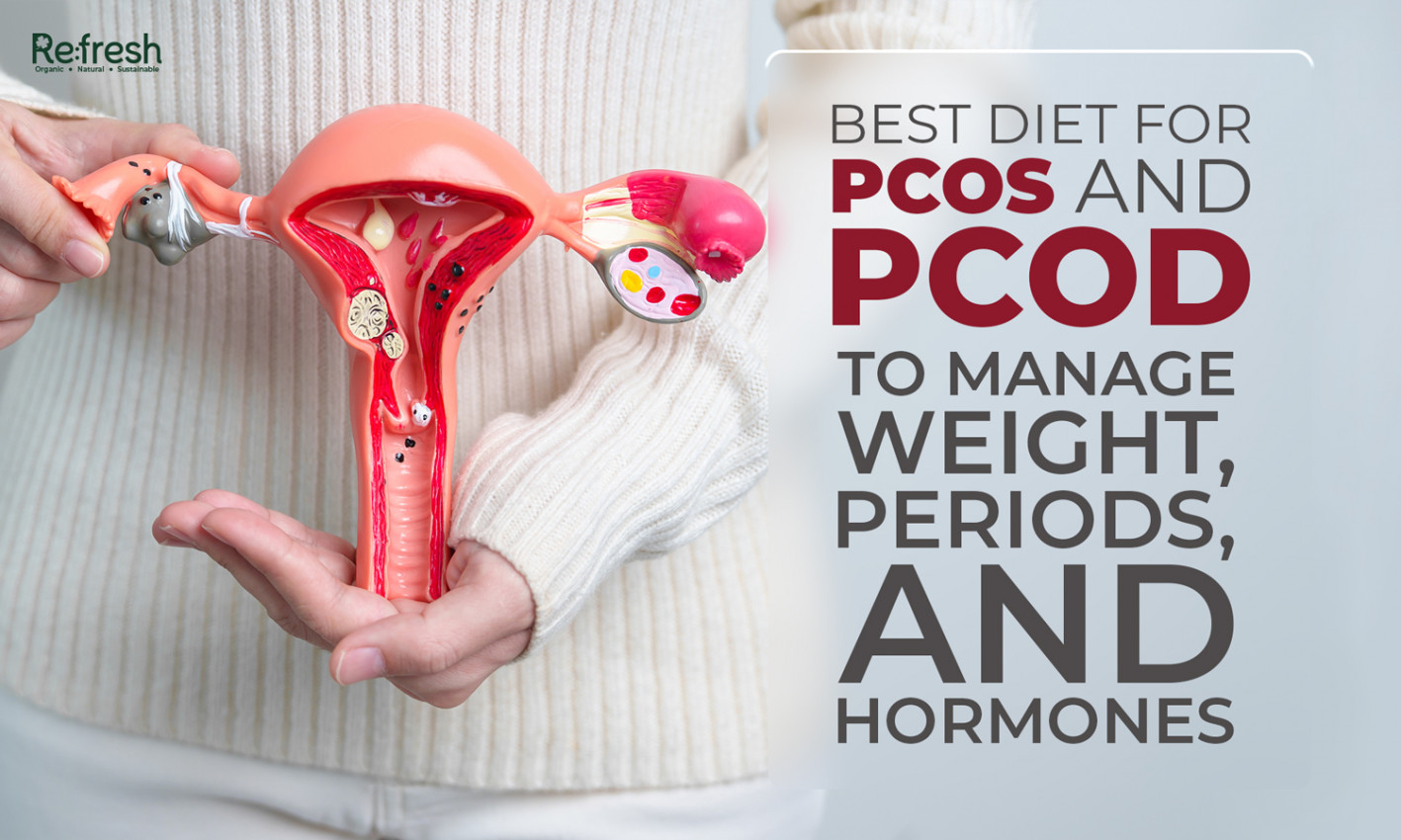
Best Diet for PCOS and PCOD to Manage Weight, Periods, and Hormones
Living with PCOD and PCOS can feel overwhelming, especially when symptoms affect weight, periods, skin, and emotional health.
Millions of women are silently suffering from irregular periods, weight gain, skin issues, and difficulty in getting pregnant.
While there’s no single for pcos/pcod, experts weigh in the important of a healthy pcod diet to effectively manage PCOD and PCOS symptoms.
The right food choices can help regulate insulin, reduce inflammation, and improve hormone balance.
In this blog, we’ll talk about what to eat, what to avoid, and how pcod diet can truly help women dealing with these conditions.
Understanding PCOD and PCOS
PCOD (Polycystic Ovarian Disease) and PCOS (Polycystic Ovary Syndrome) are hormonal disorders affecting women of reproductive age, which have become common nowadays. (1)
Both conditions can cause insulin resistance, high inflammation, and hormonal imbalance, which mess up the menstrual cycle, causing irregular periods.
Some women may also feel daily fatigue, have mood swings, and acne issues, likely caused by diabetes and high blood pressure if PCOD is not managed on time.
Common Signs and Symptoms of PCOS and PCOD
Irregular periods are one of the most common signs of PCOD/POCS. There are some pivotal symptoms that you can recognise early to help manage the condition better.
Common signs of PCOS and PCOD include:
- Irregular or missed periods
- Weight gain, especially around the abdomen
- Excess facial or body hair (hirsutism)
- Hair thinning or hair loss
- Acne and oily skin
- Fatigue and low energy
- Difficulty conceiving
- Sugar cravings and mood swings
If you notice multiple signs or symptoms in your body, If you notice multiple symptoms, a pcod diet can help you improve the quality of your life alongside medical guidance.
How Diet Helps Manage PCOD and PCOS
An effective diet plan for PCOD/PCOS is important to help better control the harsh problems caused by hormonal imbalance.
In PCOD, the body makes extra insulin, causing more male hormones, and leading to problems like irregular periods, weight gain, acne, and extra hair growth.
It’s important to follow a PCOD diet chart help keep the insulin and hormones balanced.
PCOD/PCOS experts emphasise that real food works better than supplements when it comes to long-term hormonal balance.
Natural products for women's health
Best Diet for PCOD and PCOS: Foods to Include
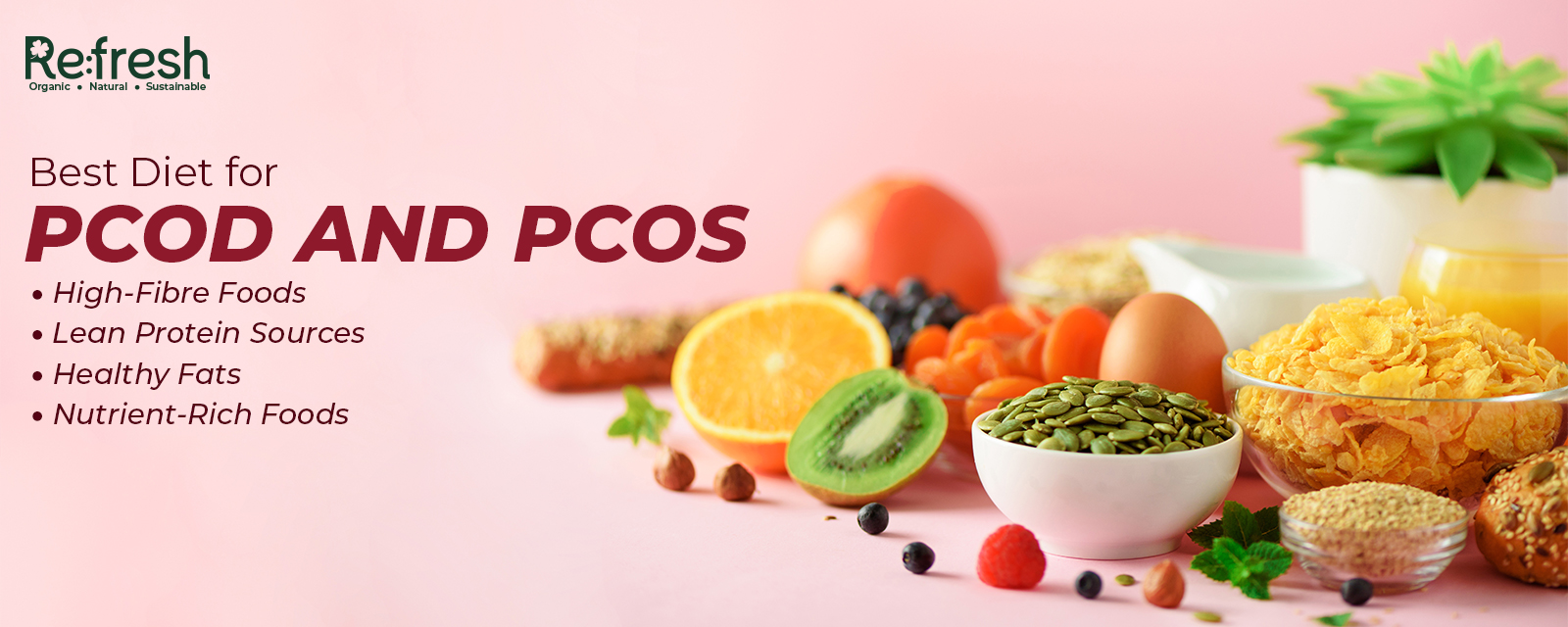
A good diet for pcod/pcos is full of seasonal fruits, vegetables, whole grains, and proteins.
These can reduce symptoms and make you feel better. It also helps manage weight and lowers the risk of diabetes and heart problems in the future.
-
High-Fibre Foods:
High-fibre foods like broccoli, spinach, bottle gourd, carrots, and leafy greens can help reduce insulin resistance and control blood sugar spikes, becoming one of the best foods for PCOD patients.
Fibre will keep you full for longer, slow down sugar absorption, and imporve insuling resistance.
Include these in your pcod diet:
- Vegetables (sweet potato, broccoli, spinach, carrots, bottle gourd)
- Fruits with low glycaemic load (guava, papaya, berries, apple, pear)
- Whole grains (Wheat, oats, millets, brown rice)
- Seeds (Pumpkin seeds, flaxseeds, chia seeds)
-
Lean Protein Sources:
Proteins are the building blocks of your body, and with lean protein sources, you can prevent rapid blood sugar spikes.
Lean proteins will also regulate your appetite hormones and support ovulation, making it crucial for menstrual regularity and fertility in PCOS and PCOD.
Best choices for pcod diet:
- Dal and legumes (moong, masoor, rajma, chickpeas, tuvar, chana)
- Tofu
- Eggs
- Milk, cheese, paneer, curd
- Greek yoghurt
- Fish and lean chicken
-
Healthy Fats:
MUFAs and PUFAs, and a healthy balance of saturated fats, can reduce inflammation and support the production of reproductive hormones, which are usually imbalanced in PCOS.
Healthy fats also provide your essential nutrients to support a healthy balance in your body.
Include these in your pcod diet:
- Nuts (almonds, cashews, walnuts, brazil nuts)
- Seeds (pumpkin, sunflower, watermelon)
- Cold-pressed oils (peanut oil, olive oil, mustard oil)
- Avocado, acai berries, and coconut (in moderation)
-
Nutrient-Rich Foods:
Your body requires varied forms of nutrients to keep your blood sugar stable, build bones and muscles, and secrete hormones.
Especially in a PCOD diet, key micronutrients like magnesium, iron, zinc, B-complex vitamins, and vitamin D play a direct role in improving metabolism, regulating periods, and reducing fatigue in women.
Include these in your PCOD diet:
- Whole grains and millets (rich in magnesium and B vitamins)
- Legumes and pulses (good source of iron, zinc, and folate)
- Sweet potato (provides potassium, vitamin B6, and antioxidants)
- Quinoa (contains magnesium, iron, and plant-based protein)
Read More: Best Foods for Menopause Relief: What to Eat During Menopause
Foods to Avoid in PCOD and PCOS
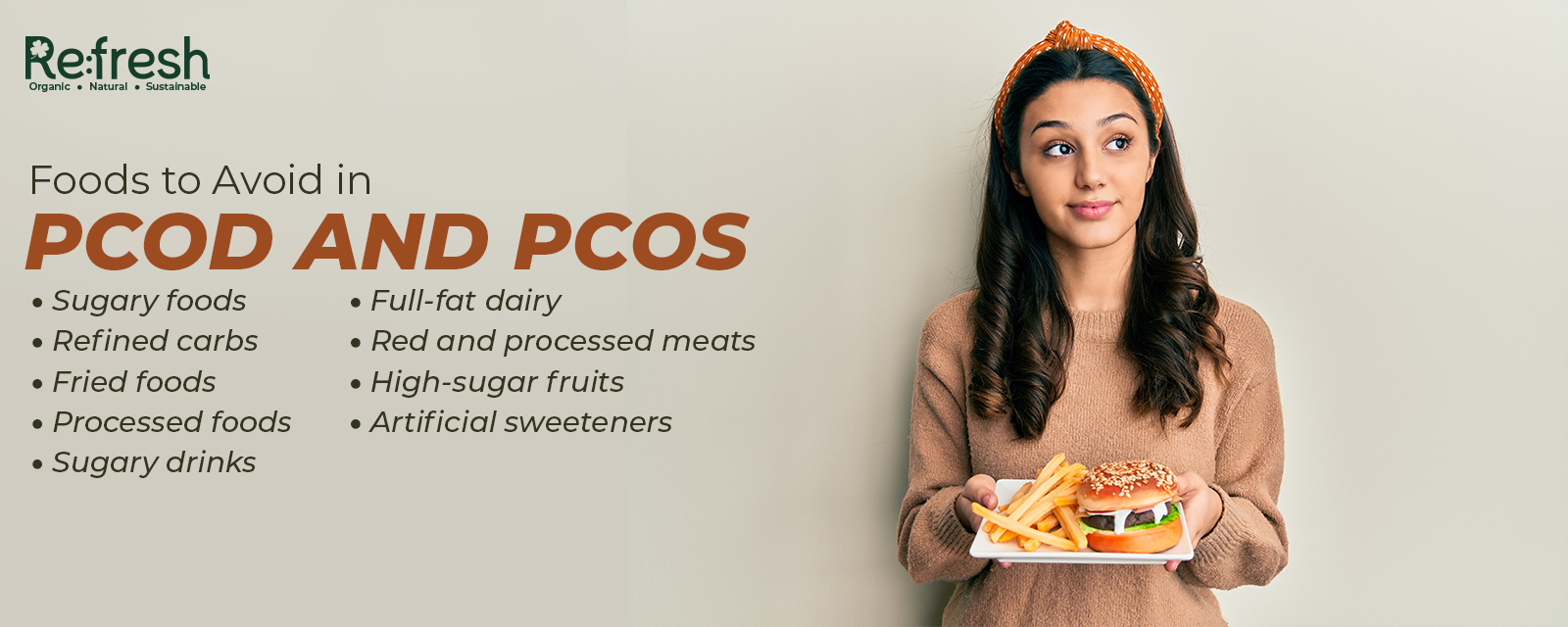
Including healthy foods won’t make the real difference. PCOD/PCOS patients need to avoid some foods in order to support a healthy lifestyle:
- Sugary foods: Sweets, candies, cakes, pastries
- Refined carbs: White bread, white rice, pasta, noodles
- Fried foods: Chips, samosas, pakoras, burgers
- Processed foods: Instant noodles, frozen meals, packaged snacks
- Sugary drinks: Cold drinks, packaged juices, energy drinks
- Full-fat dairy: Full cream milk, cheese, butter (can be heavy for some)
- Red and processed meats: Sausages, bacon, ham
- High-sugar fruits: Watermelon, ripe bananas (in large amounts)
- Artificial sweeteners: Diet sodas, sugar-free snacks
Reducing these foods can significantly improve period regularity and weight control.
Conclusion
Managing PCOD/PCOS doesn’t require crash diets, restricting yourself or any quick fixes.
It is about making consistent and nourishing food choices that support your hormones and lead the way to a regular menstrual cycle.
A balanced, whole-food based PCOS diet can help regulate hormones, improve energy levels, and reduce symptoms over time.
Focus on building your healthy plate with high fibre, protein, healthy fats, and nutrient-rich foods while limiting processed and sugary items, you create a sustainable path to better health.
Remember, consistency - not perfection - is the key to managing PCOD and PCOS naturally.
Explore More From Naturopedia
Cancer Awareness Day 2025: Tests, Signs & Early Detection for All Cancers
Are You at Risk of Heart Disease? Study Links These Foods to a Healthier Heart
Top 6 Health Benefits of Sugar-Free Chocolates for Weight Loss & Wellness
-

You're Probably Storing These 10 Everyday Foods the Wrong Way
August 19th, 2026 -
 August 17th, 2026
 -

Organic vs Regular Spices: Are Organic Spices Really Better?
August 14th, 2026 -

What Did Lord Krishna Really Eat? 7 Favorite Foods for Janmashtami
August 12th, 2026 -
 August 10th, 2026