

What Happens When You Eat Amla Daily in Winter?
Winters put extra load on your immune system, and it needs extra care.
Indian gooseberry, aka. Amla, amalaki, amla green, or Phyllanthus emblica is one of the most powerful foods you can add to your diet.
Being the richest source of vitamin C and packed with antioxidants, amla becomes even more beneficial during colder months.
Eating amla benefits immunity, digestion, skin, hair, and overall health.
In this blog, we’re diving deep into what really happens when you make amla a part of your everyday winter diet.
-
Your Immunity Strengthens Naturally
Daily consumption of amla or Indian gooseberry provides an abundant supply of vitamin C, essential for winter health benefits.
A 100 g serving of Amla gives about 600–700 mg of Vitamin C. That is 20 times more vitamin C than an orange.
It contains heat-stable vitamin C, which retains the nutrients even after cooking or drying. Amla is also rich in antioxidants
How does daily amla improve winter immunity?
- Boosts production of white blood cells
- Strengthens the body’s antiviral and antibacterial response
- Helps prevent common winter colds, coughs, and flu
- Supports faster recovery from infections
-
Boosts Digestion
The winter season slows down metabolism and often leads to sluggish digestion, bloating, and constipation.
Eating amla benefits your metabolism by regulating digestive fire (agni) and improving gut health.
Daily digestive benefits of amla in winter:
- Balances stomach acid levels
- Enhances nutrient absorption
- Reduces acidity and indigestion
- Works as a mild natural detoxifier
- Supports a healthy gut microbiome
This makes amla a great companion for heavy winter meals.
-
Your Skin Looks Hydrated & Radiant
People often complain about dry, dull, and rough skin in winter, and most conventional moisturisers don’t hydrate deeply.
Amla or Indian gooseberry has high vitamin C, antioxidants, and collagen-boosting properties, making it exceptional for winter skincare.
What daily amla does for your skin:
- Enhances collagen production
- Reduces dryness and dullness
- Gives a natural, healthy glow
- Protects against skin damage and ageing
- Helps reduce pigmentation and blemishes
Amla benefits your skin, making it soft, supple, and youthful from the inside.
-
Keeps Your Hair Becomes Stronger, Shinier & Dandruff-Free
Amla has traditionally been used to effectively nourish your scalp.
Winter often causes dryness and dandruff, but eating amla daily provides essential nutrients to to hair scalp and follicles.
Daily amla for hair benefits include:
- Reduces hair fall
- Strengthens hair roots
- Prevents dandruff and scalp irritation
- Enhances hair shine and thickness
- Promotes healthy hair growth
Pairing it with amla oil or amla powder masks boosts results.
-
Helps in Weight Management
Winter cravings can lead to overeating, but amla helps regulate appetite, support metabolism, and reduce oxidative stress.
Why does daily amla support weight management?
- Speeds up metabolism
- Helps regulate blood sugar levels
- Supports liver detoxification
- Reduces water retention
- Promotes fat metabolism
This makes amla juice for weight loss especially popular during winter.
-
Improves Heart Health
Amla is known to support cardiovascular health, with its antioxidant and anti-inflammatory properties.
Daily health benefits include:
- Helps reduce LDL (bad cholesterol)
- Supports better circulation
- Reduces oxidative stress
- Improves blood sugar control
- Strengthens overall vitality and energy levels
Eating amla daily supports overall health.
-
How to Add Amla to Your Everyday Winter Diet
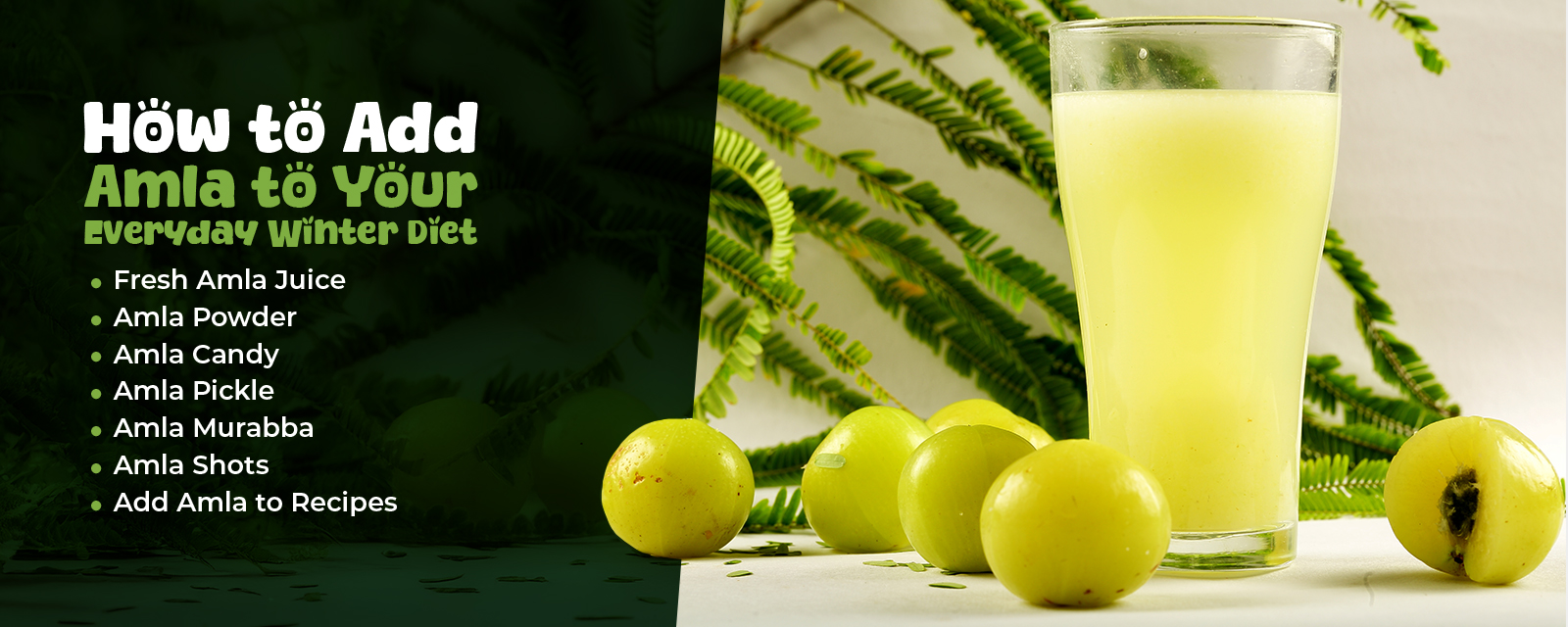
Many people find it hard to eat amla daily. Here are simple and enjoyable ways to include it:
-
Fresh Amla Juice
You can blend 1-2 amlas with water and strain to get fresh amla juice that boosts immunity, digestion, and metabolism. Add honey if he sourness is too much for you.
-
Amla Powder
If fresh amla isn’t available or you're searching for “indian gooseberry near me” and want a shelf-stable option, amla powder benefits include convenience and easy mixing.
Ways to use:
- Mix with warm water
- Add to smoothies
- Use in herbal tea
- Combine with honey for a natural tonic
-
Amla Candy
A sweet-tangy snack rich in antioxidants. Kids and adults both love it.
-
Amla Pickle
A traditional way to get digestive support plus great flavour.
-
Amla Murabba
A spoonful daily supports immunity, digestion, and energy.
-
Amla Shots
Mix amla juice + ginger + turmeric + black salt for a powerful winter wellness shot.
-
Add Amla to Recipes
- Amla chutney
- Amla raita
- Amla halwa
- Amla smoothie bowls
- Amla-infused herbal tea
These recipes make daily consumption simple and enjoyable.
-
-
Conclusion
Eating amla daily in winter transforms your health in every aspect.
This humble amla green fruit delivers powerful benefits - strong immunity, better digestion, glowing skin, healthy hair, balanced metabolism, and enhanced overall vitality.
Because of its nutrient density and antioxidant strength, Phyllanthus emblica is truly one of the most valuable superfoods for winter wellness.
Make amla a regular part of your diet this season, whether through juice, powder, candy, or fresh fruit, and experience the incredible difference it brings to your health.
If you’re considering adding it to your routine, look for quality sources, check out organic amla products at Refersh.
-
Frequently Asked Questions
-
What happens if we eat amla daily?
It boosts immunity, improves digestion, enhances skin and hair health, and supports heart and blood sugar balance.
-
Does amla really grow hair?
Yes, it supports hair growth by strengthening follicles, reducing dandruff, and preventing breakage and premature greying.
-
Who should not eat amla?
People with acidity, very low blood sugar, bleeding disorders, or those on blood thinners should avoid or limit amla.
-
How many days will Amla show results?
Effects vary-digestion improves within days; skin and hair results take a few weeks.
-
What is the best time to eat amla?
Morning on an empty stomach is ideal; take it after breakfast if you have acidity.
Incorporating amla into your routine is easier when you have it ready. Instead of daily preparation, choose a clean and convenient option.
Get fresh, natural Amla Juice made for daily wellness and immunity support. 👉 Shop now at refreshyourlife.in and make amla a part of your everyday routine
-
Read More: Amla Benefits: Discover Why This Indian Gooseberry is a Nutritional Powerhouse
Explore More From Naturopedia
Top 6 Health Benefits of Sugar-Free Chocolates for Weight Loss & Wellness
These Foods May Increase Your Cancer Risk (Backed by Science)
-

You're Probably Storing These 10 Everyday Foods the Wrong Way
August 19th, 2026 -
 August 17th, 2026
 -

Organic vs Regular Spices: Are Organic Spices Really Better?
August 14th, 2026 -

What Did Lord Krishna Really Eat? 7 Favorite Foods for Janmashtami
August 12th, 2026 -
 August 10th, 2026