10 Must-Try Eco-Friendly Products to Replace Plastic at Home
According to the United Nations Environment Programme, an estimated 11 million metric tonnes of plastic enter the world’s oceans every year. (1)
Plastic and other harmful chemicals have entered our kitchens, bathrooms, wardrobes, and even inside our bodies as microplastics.
As the new year 2026 approaches, shifting to eco-friendly household products not only protects the planet but also safeguards our health, reduces waste, and supports a more sustainable lifestyle.
In this blog, we tell you about 10 eco-friendly products that can reduce plastic pollution while elevating your daily routine.
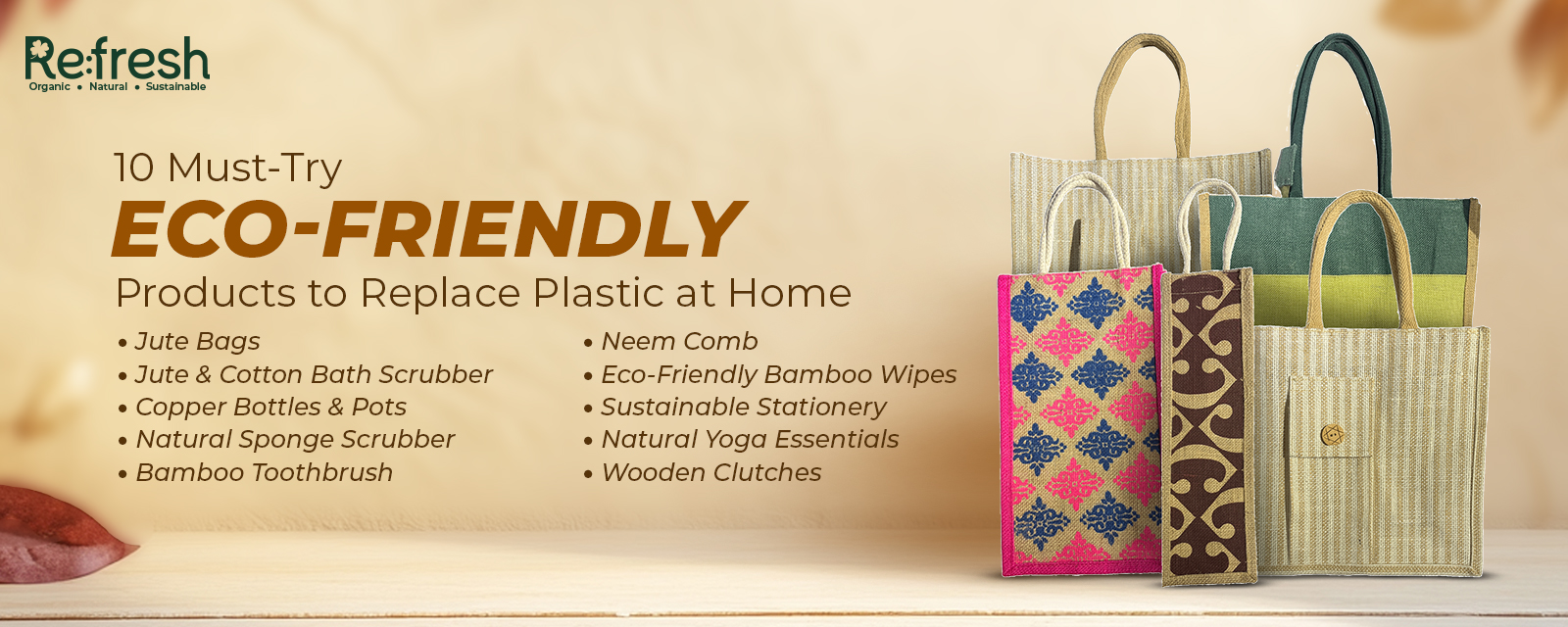
1. Jute Bags:
Plastic waste contributes to 4-8% of annual fossil fuel consumption. (1)
Plastic bags clog rivers and oceans, choke marine life, and take up to 1000 years to decompose.
Jute shopping bags are sustainable, biodegradable, stylish, durable, and incredibly practical.
You can carry heavy groceries, use it for travel, storage, and use your jute bag in various ways, thereby reducing plastic waste.
Jute bags are made of natural fibre; their use supports jute farmers, making every purchase a step toward a zero-waste lifestyle.
2. Jute & Cotton Bath Scrubber:
Most bath loofahs are made of plastic fibres that shed microplastics with every use and may accumulate in your body over time.
WHO has warned that microplastics can enter the food chain and harm our overall health.
Replace your plastic loofah with a jute-cotton bath scrubber, which is gentle on skin, biodegradable, and free from toxic chemicals.
Crafted from natural jute and cotton fibres, these scrubbers gently exfoliate your skin, leaving it soft and refreshed.
Ideally, replace your Jute and cotton loofahs every 6-8 months to maintain hygiene while staying eco-friendly.
3. Copper Bottles & Pots:
Plastic water bottles can leach microplastics and harmful chemicals like BPA, which has been linked to hormonal imbalance and developmental concerns.
According to Ayurveda, Tamra Jal, or water stored in copper bottles, has high antimicrobial properties and the ability to balance the three doshas- Vata, Pitta, and Kapha. Copper water is positively charged and maintains the body’s pH (acid-base) balance.
Replace your plastic bottles with pure copper bottles and utensils to lower your exposure to microplastics.
Copper bottles reduce plastic waste and are durable, helping keep water safer while supporting digestion and immunity.
Read More: How to Choose the Right Copper Bottle for You
4. Natural Sponge Scrubber:
The green sponges used in our kitchens release tiny plastics into water systems daily, increasing the risk of harmful diseases.
According to a study, synthetic sponges contribute significantly to microplastic contamination in household wastewater. (1)
Try a natural sponge scrubber, which is plant-based, compostable, effective for cleaning dishes, and safe for your health.
Plus, it doesn’t store any harmful buildup when you dry it properly - making it safer and cleaner than plastic sponges.
5. Bamboo Toothbrush:
Every year, over 1 billion toothbrushes end up in landfills, aggravating soil pollution.
Plastic toothbrushes never decompose, breaking down into toxic microplastics instead and polluting the soil.
A bamboo toothbrush offers a biodegradable handle, a comfortable grip, and guilt-free brushing.
Pair it with a natural and Ayurvedic toothpaste, and you will instantly feel the goodness of sustainable living.
6. Neem Comb:
Hair is one of the most sensitive parts of our body, and plastic combs generate static, damage hair, and contribute to everyday waste.
Try a neem wood comb, an antimicrobial comb which reduces hair fall, stimulates the scalp, and lasts longer than plastic combs.
Naam has antibacterial properties that help maintain scalp health, plus help you avoid contact with petroleum-based plastic every single day.
Most importantly, choosing a neem comb supports a healthier hair-care routine while minimising your environmental footprint.
7. Eco-Friendly Bamboo Wipes:
Wipes are widely used almost everywhere, but they contain polyester and plastic fibres, meaning that every wipe used contributes to more land pollution.
Replace your plastic wipes with eco-friendly bamboo wipes that are biodegradable, skin-friendly, and safer for babies and adults alike.
Bamboo wipes decompose naturally, unlike synthetic wipes that will take at least 200 years to decompose.
Make this smart choice for hygiene, parenting, and environmentally conscious living in 2026.
Make this smart choice for hygiene, parenting, and environmentally conscious living in 2026.
8. Sustainable Stationery:
Who said who has to cut millions of trees and create unnecessary waste to make notebooks and pens?
Gaukriti paper is bleach-free, tree-free, chlorine-free, chemical-free, 100% recyclable, made through a traditional, eco-friendly process, and crafted using natural materials like cotton waste and organic fertiliser.
These beautifully creative sheets are painted with natural colours and can even be planted in soil, where they decompose and act as fertiliser.
Refreshyourlife has a wide range of cow dung paper diaries, pencils, notebooks, calendars, file folder and so much more.
9. Natural Yoga Essentials:
Yoga mats are a daily essential for health-enthusiasts, whether you want to practise yoga, pilates or daily stretches.
Most yoga mats are made of PVC, a type of plastic fibre linked to environmental toxicity and skin irritation.
Natural Yoga mats are made of cork, rubber, or jute, which are breathable, non-toxic, and planet-friendly.
They support your wellness journey while aligning with the philosophy of mindfulness and eco-conscious fitness.
10. Wooden Clutches:
Trendy purses are made of plastic and leather, which come at the cost of the planet and animal life.
Wooden clutches are an innovative and sustainable alternative to plastic-based accessories that pollute soil and oceans long after you stop using them.
Wooden clutches come in beautiful designs and styles which are elegant, durable, and free from harmful synthetics.
They decompose naturally, reduce the landfill waste, and prove that sustainability can absolutely be stylish.
Practical Tips to Make the Switch Easier:
- Start small and replace one plastic product at a time. You cannot adapt to new changes immediately, and healthy habits take time.
- If you already have some plastic products, don’t throw them away because sustainability means responsible use. Use them to the fullest before replacing them with eco-friendly products.
- Educate your family members, especially children, about the negative effects of plastic products and that sustainability is the future.
- Choose high-quality, natural, and certified organic products from reputed marketplaces like RefreshYourLife.
Final Thoughts
These eco-friendly products can transform your home into a plastic-free home and are one of the most meaningful steps you can take for your health and the Earth.
Every eco-friendly swap will reduce pollution, support sustainable farmers, and build a future where convenience and responsibility coexist.
Plastic pollution threatens marine life, biodiversity, food safety, and climate balance.
Start today, because the planet deserves better, and so does our health.
Explore More From Naturopedia
5 Simple Dietary Swaps to Protect Your Lungs This Polluted Winter
Stop Spraying Toxins on Your Skin: This 100% Natural Body Mist is the Safe Switch You Need
Tired or Moody? Unexpected Symptoms of Vitamin D Deficiency You Shouldn’t Ignore
-

You're Probably Storing These 10 Everyday Foods the Wrong Way
August 19th, 2026 -
 August 17th, 2026
 -

Organic vs Regular Spices: Are Organic Spices Really Better?
August 14th, 2026 -

What Did Lord Krishna Really Eat? 7 Favorite Foods for Janmashtami
August 12th, 2026 -
 August 10th, 2026