
How to Use Ghee Correctly: Common Mistakes Indians Make Daily
For Indians, desi cow ghee is sacred, symbolising nutrition, health, culture, and deep-rooted traditions.
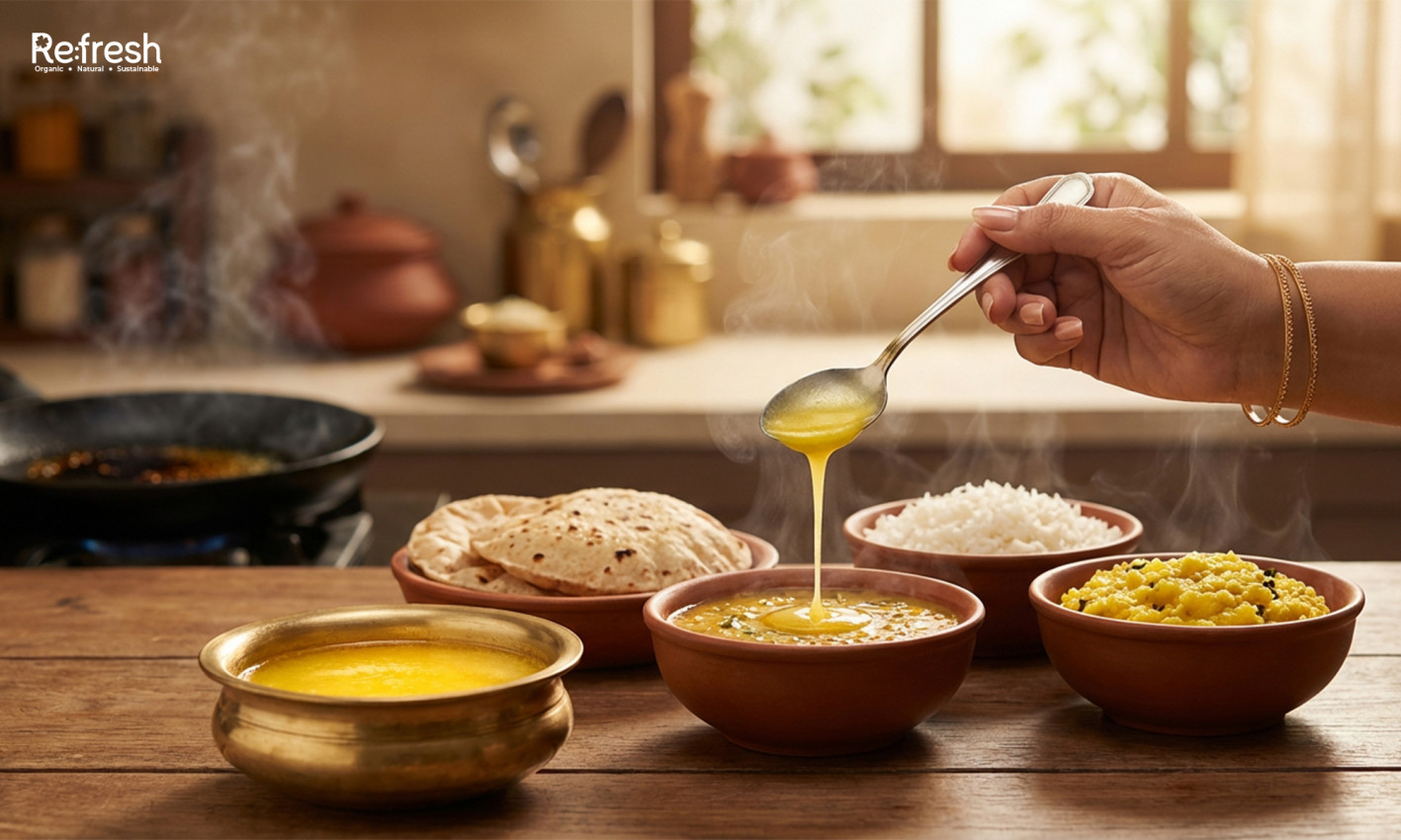
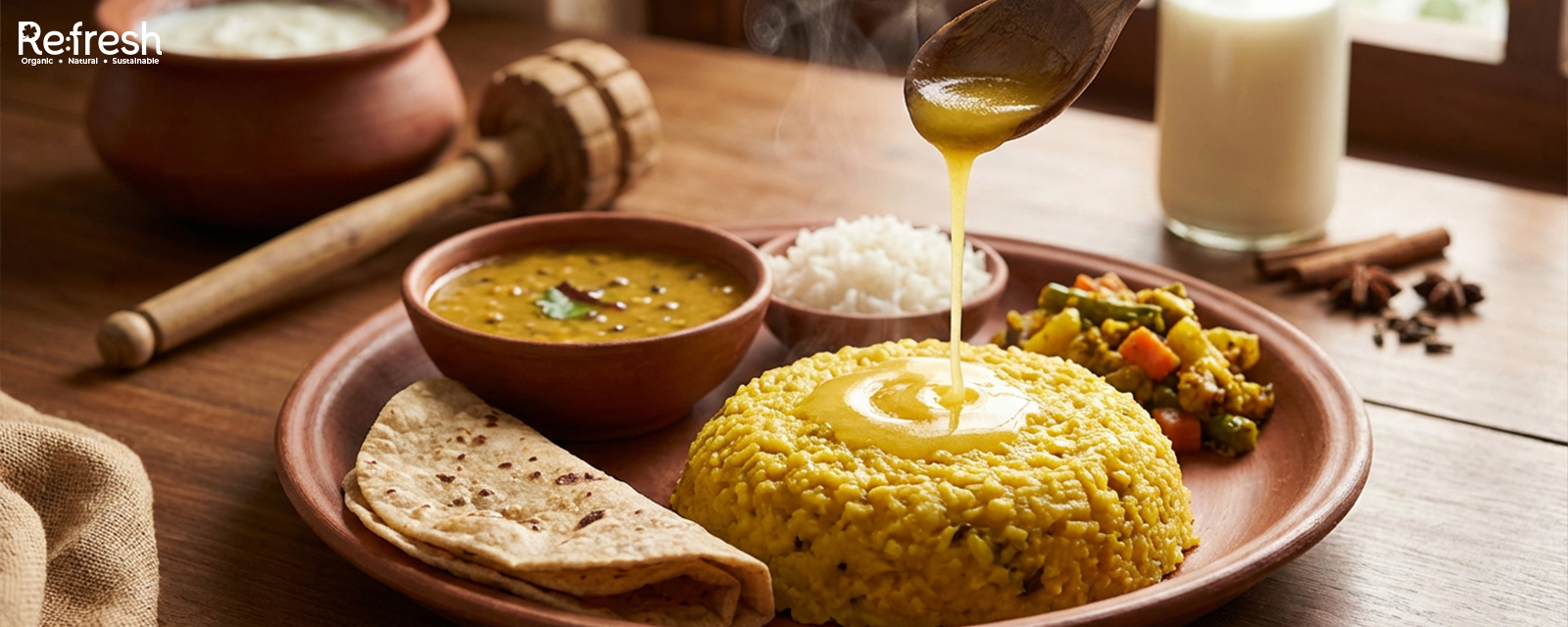
We pour it into havan fires, drizzle a generous spoonful on our dal chawal, and garnish our chapatis.
But here's what nobody tells Indians: we've been using desi cow ghee the wrong way, and it's harming our health in different ways.
In this blog, we're exploring the major mistakes Indians make while using ghee and how to add it.
-
Why Ghee Became India's Most Misunderstood Fat?
-
The Most Common Ghee Mistakes Indians Make:
For years, pure ghee was viewed with suspicion due to its high saturated fat content and was often grouped with foods that increased heart disease risk.
While it is still advised that you limit your saturated fat intake from desi cow ghee, researchers now recognise that ghee is more complex than it was once made out to be.
Pure cow A2 ghee contains fat-soluble vitamins such as A, D, E, and K, as well as small amounts of beneficial fatty acids, including butyric acid and conjugated linoleic acid (CLA).
Some research suggests that desi ghee benefits gut lining health through a compound called butyrate by regulating inflammation.
But ghee's benefits mainly depend on how much and how often you consume it; that's exactly where most Indians go wrong.
Heating Ghee Past Its Smoke Point:
Using the Wrong Type of Ghee
A2 Ghee vs Regular Ghee: Why Source Matters
- A2 ghee is made from milk of indigenous Indian cows like Gir and Sahiwal, which produce A2 beta-casein protein.
- Regular ghee typically comes from crossbred cows producing A1 beta-casein, which some studies suggest may be harder to digest for certain individuals.
- Traditional bilona ghee, made by fermenting milk into curd, churning it into butter, and slow-heating it, helps retain naturally occurring nutrients better than high-heat industrial processing.
Eating Too Much Ghee, Frequently
Pure desi A2 cow ghee has a high smoke point of around 250°C (482°F).
But mixing ghee with refined oils or using low-quality cow ghee can bring the smoke point significantly lower.
When the ghee overheats, the healthy fats can oxidise and get converted into harmful free radicals.
Free radicals are linked to inflammation, arterial damage, and oxidative stress.
Recently, Hyderabad police seized 3,000 kg of cow & buffalo cream were mixed with cheap substances and supplied to the public.
Most supermarket cow ghee is actually made from buffalo milk or low-quality mixed dairy, processed at a higher temperature.
Fake ghee can lack the key nutrients - CLA, omega-3s, and fat-soluble vitamins - found in pure A2 cow ghee made via the bilona churning method.
Ghee is a calorie-dense food, as one tablespoon carries approximately 112–120 calories and 13 grams of fat.
When you consume excess ghee without an active lifestyle, it can contribute to weight gain and elevated LDL cholesterol, especially in people with sedentary routines.
Adding Ghee to the Wrong Foods
Desi ghee adds saturated fats to your food and should be paired with adequate protein and carbs in a plate.
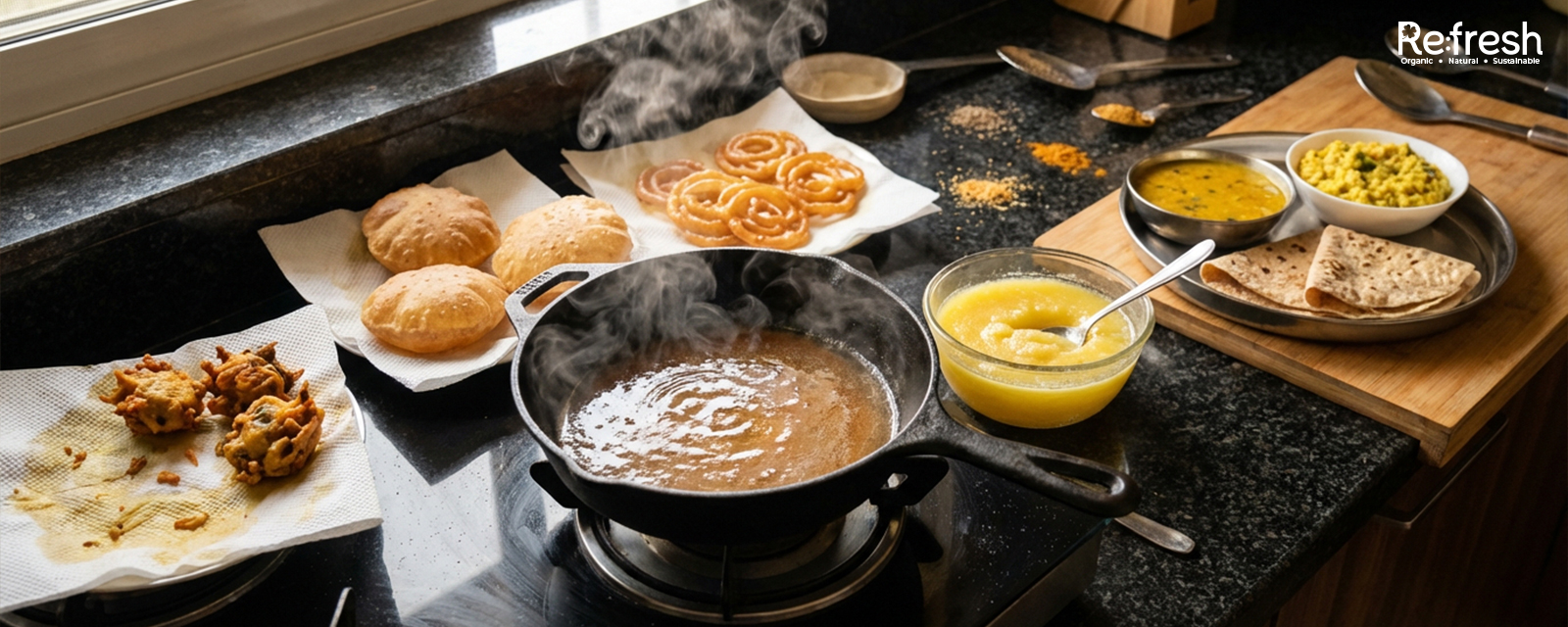
When you combine it with already high-fat or high-sugar foods, like puris fried in ghee, ghee-laden mithais, or ghee mixed into sugary desserts, you create a metabolic load your body struggles to process efficiently.
-
Health Benefits of Desi Cow Ghee:
Supports Gut Health Naturally:
Ghee has butyric acid, a kind of short-chain fatty acid that serves as a primary energy source for colonocytes - cells in our gut lining.
Harvard research suggests colonocytes play an important role in maintaining a healthy gut barrier and regulating inflammation.
A healthy gut lining means better nutrient absorption, lower risk of leaky gut, and reduced bloating.
Although ghee is not a major source of butyrate, small amounts of it can be added to dal, khichdi, or chapati to support overall digestion.
Contains Fat-Soluble Vitamins:
Pure desi cow ghee contains fat-soluble vitamins such as vitamin A, D, E, and K, especially when sourced from grass-fed cows.
These vitamins play key roles in maintaining overall health:
- Vitamin A supports vision, immunity, and skin health. ( 1 )
- Vitamin D helps regulate calcium absorption and bone health. ( 1 )
- Vitamin E acts as an antioxidant, protecting cells from damage
- Vitamin K plays a role in blood clotting and bone metabolism
While ghee is not a major source on its own, it plays an important role in the absorption of these fat-soluble vitamins from other foods.
Supports Hormonal Function:
Healthy fats are required for the proper production of essential hormones such as estrogen, progesterone, and testosterone.
Research has consistently shown that low-fat diets may negatively affect your hormone production, particularly in women.
Including moderate amounts of dietary fats like desi cow ghee can support overall hormonal balance.
However, ghee will not directly boost your hormone levels, but it's a part of a balanced dietary pattern that supports endocrine health.
Supports Healthy Weight Management (When Used Moderately)
Ghee has often been misunderstood as a food that causes weight gain, but the effects largely depend on your overall diet.
It contains a small amount of conjugated linoleic acid (CLA), a fatty acid being studied for its role in fat metabolism.
That said, fats like ghee can increase satiety and help reduce overall calorie intake as it's more calorie-dense. (Moderation should be maintained)
Adding a small amount of ghee to meals may help improve satisfaction and reduce unnecessary snacking.
May Support an Anti-Inflammatory Diet:
Chronic inflammation is linked to many lifestyle conditions, including metabolic disorders and cardiovascular disease.
Compounds like butyrate and CLA, present in desi cow ghee, have shown anti-inflammatory properties in research.(1)
However, the impact of ghee is not significant and should be paired with an overall balanced, anti-inflammatory dietary pattern that includes whole foods, fibre, and healthy fats.
The Bottom Line
Ghee is not a villain, it never was, and it will never be.
But ghee is not a magic food that you can carelessly eat in unlimited amounts without thinking about fat and calories,
India has been using ghee correctly for thousands of years.
Somewhere in the modern rush and supermarket culture, we lost touch with moderation, and overeating became the norm.
Use less. Use better. Use it right. That's when ghee truly becomes the hero.
We don't need to convince you about the health benefits of A2 cow ghee and bilona desi cow ghee, so follow this link to buy the best ones here - Buy A2 desi ghee online
Frequently Asked Questions
▼-

You're Probably Storing These 10 Everyday Foods the Wrong Way
August 19th, 2026 -
 August 17th, 2026
 -

Organic vs Regular Spices: Are Organic Spices Really Better?
August 14th, 2026 -

What Did Lord Krishna Really Eat? 7 Favorite Foods for Janmashtami
August 12th, 2026 -
 August 10th, 2026