
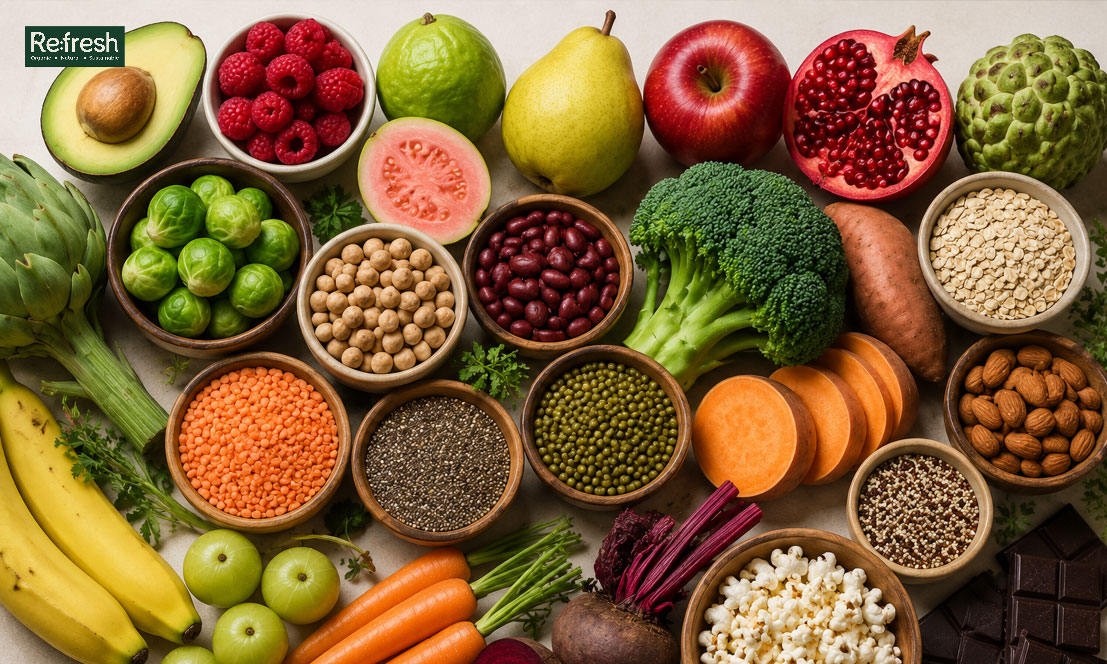
25 Fiber Rich Foods Every Vegetarian Should Eat for Better Digestion
Most Indians don’t get enough fiber through their daily diet.
Fiber is a type of carbohydrate found in plant foods that the body cannot fully digest. It helps support digestion, regular bowel movements, and gut health.
In fact, modern eating habits are full of refined flour, high-processed foods, and low-vegetable meals, quietly increasing digestive issues, constipation, unhealthy cravings, and blood sugar spikes.
A low-fiber diet may contribute to constipation, poor gut health, increased hunger, and unstable blood sugar levels throughout the day.
Simple vegetarian foods like lentils, guava, chickpeas, and oats can dramatically improve your fiber intake naturally.
In this blog, we’re talking about top 25 fiber-rich foods for vegetarians so you can make smarter everyday choices.
Top 25 Fiber Rich Foods for Vegetarians
Dietary fiber is a part of plant food that your body cannot digest and that’s exactly why it’s valuable. It feeds your gut bacteria, reduces LDL cholesterol, slows glucose absorption, and keeps your bowel movements regular.
All values are presented in commonly consumed serving sizes (raw/dry where applicable), sourced from USDA FoodData Central and ICMR food composition tables.
High In Fiber Fruits
Here are some of the best fiber rich fruits ranked by fiber content.
- Avocado: 6.7 g fiber per 100 g. Avocado is one of the richest fiber-containing foods and also provides healthy fats that help keep you full for longer.
- Raspberries: 8 g fiber per cup. Raspberries are high in several powerful antioxidants like vitamin C, quercetin, ellagic acid, and so on.
- Guava: 5.4 g fiber per 100 g. Guava or amrood is also rich in Vitamin C and known traditionally for relieving constipation.
- Pear: 5.5 g fiber per medium fruit. Pears are excellent fruits high in fiber, especially when eaten with the skin.
- Apples: 4 g fiber per medium fruit. Apples have a low glycemic index, making them a great snack to lower type 2 diabetes risk.
- Pomegranate: 4 g fiber per 100 g. Most of the fiber is in pomegranate seeds (arils) so don't strain the juice - eat the whole aril for maximum benefits.
- Custard Apple: 4.4 g fiber per 100 g. Along with fiber, custard apple provides vitamin C, antioxidants, and natural carbohydrates that can help support energy levels.
- Amla: 4.3 g fiber per 100 g. Indian gooseberry or amla contains a strong dose of vitamin C, supports digestion and overall gut health.
- Bananas: 3.1 g fiber per medium banana. Slightly raw bananas contain resistant starch that support good gut bacteria.
Fiber-Rich Vegetables
If you’re searching for food high in fiber vegetables, these names deserve a place in your balanced plate.
- Artichoke: 9.6 g fiber per cup. Artichokes are one of the highest fiber-rich foods available worldwide. It contains prebiotic fibers that support beneficial gut bacteria.
- Brussels Sprouts: 6.4 g fiber per cup. These tiny cruciferous vegetables are also rich in vitamin C, vitamin K, and antioxidants that may help support immunity and overall health.
- Sweet Potatoes: 6.4 g fiber per cup. Shakarkandi or sweet potatoes are widely available in India and an excellent fiber-rich option for constipation relief. Steam, roast, or have it as chaat - the skin adds extra fiber.
- Broccoli: 5.1 g fiber per cup. Broccoli is not a traditional Indian vegetable but it integrates well in pulao, biriyani, and stir fries. It also delivers Vitamin C and sulforaphane alongside its fiber.
- Carrots: 3.6 g fiber per cup. Carrots or gajar are also rich in beta-carotene, an antioxidant that your body converts into vitamin A, helping support eye health and immunity.
- Beetroot: 2.8 g fiber per cup. Beetroot is also rich in antioxidants and natural nitrates that may support blood circulation, exercise performance, and overall heart health.
Fiber-Rich Lentils & Pulses
Legumes are a balanced combination of fiber and protein, especially for vegetarians.
- Split Peas: 16 g fiber per cooked cup. Split peas are incredibly high in fiber that may support healthy bowel movements and better blood sugar balance. They are incredibly filling and excellent for soups and dals.
- Kidney Beans (Rajma): 13.1 g fiber per cooked cup. Kidney beans also contain antioxidants and minerals like magnesium and potassium that support overall heart and metabolic health.
- Chickpeas: 12.5 g fiber per cooked cup. Chickpeas also contain important minerals like iron, magnesium, and folate and are versatile enough for hummus, curries, and chaat.
- Moong Dal: Around 7–8 g fiber per cooked cup. Moong dal is one of the easiest dals to digest, making it a popular choice in light and balanced Indian meals.
- Masoor Dal (Red Lentils): Around 8 g fiber per cooked cup. Masoor dal is naturally low in fat while being a good source of folate, an essential B vitamin that supports red blood cell formation and DNA synthesis.
Additional Fiber-Rich Foods
These are some easy fiber-enriched foods you can add in your daily diet without much effort.
- Oats: 10.1 g fiber per 100 g. Oats are rich in a special type of soluble fiber called beta-glucan, which may help support heart health and lower cholesterol levels.
- Quinoa: 5.2 g fiber per cooked cup. Quinoa is a nutrient-dense seed and unlike many grains, quinoa contains all nine essential amino acids, making it a valuable protein source for vegetarians. Subtle Pick: Conscious Food Quinoa Seeds.
- Chia Seeds: 4-5 g fiber per tablespoon. These tiny seeds are naturally rich in omega-3 fatty acids, calcium, magnesium, and antioxidants that support overall wellness. Subtle Pick: Chia Seeds Collection.
- Almonds: 3.5 g fiber per 28 g. Almonds are packed with vitamin E, healthy fats, and plant compounds that may support skin elasticity and heart health. Subtle Pick: Refresh Organic Almonds.
- Popcorn: 5.8 g fiber per 3 cups. Popcorn is a whole grain snack that can be surprisingly healthy when you limit butter and excess salt.
- Dark Chocolate: Around 3–4 g fiber per 30 g. Dark chocolate contains strong antioxidants like flavonoids that may help support heart health and overall wellness when consumed in moderation. Choosing dark chocolate with higher cocoa content usually provides more beneficial plant compounds and less added sugar.and this chocolate range meets these criteria.
How Much Fiber Do You Really Need Per Day?
The ICMR recommends 25-40 g of total dietary fiber per day for Indian adults.
Children need slightly less and pregnant women benefit from staying at the higher end.
Since most Indians fall short of the daily recommended limit of fiber, this list of high-fiber foods can help you support overall health.
Start Eating Fiber-Rich Foods Today!
You don’t need to make drastic changes to your diet overnight.
Add one fiber-rich food at a time and swap polished rice for quinoa twice a week, start your morning with a guava, or make dal a daily staple.
These small shifts, when consistently practiced, are what build lasting digestive health.
A fiber-rich diet for constipation is also a diet for a healthier heart, a thriving gut microbiome, and better blood sugar control.
If you want to make these upgrades even healthier, explore certified organic pulses, seeds, and grains, delivered across India, at Refreshyourlife.
Frequently Asked Questions
-

You're Probably Storing These 10 Everyday Foods the Wrong Way
August 19th, 2026 -
 August 17th, 2026
 -

Organic vs Regular Spices: Are Organic Spices Really Better?
August 14th, 2026 -

What Did Lord Krishna Really Eat? 7 Favorite Foods for Janmashtami
August 12th, 2026 -
 August 10th, 2026