
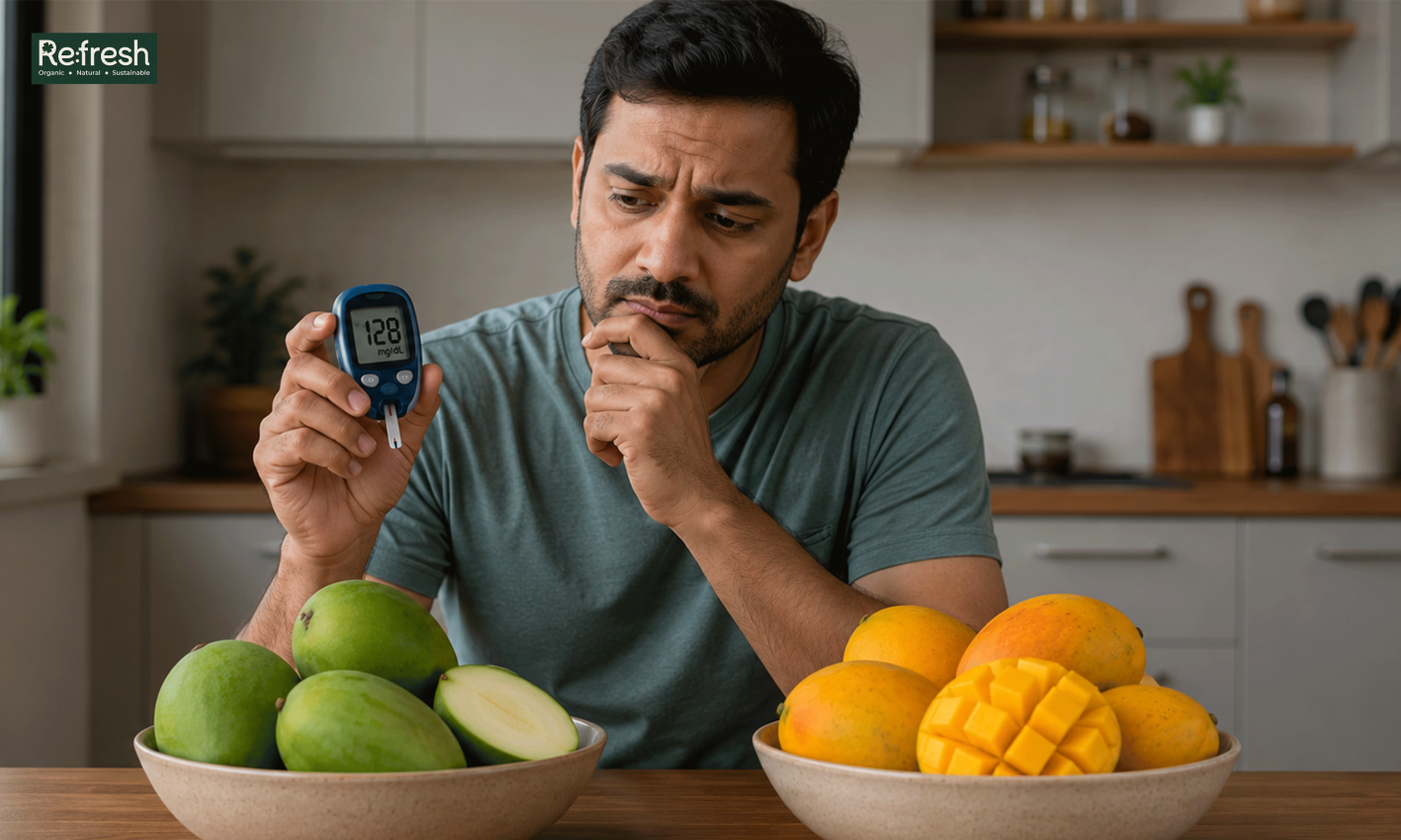
Raw Mango vs Ripe Mango: Which One Is Safe for Diabetes and Won't Spike Your Blood Sugar?
Every summer in India, the same question resurfaces - can I eat mango if I have diabetes?
Mangoes are irresistible but doctors recommend limiting the number of mangoes you eat.
And for diabetic patients, it becomes harder to resist a ripe mango as sweet cravings increase.
Raw mango or kacchi kairi is also eaten with the same love and people often have this confusion around diabetes.
Raw mango and ripe mango affect your blood sugar levels very differently, and understanding that difference could change how you eat all season long.
Can a Diabetic person eat Mango?
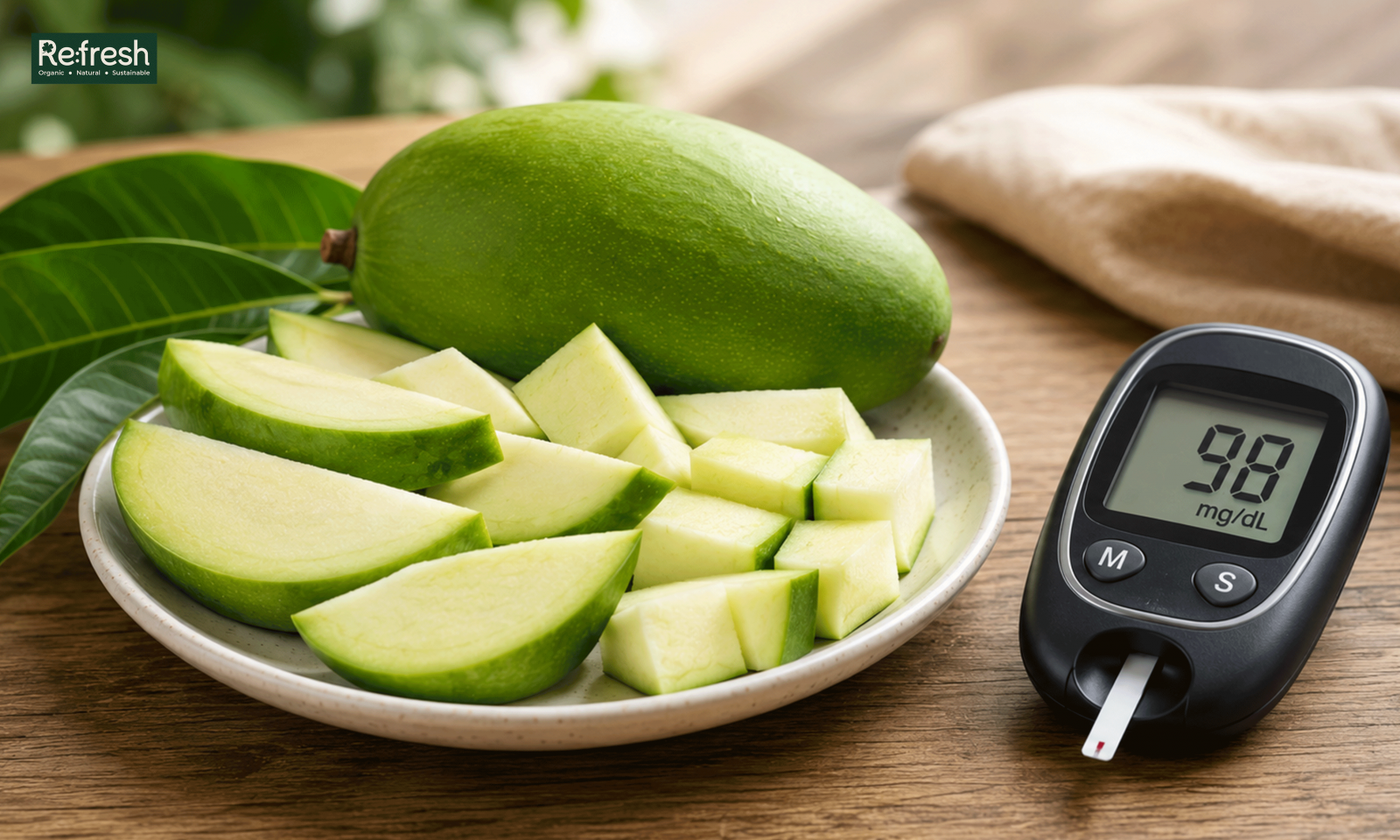
Diabetes - especially type 2 diabetes - requires you to calculate every gram of sugar carefully.
With India being the diabetes capital of the world, millions of people are navigating their diets every day during mango season.
The problem isn't mango itself - it's the form, quantity, and timing of consumption. Both raw and ripe mango offer benefits, but they impact glucose levels very differently.
Understanding this difference is the first step to making mango a safe, enjoyable part of your diabetic friendly food diet.
If you're building a more mindful kitchen this season - from organic spices to better-for-you snacks - Refreshyourlife has a dedicated Diabetes-Friendly section worth exploring.
Is Raw Mango Safe for Diabetes? What Your Blood Sugar Levels Will Actually Show!
1. Raw Mango is Nutritious:
Raw mango or kairi, as it’s lovingly called across India, is tart, crunchy, and surprisingly low in sugar.
Per 100g of raw mango contains:
- ● Total sugars: ~2–3g (compared to 14–15g in ripe mango)
- ● Dietary fibre: ~1.6g
- ● Vitamin C: significantly higher than ripe mango
- ● Glycemic Index (GI): estimated 41–55 (low to medium range)
So it’s a great addition to a diabetic diet as the sugar is low and has a low glycemic index.
2. Raw Mango Causes a Slower Rise in Glucose Levels
The lower natural sugar content means raw mango causes a slower, steadier rise in blood sugar levels.
Raw mango is a source of dietary fiber which slows down glucose absorption in the gut - a key factor for anyone managing type 2 diabetes or prediabetes.
A 2023 study found that low-GI fruits, when consumed in controlled portions, had minimal negative impact on glycemic control in people with type 2 diabetes. Raw mango fits comfortably in this category.
Read More: 5 Underrated Summer Fruits with Surprising Health Benefit
Does Ripe Mango Spike Blood Sugar in Diabetes Patients?
Ripe mango in summers is delicious and also dense in natural sugars like fructose, glucose, and sucrose.
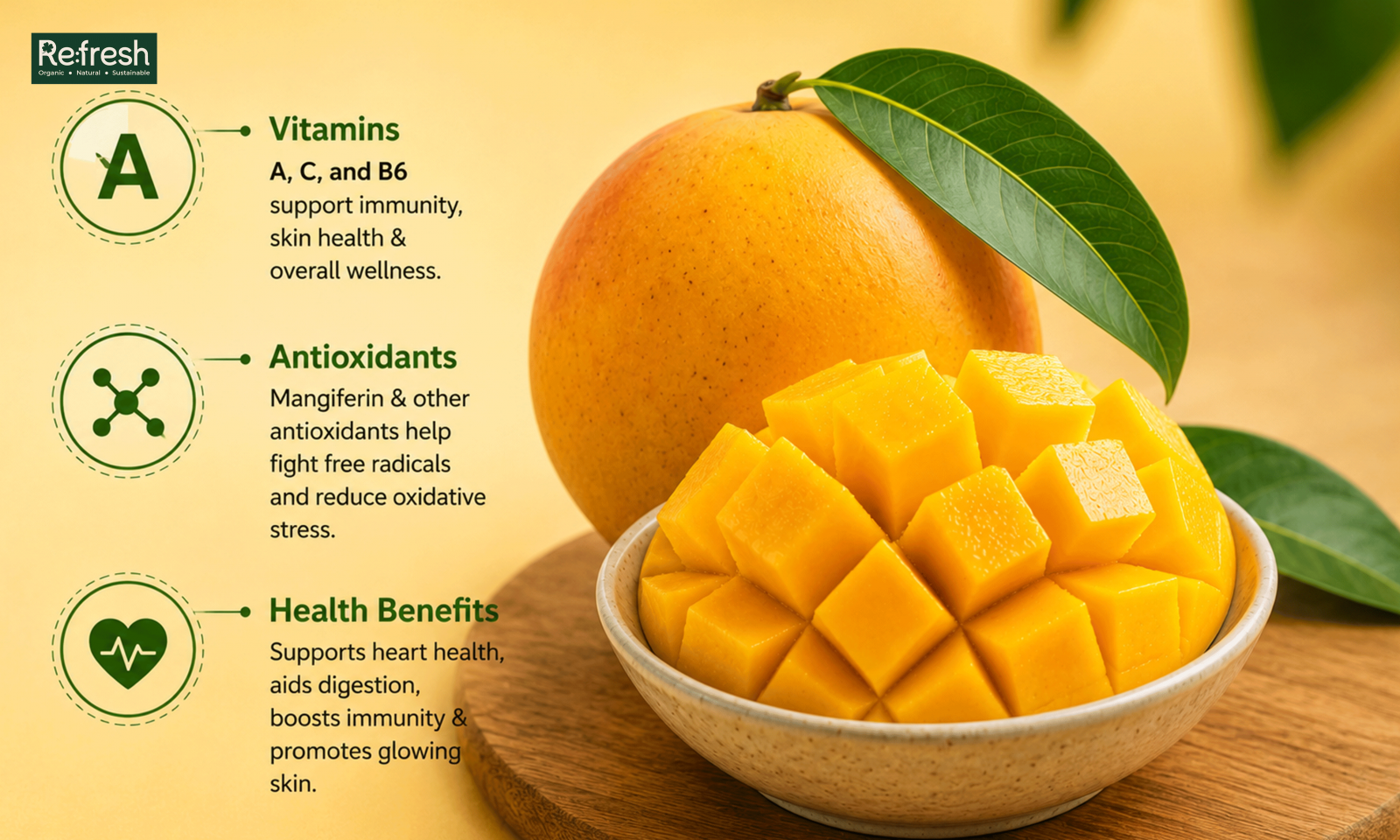
While it does have vitamins A, C, and B6, along with antioxidants like mangiferin, the higher sugar load makes it tricky for people on continuous glucose monitoring
Ripe mangoes like alphonso, kesar, dasheri, langra, totapuri, banganapalli, etc, have a glycemic index of around 51-60, placing it in the medium range.
While this doesn't make ripe mango forbidden, portion size becomes critical.
Eating half a small ripe mango (roughly 70-80g) with a high fibre meal can be tolerable to some people - but this varies by individual, the stage of diabetes, and medication.
Common signs of diabetes and blood sugar fluctuation that shouldn't be ignored after having mango includes fatigue after eating, excessive thirst, and foggy thinking.
| Feature | Raw Mango (Kairi) | Ripe Mango |
|---|---|---|
| Sugar content (per 100g) | ~2–3g | ~14–15g |
| Glycemic Index | 41–55 (Low–Medium) | 51–60 (Medium) |
| Fibre | Moderate | Moderate |
| Safe for diabetes? | ✅ More suitable | ⚠️ In small portions only |
| Best use | Chutneys, panna, salads | Fresh consumption, smoothies |
How to Safely Add Mango to a Diabetic Diet?
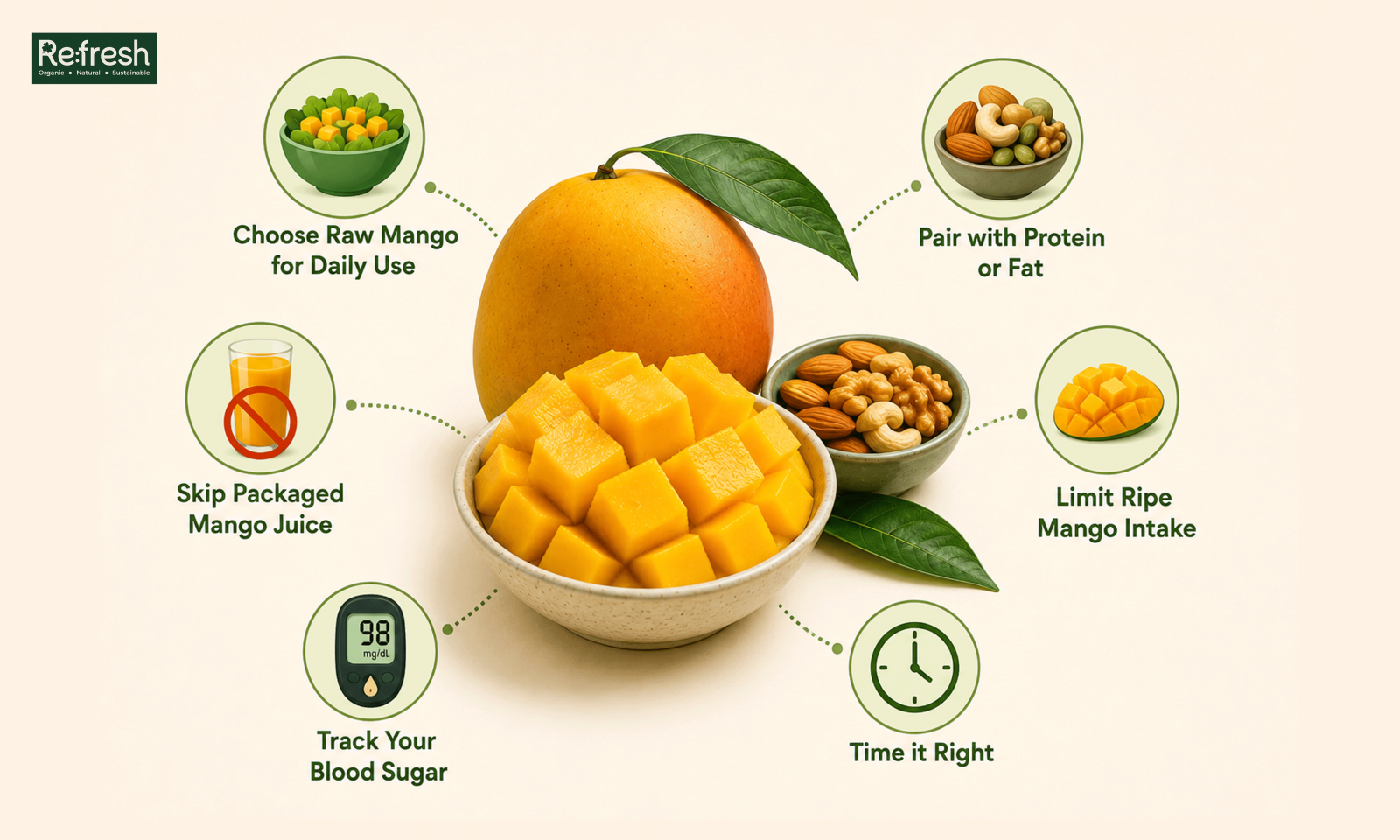
Whether you choose raw mango or ripe mango, these tips can help diabetic people mango without derailing your blood sugar levels:
1. Pair with Protein or Fat - Eating ripe mango with a handful of nuts and seeds can help slow down glucose absorption.
· You can have a small katori of mango with some walnuts, cashews, and almonds.
2. Choose Raw Mango for daily use: You can make aam panna (without adding sugar), raw mango salads, or kairi chutney.
3. Limit Ripe Mango Intake: Mango is a source of natural sugars, which is why you should limit your intake to 1–2 slices and never eat it on an empty stomach.
4. Track your blood sugar: People living with type 2 diabetes should use a continuous glucose monitoring device or a simple blood glucose monitor to understand your blood glucose levels.
5. Time it Right: Having mango in mid-morning is better than having it in evening as the digestion slows down at night.
6. Skip packaged mango juice: Most commercial mango juices are stripped of natural fiber and loaded with added sugar.
· If the rest of the family wants to enjoy mango this summer without compromise, the Rus Organic Mango Juice at Refreshyourlife is a certified organic option - no artificial additives, just real mango.
· A better pick for everyone who isn't watching their glucose.
Just skip the added jaggery if you're on a type 2 diabetes diet.
The Bottom Line:
When it comes to mango and diabetes, raw mango is a better and healthier choice - lower in sugar, gentle on glucose levels, and a more versatile addition in a diabetic diet.
Ripe mango can be consumed by diabetic patients, but in smaller quantities and with careful planning.
The mango doesn't have to disappear from your summer. It just needs a little more thought.
Frequently Asked Questions
1. What are the 10 benefits of mango?
Mango supports immunity, digestion, skin health, eyesight, and heart health. It is rich in Vitamins A, C, and B6, folate, fibre, and antioxidants like mangiferin. Raw mango also aids iron absorption and keeps energy levels steady through the day.
2. Which is healthier - guava or mango?
For diabetes and blood sugar management, guava wins — it has lower sugar, more fibre, and a lower glycemic index. For skin, immunity, and antioxidants, mango holds its own. Both are healthy; your goal decides the better pick.
3. What are the side effects of eating too much mango?
Overeating ripe mango can spike blood sugar, cause bloating, digestive discomfort, and may contribute to weight gain over time. Some people also experience mild skin or mouth irritation. Stick to one small serving a day.
4. Are mangoes high in sugar?
Ripe mango contains around 14–15g of natural sugar per 100g — relatively high for a fruit. Raw mango has just 2–3g per 100g, making it a much safer option for anyone watching their glucose levels.
5. Can I eat mango every day?
Healthy individuals can enjoy one small serving daily without concern. For diabetics or those with prediabetes, daily ripe mango is best avoided. Raw mango, however, can be included more regularly in controlled portions.
If you liked this blog, dive deeper - better choices begin with better awareness.
-

You're Probably Storing These 10 Everyday Foods the Wrong Way
August 19th, 2026 -
 August 17th, 2026
 -

Organic vs Regular Spices: Are Organic Spices Really Better?
August 14th, 2026 -

What Did Lord Krishna Really Eat? 7 Favorite Foods for Janmashtami
August 12th, 2026 -
 August 10th, 2026