
Why More People Are Choosing Jowar Noodles Over Maida Noodles
A bowl of instant noodles is quick, comforting, and a dish kids would never hate!
But what’s actually inside that bowl of noodles? Most instant noodles are made from maida (refined flour), palm oil, and a whole lot of emulsifiers, preservatives, and so much more.
Maida contains significantly less fibre and fewer nutrients than whole grains because much of the bran and germ are removed during refining.
This growing awareness about ingredients has led to the rise of jowar noodles, made from sorghum millet or jowar. Jowar is an ancient Indian grain (millet), naturally rich in fibre, antioxidants, and essential nutrients, making it a nutritious alternative to refined grains.
Jowar noodles, made from sorghum millet, are a nutritious alternative to conventional refined flour noodles.
By the end of this blog, you'll understand why more families are making the switch from maida noodles to jowar noodles.
Jowar Noodles vs Maida Noodles: Which Is Better?
When you compare jowar noodles with the refined flour ones, the primary difference lies in the grain source.
Refined flour noodles are primarily made from refined wheat flour or a combination of refined and whole wheat flour.
Since maida is made by removing the outer bran and germ layers, the remaining starchy endosperm loses most of the nutrients.
Are Jowar Noodles Healthy?
Jowar noodles are made using sorghum millet which contains naturally occurring fibre and plant compounds that contribute to its nutritional profile.
- These healthy noodles without maida are naturally cholesterol-free and contain very little fat.
- Because it contains fibre and some protein, jowar-based foods may help people feel fuller for longer compared with highly refined flour products.
- Sorghum is one of the grains known to contain beneficial plant compounds such as phenolics and flavonoids that have antioxidant activity.
Jowar-based foods may help promote fullness because sorghum naturally contains fibre and protein.
Research suggests that sorghum-based foods may promote greater satiety than refined grain alternatives, while also providing naturally occurring fibre, minerals, and antioxidant compounds.
That's one reason why healthy noodles without maida are becoming increasingly popular among health-conscious consumers.
5 Reasons People Are Switching to Jowar Noodles
-
Higher Fibre Content
One of the biggest advantages of jowar noodles is that they’re made from whole grain rather than refined flour.
Fibre helps promote satiety by slowing digestion and can also support gut health by serving as food for beneficial gut bacteria.
As jowar retains its natural fibre, millet noodles are a more wholesome choice for everyday meals.
This is one of the reasons many consumers are choosing millet noodles over conventional maida noodles.
-
Naturally Gluten-Free
Jowar is naturally gluten-free, making it a popular grain among people looking to reduce or avoid gluten in their daily diets.
These millet noodles are an excellent alternative for individuals with celiac disease, gluten sensitivity, or those avoiding maida.
Individuals with celiac disease should always read product labels and manufacturing information carefully.
-
More Nutrient-Dense
Unlike refined flour, Sorghum (jowar) contains a combination of complex carbohydrates, protein, minerals, and antioxidant compounds that contribute to its nutritional value.
Sorghum also provides minerals such as iron and magnesium, which contributes to their nutritional value and makes them a more wholesome noodle option.
These minerals are important as iron supports oxygen transport and energy production, while magnesium contributes to muscle function, nerve health, and overall metabolism.
-
May Support Better Blood Sugar Management
Whole grains are generally digested more slowly than highly refined grains, which can lead to a steadier release of glucose into the bloodstream.
Jowar is generally considered to have a lower glycaemic index than highly refined grains such as maida.
As millet noodles contain complex carbohydrates, jowar noodles may digest more gradually, which may help support steadier blood sugar responses as part of a balanced diet.
Are Jowar Noodles Healthy for Everyone?
For most people, jowar noodles are an easy way to incorporate more whole grains into a balanced diet.
Because jowar is a whole grain, the noodles have a firmer bite and wholesome flavour compared to maida noodles.
Maida noodles are essentially fast-digesting starch with little fiber, protein, or micronutrients.
For growing children, whole grains like jowar offer a more nourishing choice than highly refined flour, providing nutrition that supports their active and developing bodies.
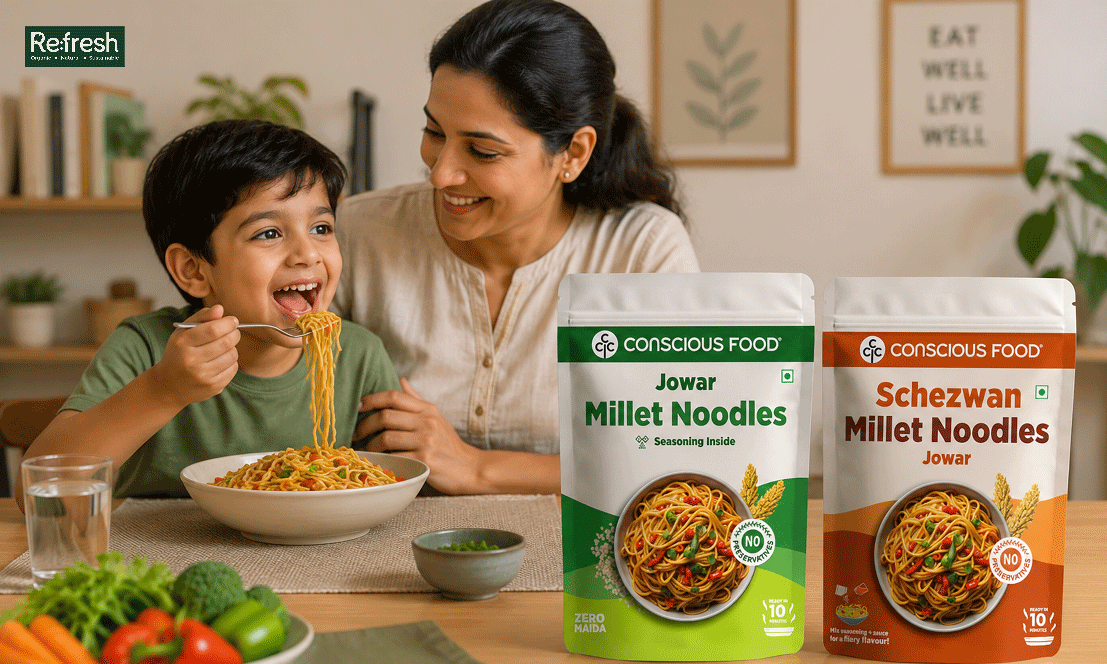
That's exactly why we love Conscious Food Jowar Millet Noodles from Refreshyourlife.
Made with jowar instead of maida, they offer a more wholesome take on a classic favourite that is mild-tasting, has no preservatives, and is made without maida.
How to Cook Jowar Noodles at Home
You don’t need special skills to make healthy millet noodles:
- Boil some water with 1 tbsp oil and a pinch of salt.
- Add jowar noodles and keep boiling for 5-6 minutes but keep checking as jowar cooks faster and can turn mushy if overdone.
- Add vegetables like capsicum, carrots, cabbage as they pair well with jowar's earthy, neutral flavour.
- Use minimal oil as millet noodles don’t need much. A light stir-fry works better than deep-saucing.
- Use the masala that comes with the jowar noodles.
Plant-based noodles like jowar work brilliantly in Indo-Chinese stir-fries, simple soy-sauce tossings, or even a light veggie hakka style — the everyday meals Indian families already love.
Explore certified jowar millet noodles and more wholesome pantry alternatives at
Refreshyourlife
where every product is curated to match your health goals.
The Bottom Line
As consumers become aware of what goes into their food, the demand for millet noodles will continue growing.
Whether you're cooking for young children, trying to manage weight or simply trying to eat a little more thoughtfully, sorghum noodles offer a straightforward upgrade from the maida ones.
Whole grain ingredients, naturally occurring fibre, and a more balanced nutritional profile make them a smart option for modern lifestyles.
If you're ready to move beyond refined flour, jowar noodles can be a simple first step toward bringing more whole grains into everyday meals.
Frequently Asked Questions
-

You're Probably Storing These 10 Everyday Foods the Wrong Way
August 19th, 2026 -
 August 17th, 2026
 -

Organic vs Regular Spices: Are Organic Spices Really Better?
August 14th, 2026 -

What Did Lord Krishna Really Eat? 7 Favorite Foods for Janmashtami
August 12th, 2026 -
 August 10th, 2026