
Why Are Indian Women Always Tired? Iron Deficiency Anemia Could Be the Reason!
Do you feel exhausted even after a full night’s sleep or lose more hair than usual or struggle to focus on work despite your morning coffee?
Unfortunately these symptoms are often blamed on stress, busy schedules, or lack of sleep.
However, these symptoms can be early warning signs of iron deficiency.
Iron deficiency anemia is one of the most common nutritional deficiencies worldwide and affects women far more than men.
Recognizing the signs and symptoms of iron deficiency anemia and eating an iron rich diet can help prevent long-term health complications.
Let’s understand everything in detail.
What Is Iron Deficiency Anemia?
Iron is an essential mineral that your body needs to make haemoglobin, the protein in red blood cells that carries oxygen from the lungs to the tissues.
When your iron levels drop too low, your body can’t produce enough healthy red blood cells (erythrocyte) and the result is iron deficiency anemia.
According to the World Health Organization (WHO), anemia affects approximately 40% of women of reproductive age globally, and iron deficiency anemia is one of them.
Iron does much more than support haemoglobin production, it is also a significant component of a protein that helps deliver oxygen to muscles.
Additionally, iron plays a critical role in physical growth, hormone production, neurological development, and normal cellular function.
Most Indian Women Are Anaemic
In India, the burden of iron deficiency is even higher.
According to the National Family Health Survey (NFHS-5), nearly 57% of women aged 15-49 years are anaemic.
In other words, more than one in every two women may be living with low haemoglobin levels, often ignoring the symptoms for years.
How is Iron Deficiency Diagnosed?
In many cases, haemoglobin levels may remain normal before ferritin levels drop.
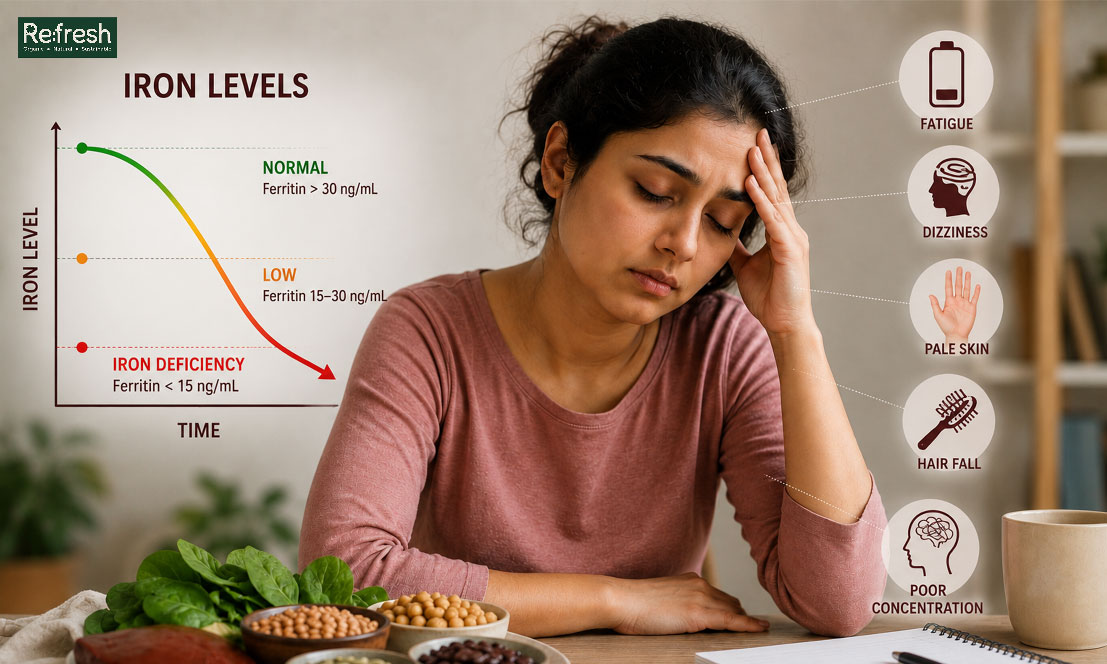
To diagnose iron deficiency, the serum ferritin test is considered the most important because it reflects the body's stored iron levels.
Generally, a ferritin level <15 ng/mL is considered diagnostic of iron deficiency.
However, if symptoms are present, ferritin levels of <30 ng/mL may also suggest iron deficiency, based on the patient’s overall health.
What Other Tests May Be Recommended?
Your doctor may recommend one or a combination of these tests to help confirm iron deficiency, assess its severity, and identify possible underlying causes:
- Complete Blood Count (CBC): Haemoglobin below 12g/dl in women may indicate iron deficiency anemia.
- Serum Iron: Levels below 60 mcg/dL are often considered low.
- Total Iron Binding Capacity (TIBC): Levels above 450 mcg/dL may indicate iron deficiency.
- Transferrin Saturation (TSAT): Levels below 20% are commonly associated with iron deficiency.
Why Does Iron Deficiency Affect Women More?
Iron deficiency affects more women due to several distinct biological and social factors:
1. Blood Loss During Menstruation
Women of reproductive age lose blood and iron during every menstrual cycle.
Some women who experience heavy menstrual bleeding lose significantly more iron each month than the body can replenish through diet alone, creating a deficit that increases over time.
2. Pregnancy and Breastfeeding
During pregnancy, the blood volume expands as the developing foetus and placenta require substantial amounts of iron for healthy growth.
Iron requirements may remain elevated after pregnancy, making it important to replenish iron stores through diet and, when needed, supplementation.
3. Dietary Patterns
Premenopausal women require 18 mg iron daily but they may not be getting enough dietary iron.
Plant-based iron (non-haem iron) is absorbed less efficiently than animal-based iron (haem iron). Add to this the tendency in many households where women eat last or eat less, and it becomes clear why the gap is so wide.
What Are the Early Signs of Iron Deficiency Most Women Ignore?
The early signs of iron deficiency are often easy to ignore as simple stress or everyday fatigue.
-
Persistent Fatigue: One of the most common signs of iron deficiency is constant fatigue
that does not improve with rest.
Since iron helps carry oxygen throughout the body, low levels can leave your body feeling exhausted even after getting enough sleep. -
Frequent Headaches and Dizziness: Most women experience headaches and dizziness for years.
Reduced oxygen delivery to the brain may trigger headaches, dizziness, or light-headedness, especially when standing up suddenly.
-
Pale Skin, Gums, or Inner Eyelids: The inside of your eyelid should normally be vibrant
pink. If it appears pale, white, or light yellow when pulled down, it is a key indicator of low red blood
cell count.
Since less oxygen-rich blood reaches the surface of the skin and gums, they can appear washed out, chalky, or pale. -
Shortness of Breath During Mild Activity: If everyday activities like climbing the stairs
or walking faster leave you unusually breathless, low iron levels may be affecting oxygen transport.
As a result, the heart and lungs are pushing harder to deliver oxygen to the cells. -
Cold Hands and Feet: When iron supply is low, your body prioritizes oxygen supply to vital
organs.
This can make your hands and feet feel cold even when the weather is warm. -
Hair Fall and Hair Thinning: Adequate iron levels support
healthy hair growth.
Iron deficiency may weaken hair follicles and contribute to excessive hair shedding over time. -
Brittle or Spoon-Shaped Nails: Weak or brittle nails or nails that curve upwards in a
spoon-like shape are a classic sign of iron deficiency.
In some cases, they may also become thin, fragile, or more prone to breaking. -
Poor Concentration and Irritability: Iron deficiency can affect oxygen transport to the
brain, leading to difficulty concentrating, forgetfulness, irritability, and brain fog.
Tasks that should normally feel easy may require more effort and focus. -
Craving Non-Food Items: An unusual craving to chew chalk, ice, clay, or other non-food
substances, also known as pica, is also strongly associated with iron deficiency.
Although uncommon, this symptom should never be ignored and warrants medical evaluation.
Iron Rich Foods to Add to Your Diet
Following an iron-rich diet is one of the most natural ways to support healthy iron levels and prevent deficiency. Here’s a comprehensive look at the best food sources of iron.
Iron Rich Vegetables
Leafy greens and dark vegetables are among the best plant-based sources of iron.
These iron rich vegetables also provide fibre, antioxidants, vitamins, and minerals that support overall health:
- Spinach
- Kale
- Collard greens
- Beet greens
- Swiss chard
- Sweet potatoes
- Broccoli
- String beans
Iron Rich Fruits
Fruits generally contain smaller amounts of iron but still contribute meaningfully to your daily intake:
- Strawberries
- Watermelon
- Figs
- Dates
- Raisins
- Dried apricots
- Prunes
Other Iron Rich Foods
Some of the most iron-dense foods are pulses and some iron-fortified foods, including:
- Beans: Kidney beans, black beans, and chickpeas.
- Lentils: Moong dal, masoor dal, urad dal, and tuvar dal.
- Green peas
- Pumpkin seeds
- Quinoa
- Tofu
- Maple syrup
- Iron-fortified foods: Cereals, bread, and salt.
- Molasses: Blackstrap molasses is a thick, dark syrup produced during sugar processing and is one of the richest natural sources of iron. It can be added to smoothies, oatmeal, or baked goods.
Tips to Absorb Iron Better
The amount of iron your body absorbs depends on how much iron you eat, but also on what you pair it with as some compounds can reduce its absorption. Use these practical kitchen tips to maximize absorption:
- Add Vitamin C: Pair Vitamin C with every iron-rich meal—like adding lemon to dal, amla in a chutney, or tomatoes in your leafy greens.
- Avoid Tea and Coffee with Meals: Tannins reduce iron absorption. Space your tea and coffee at least 1 hour before or after eating.
- Cook in Cast Iron: Cooking in cast iron cookware can leach small but consistent amounts of iron into your food.
- Soak and Sprout: Soaking and sprouting legumes reduces phytates, which otherwise block iron absorption.
- Separate Calcium from Iron: Avoid consuming calcium-rich foods and iron-rich foods at the same time, as calcium can reduce iron absorption.
Can You Prevent Iron Deficiency Naturally?
Yes, but medical intervention is needed in severe iron deficiency or any critical condition.
Iron deficiency anemia is not just a statistic — it's a lived experience for millions of Indian women who are told their tiredness is "normal" or "just stress." It isn't. Your energy, your focus, your skin, and your hair all depend on adequate iron.
Paying attention to early symptoms, eating a balanced diet, and including a variety of iron rich foods can help reduce the risk of iron deficiency.
Women with heavy periods, pregnancy, vegetarian diets, or the ones experiencing the above symptoms may benefit from regular health check-ups and monitoring.
The good news is that iron deficiency is often manageable when identified early.
Healthy eating starts with wholesome ingredients. Explore RefreshYourLife's range of organic foods, clean pantry staples, and wellness-focused products to make nutritious living a simple part of your daily routine.
Frequently Asked Questions
-

You're Probably Storing These 10 Everyday Foods the Wrong Way
August 19th, 2026 -
 August 17th, 2026
 -

Organic vs Regular Spices: Are Organic Spices Really Better?
August 14th, 2026 -

What Did Lord Krishna Really Eat? 7 Favorite Foods for Janmashtami
August 12th, 2026 -
 August 10th, 2026