
Is Ready-Made Dosa Batter Safe? Ahmedabad Case Explained
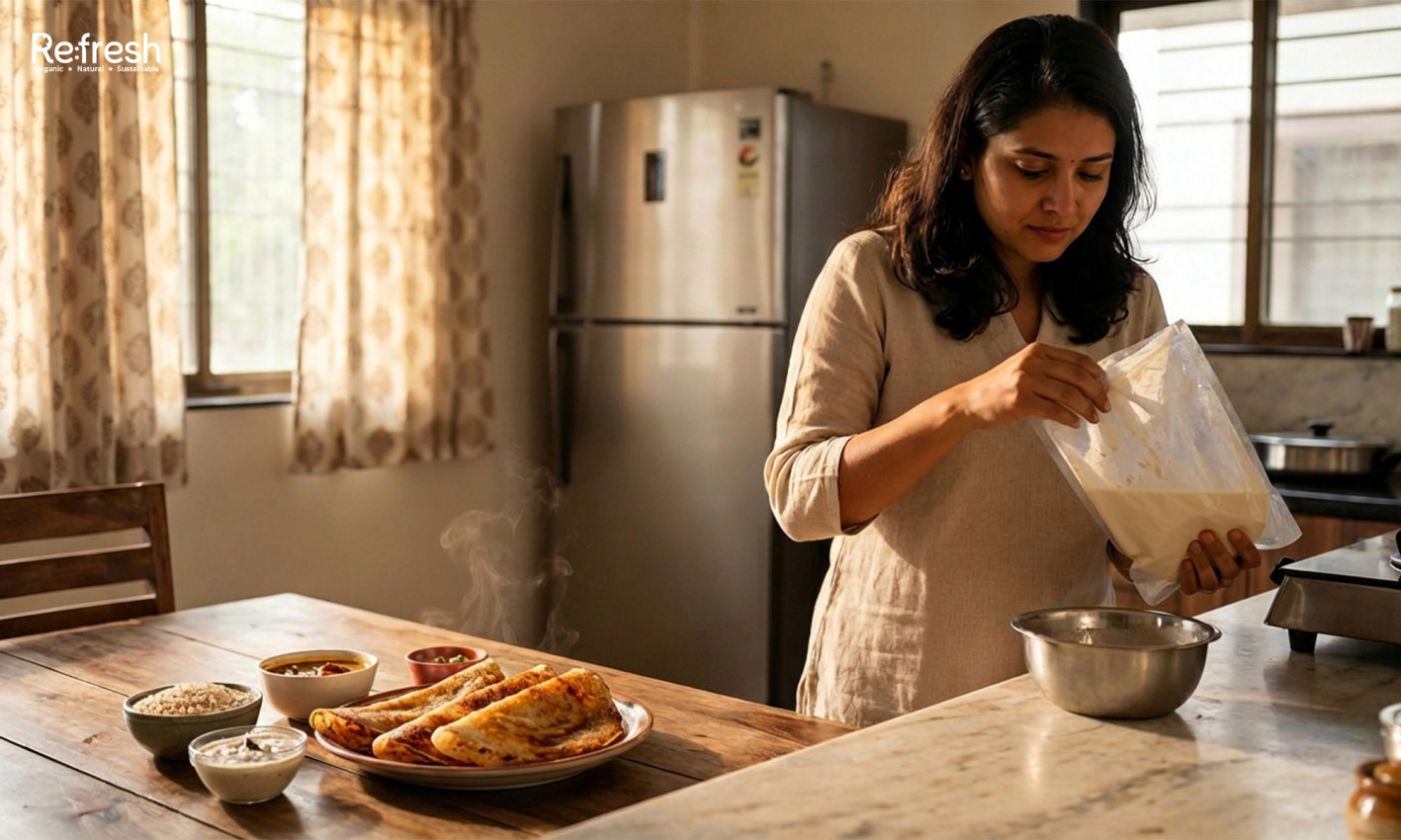
The convenience of ready-made dosa batter has made it a staple on our dining tables.
And the popularity has soared owing to 9-5 jobs and people finding it hard to make the urad dal-rice batter from scratch everyday.
But recent headlines, especially the dosa batter news Ahmedabad, have raised serious concerns about its safety.
Reports of food poisoning linked to contaminated dosa batter have left many questioning what they are really consuming.
In this blog, we explore if your quick dosa batter is actually compromising your health through facts, risks, and smarter choices you can make.
1. What Happened With the Ahmedabad Dosa Batter Food Poisoning Case?
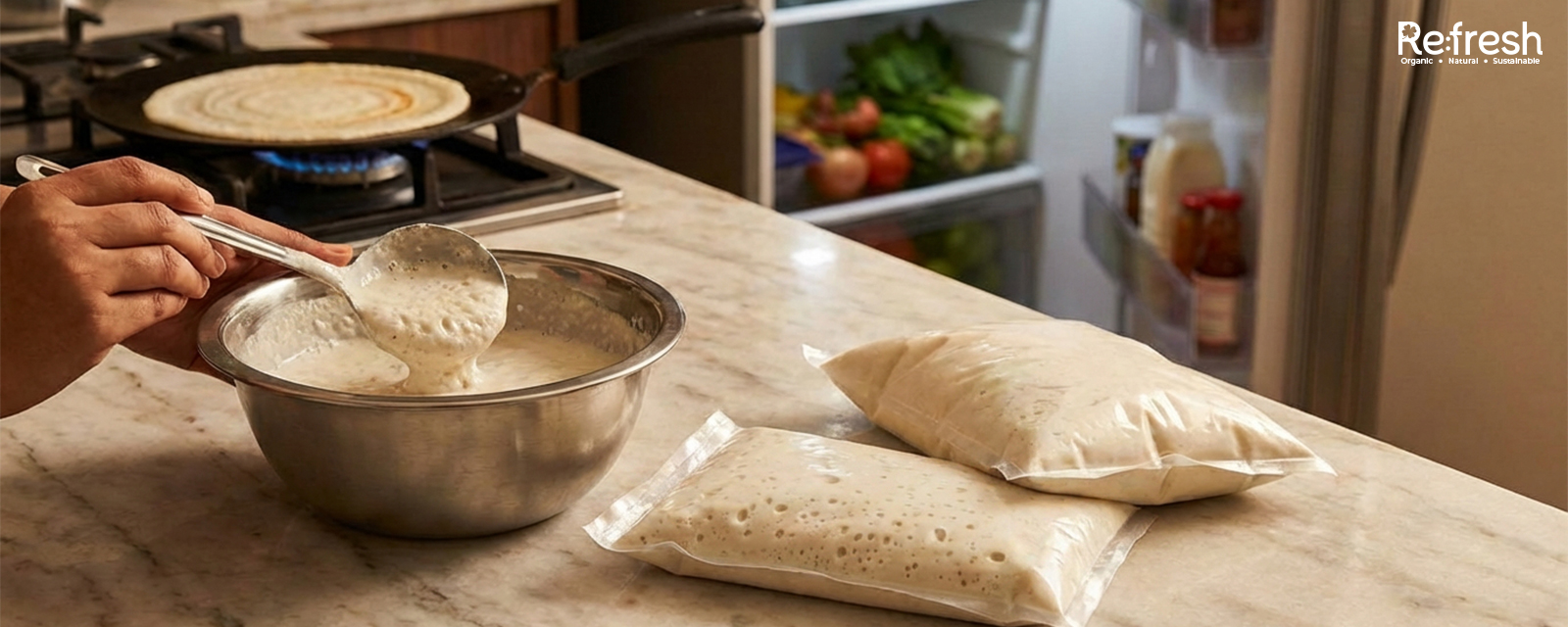
India woke up to a dosa batter news Ahmedabad where parents reported alleged food poisoning from instant dosa batter they bought at a local dairy.
A family complained of falling sick after having dosa made from store-brought dosa batter.
The parents were rushed to the hospital and later recovered. But their daughters, four-year-old Misti and three-month-old Raha, did not survive.
Commercially sold dosa batter can carry foodborne viruses if handled unhygienically and not stored at a proper temperature.
Buying instant dosa batter isn't the issue, but how the batter was prepared, stored, and handled.
The risks stem from:
- Improper fermentation conditions
- Poor hygiene during production
- Contamination due to storage and transportation
2. Symptoms of Batter-Related Food Poisoning
When you consume contaminated dosa batter, the body reacts quickly because fermented foods can carry viruses and microbes.
Common symptoms include:
- Nausea and vomiting
- Loose motions or diarrhea
- Abdominal cramps and bloating
- Mild fever or fatigue
In most cases, symptoms appear within a few hours of consumption.
While mild cases resolve on their own, repeated exposure to poorly handled instant dosa batter can stress gut health over time.
Fermented foods like dosa are naturally sensitive and if not handled correctly, they can become breeding grounds for harmful bacteria.
3. Understanding FSSAI Standards for Dosa Batter
If you're a frequent buyer of readymade instant mixes, you should know about the Food Safety and Standards Authority of India (FSSAI) regulations. (1)
What FSSAI Ensures:
- Basic hygiene and sanitation during food production
- Proper labeling (ingredients, expiry date, batch details)
- Limits on harmful contaminants and additives
What FSSAI Doesn't Guarantee:
- It doesn't ensure perfect storage after production
- It doesn't control how long the batter sits in a store fridge
- It doesn't monitor handling during transportation
So, the FSSAI logo can offer some safety, but it's not a magical shield that will protect you from contaminated dosa batter.
4. What to Check Before Buying Ready-Made Dosa Batter:
Fermented foods like dosa or idli are a treat to our good gut bacteria and support a healthy gut .
Instant dosa batters are a blessing in disguise for people working full time but blindly trusting every packet can lead to dangerous health implications.
Look for these things before buying instant dosa batter.
Does Your Dosa Batter Smell Sour or Off?
Fresh khiru has a milk, slightly tangy aroma when made in perfect room temperature and conditions.
If the instant dosa batter smells sour, alcoholic, and just "not the same quality", that's a clear red flag and you should avoid taking the risk.
The batter texture should be smooth and slightly airy. If it feels too watery or overly thick, it's a red flag.
How Long Does Ready-Made Dosa Batter Last Before It Goes Bad?
Fermentation is time sensitive and dosa batters cannot last longer like biscuits or other packaged foods.
Always choose a fresh batch of instant dosa batter and avoid anything closer to expiry as the longer it sits, the higher will be the microbial growth.
Incidents like dosa batter news Ahmedabad are a reality check for start reading labels.
Wrong Storage Temperature Can Spoil Dosa Batter:
The dosa batter should be stored in a refrigerator or even in a deep freezer and even a few minutes of room temperature will increase the growth of bacteria.
This is why you should choose from a reputed, tested, and certified brand like Pure & Sure and Organic Tattva where you can easily question the process.
For local dosa batter products, it is hard to identify the route of contamination or cold chain breaks.
What Ingredients Should Be in Dosa Batter?
Homemade dosa batter is made of rice and urad dal and fermented to get healthy microbial growth. (1)
Your instant dosa batter shouldn't contain more than 3-4 ingredients or 6-7 ingredients if it is rava or sooji dosa.
Look for basic ingredients like rice, urad dal, sugar, salt, any other flour and masalas.
Is Your Dosa Batter Brand FSSAI or Organic Certified?
Clean and organic brands offer a higher level of transparency than local or un-branded instant dosa batter products.
Always check for FSSAI approval, testing details, organic certifications, and other details of sourcing and processing.
If there's no clarity on certifications, testing, that's your sign to skip buying the product.
Read More: What are the Organic Certifications in India
Bloated or Leaking Dosa Batter Packaging?
Instant dosa batter should be packed in an airtight container preferably in a solid plastic packaging.
Bloated or puffed-up packaging can indicate the formation of gas from microbial activity.
Always avoid any kind of leaks or tampered packaging.
5. How to Make Safe Dosa Batter at Home - Step-by-Step
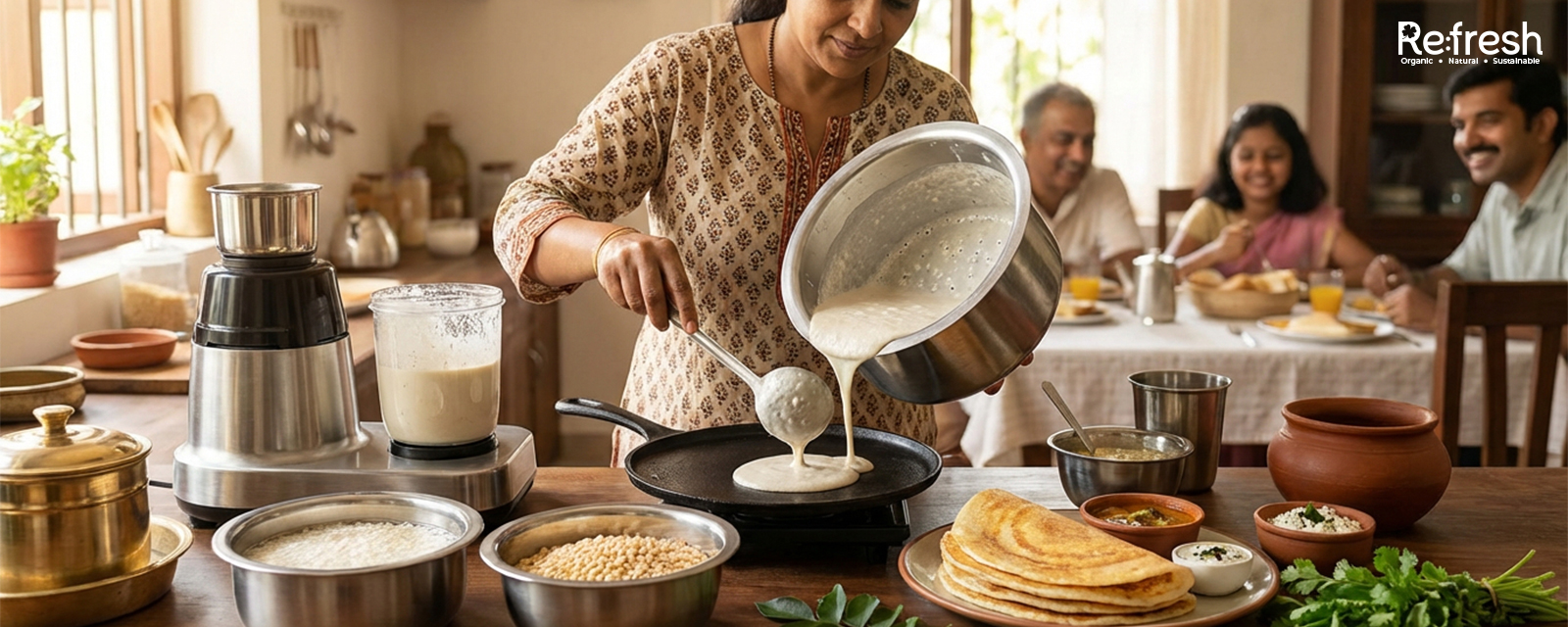
There's a reason homemade batter has survived generations, feeding our gut and keeping our digestions going.
Traditional fermentation of urad dal and rice mix supports beneficial bacteria that aid digestion and gut health.
Modern life doesn't allow the time to wait for your khiru to ferment and the result? Many brands are playing with our health.
If you have the time and conditions to make dosa and idli batter at home, follow these steps:
Basic method:
- Soak 3 parts rice and 1 part urad dal for 6–8 hours
- Grind separately to a smooth consistency
- Mix, add salt lightly, and ferment overnight (8–12 hours)
- Refrigerate after fermentation
Why this works better:
- Controlled fermentation reduces contamination risk
- No preservatives or additives
- Naturally supports gut-friendly bacteria
But modern lifestyle can make something as basic as fermenting khiru difficult due to timing and patience issues.
That's where well-made, high-quality dosa mix options step in, giving you consistency without compromising too much on tradition.
6. Is Organic Dosa Mix Healthier and Safer Than Regular Ready-Made Batter?
Switching to high-quality, certified organic isn't about trends, it's about choosing smart for your health.
Cleaner Ingredients:
Organic mixes avoid synthetic preservatives and pesticide, making them safer for regular consumption.
Pure & Sure Organic Rice Dosa Mix is the closest traditional taste, rich in easily digestible carbohydrates that'll provide quick energy making it ideal for daily breakfast.
Better Fermentation Control:
With high-quality grains, grown without pesticides, fermentation behaves more predictably and naturally.
Hygiene & Certification:
Certified brands follow stricter quality protocols on raw materials, fermentation, and packaging, reducing your risk significantly.
At Refresh, we offer certified organic rice, ragi, and rava dosa instant mixes made from only natural ingredients and with no unnecessary additives or preservatives.
7. Is Packaged Dosa Batter Worth the Risk?
The recent instant dosa batter controversy in Ahmedabad is less about panic and more about awareness.
Ready-made dosa batter isn't dangerous, but poor handling, low transparency, cheap storage, and bad quality control can make it risky.
Switching to certified organic dosa mix or preparing batter at home gives you better control over what you consume.
Your everyday masala dosa shouldn't come with a side of uncertainty.
Because at the end of the day, food should nourish you, not test your immune system.
Frequently Asked Questions
▼If you liked this blog, explore more content that actually helps you live better.
How to Read Labels to Spot Genuine Organic Products (And Avoid Fake Organic) Organic vs Chemical Fertilizers in India: Complete Guide to Benefits, Risks & Best Choice (2025) The Best Certified Organic Compact Powders You'll Wish You Found Sooner-

You're Probably Storing These 10 Everyday Foods the Wrong Way
August 19th, 2026 -
 August 17th, 2026
 -

Organic vs Regular Spices: Are Organic Spices Really Better?
August 14th, 2026 -

What Did Lord Krishna Really Eat? 7 Favorite Foods for Janmashtami
August 12th, 2026 -
 August 10th, 2026